Modern Roofing (Scotland) Ltd

Industrial Roof Refurbishment Scotland

Extend the useful life of ageing factory, warehouse and commercial roofs without paying for unnecessary replacement.

Modern Roofing assesses what can be retained, what must be renewed and how the work can be phased around the building. Flat-roof overlays, liquid renewal, metal-roof overcladding, coatings, gutter works and selective strip-off are specified only where the existing roof makes them viable.

Approx. 4,000m²Caldriven roof coating refurbishment
Approx. 3,700m²East Kilbride mixed roof renewal
Approx. 2,000m²AG Barr area-by-area refurbishment
Established 2007Commercial and industrial roofing experience

Refurbishment Is Not a Product. It Is a Condition-Led Decision.

Industrial roof refurbishment sits between isolated repair and complete replacement. The commercial value comes from retaining sound parts of the roof while renewing the areas, layers and details that are no longer performing.

That decision cannot be made from age alone. The roof covering, insulation, deck, fixings, drainage, rooflights, penetrations, condensation risk, access and building operations all affect whether refurbishment is sensible.

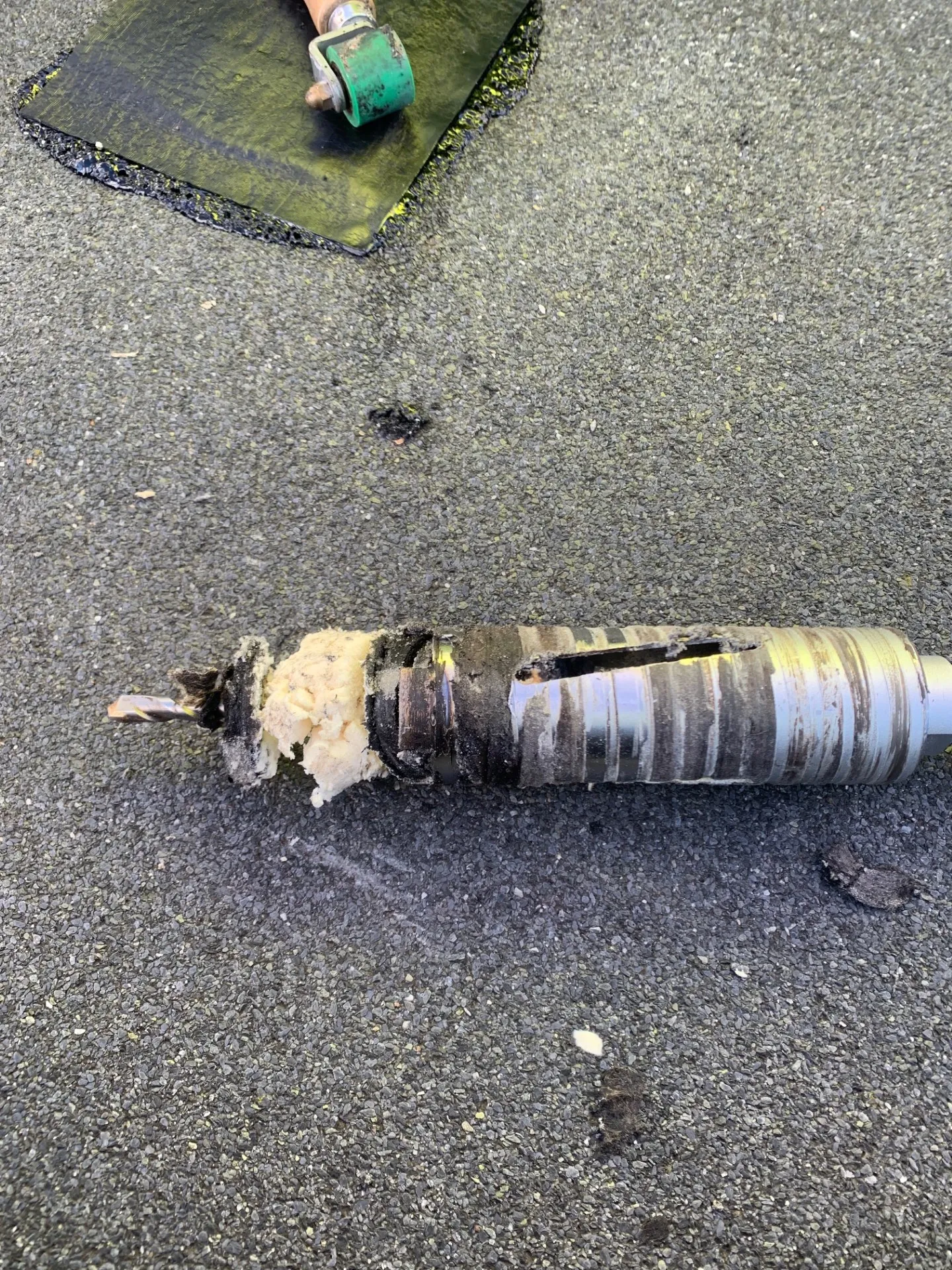
Modern Roofing uses inspection, roof history and targeted investigation to compare the realistic routes. Where required, that can include core samples, controlled opening-up, electronic integrity testing, pull-out tests and drainage checks.

See how Modern Roofing investigates industrial roofs before major work.

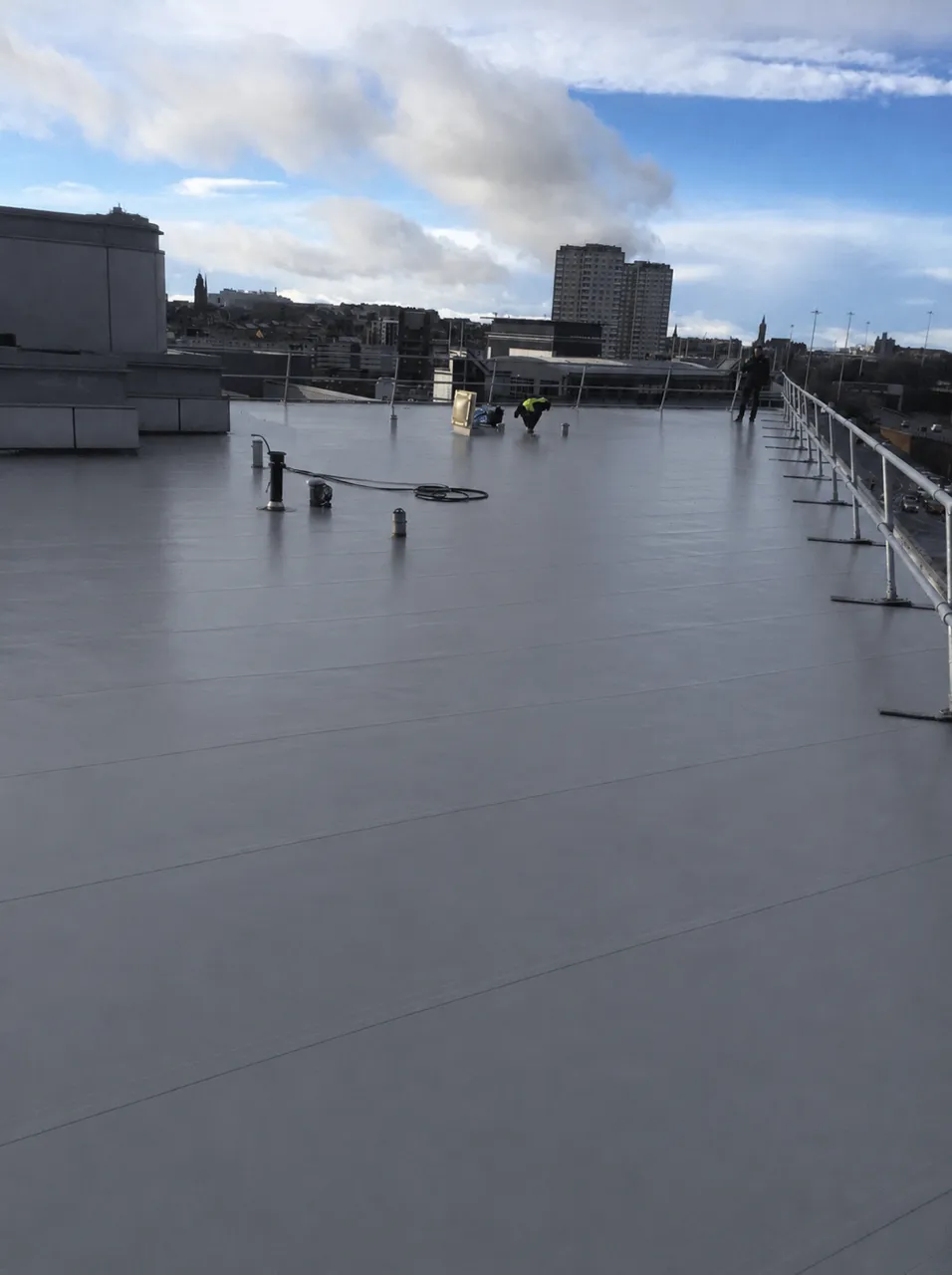
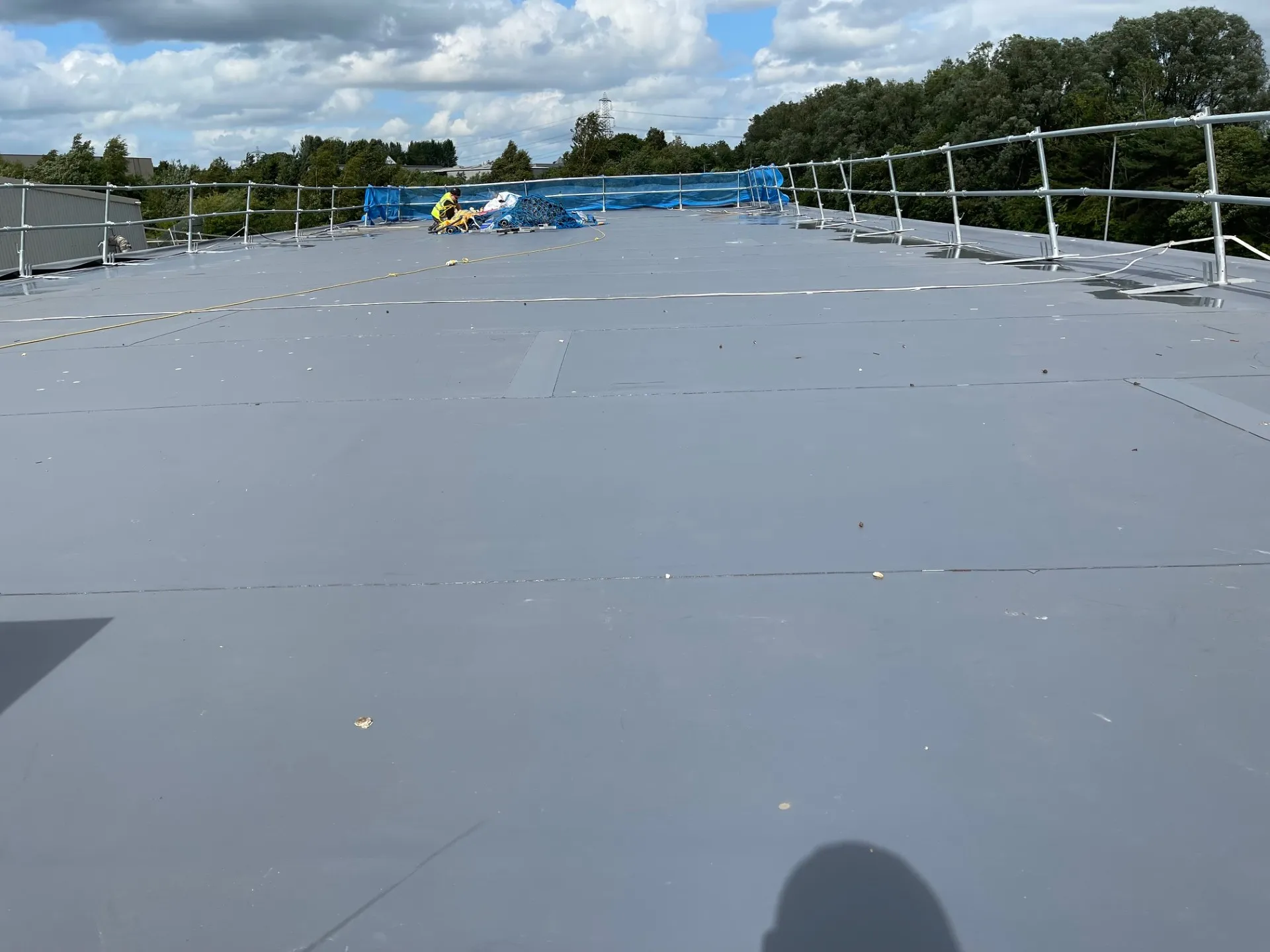
Completed membrane refurbishment across an AG Barr factory roof area
A completed roof area at the AG Barr Irn-Bru Factory, where different sections received different refurbishment routes after appraisal and core sampling.

Keep What Still Works. Renew What Does Not.

The right refurbishment scope should explain what is being retained, what is being removed, what evidence supports the decision and how the finished roof will deal with waterproofing, drainage, thermal performance, access and future maintenance.

Targeted repair

Best where defects are isolated and the wider roof remains serviceable.

Explore repair
Refurbishment

Best where several roof elements need renewal but useful parts of the existing construction can remain.

Current page owner
Overcladding

Best where a suitable metal or asbestos-cement roof can accept a new external weathering layer.

Explore overcladding
Replacement

Best where widespread failure, structural concerns or saturated build-ups make retention poor value.

Explore replacement

Two Roof Types. Different Refurbishment Logic.

A flat-roof overlay and a metal-roof upgrade should not be sold as the same service. The existing construction determines the testing, preparation, build-up and risk controls.

Flat roof refurbishment

Membranes, felt, liquid systems and warm-roof upgrades

Flat-roof refurbishment may retain dry, serviceable areas while renewing failed insulation, decks, details or waterproofing. The route can range from a direct overlay to local strip-out or a complete warm-roof rebuild.

  • confirm the existing roof build-up and moisture condition;
  • identify whether felt, membrane or liquid surfaces are compatible;
  • remove isolated saturated or failed areas where appropriate;
  • consider recovery board, vapour control and insulation upgrades;
  • correct outlets, falls, upstands and difficult details;
  • select the new waterproofing system around the evidence.

View Commercial Flat Roofing Scotland

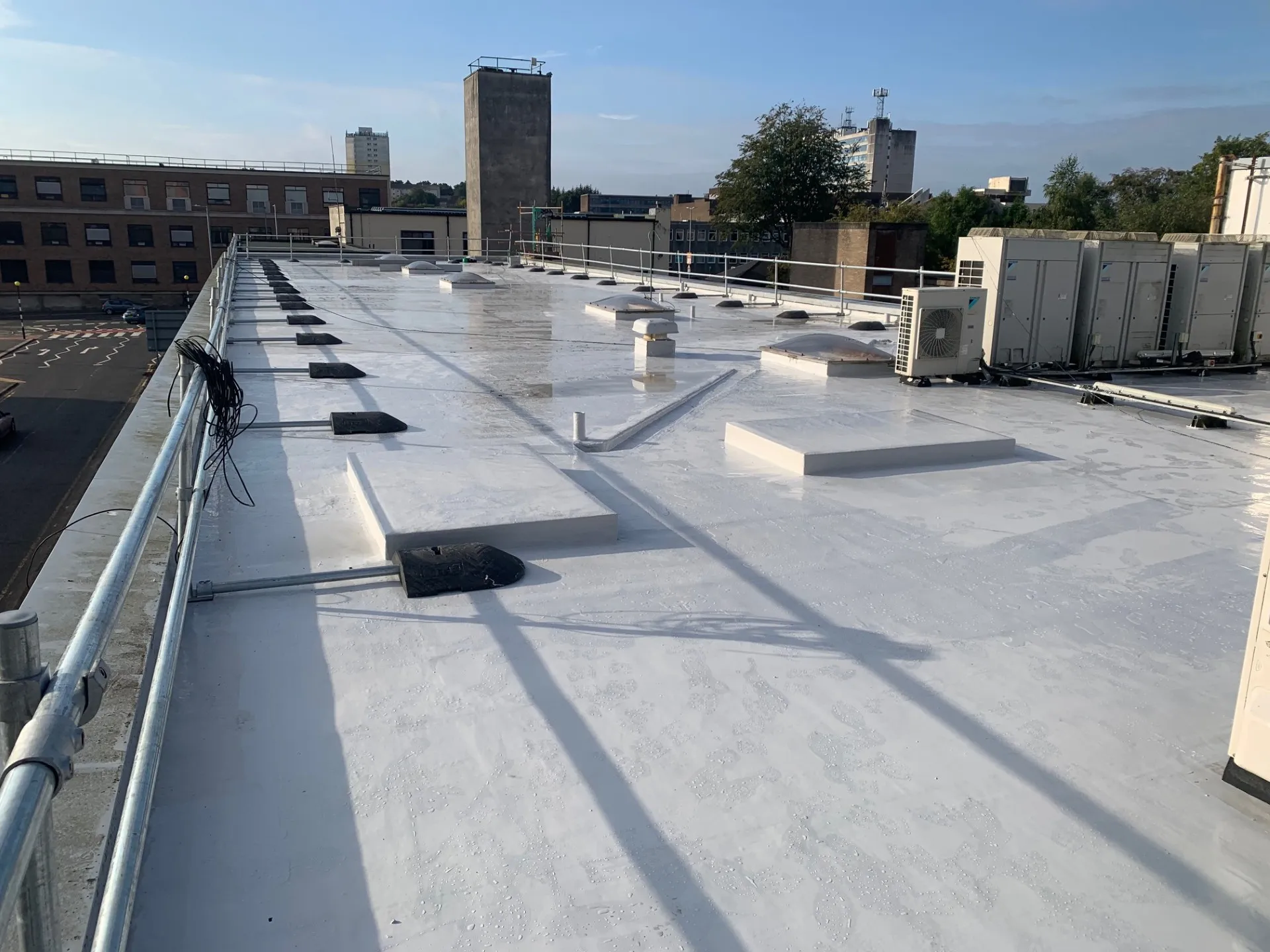
Completed commercial flat-roof refurbishment at the AG Barr Irn-Bru Factory
Completed AG Barr flat-roof refurbishment showing the finished membrane across a large commercial roof area.
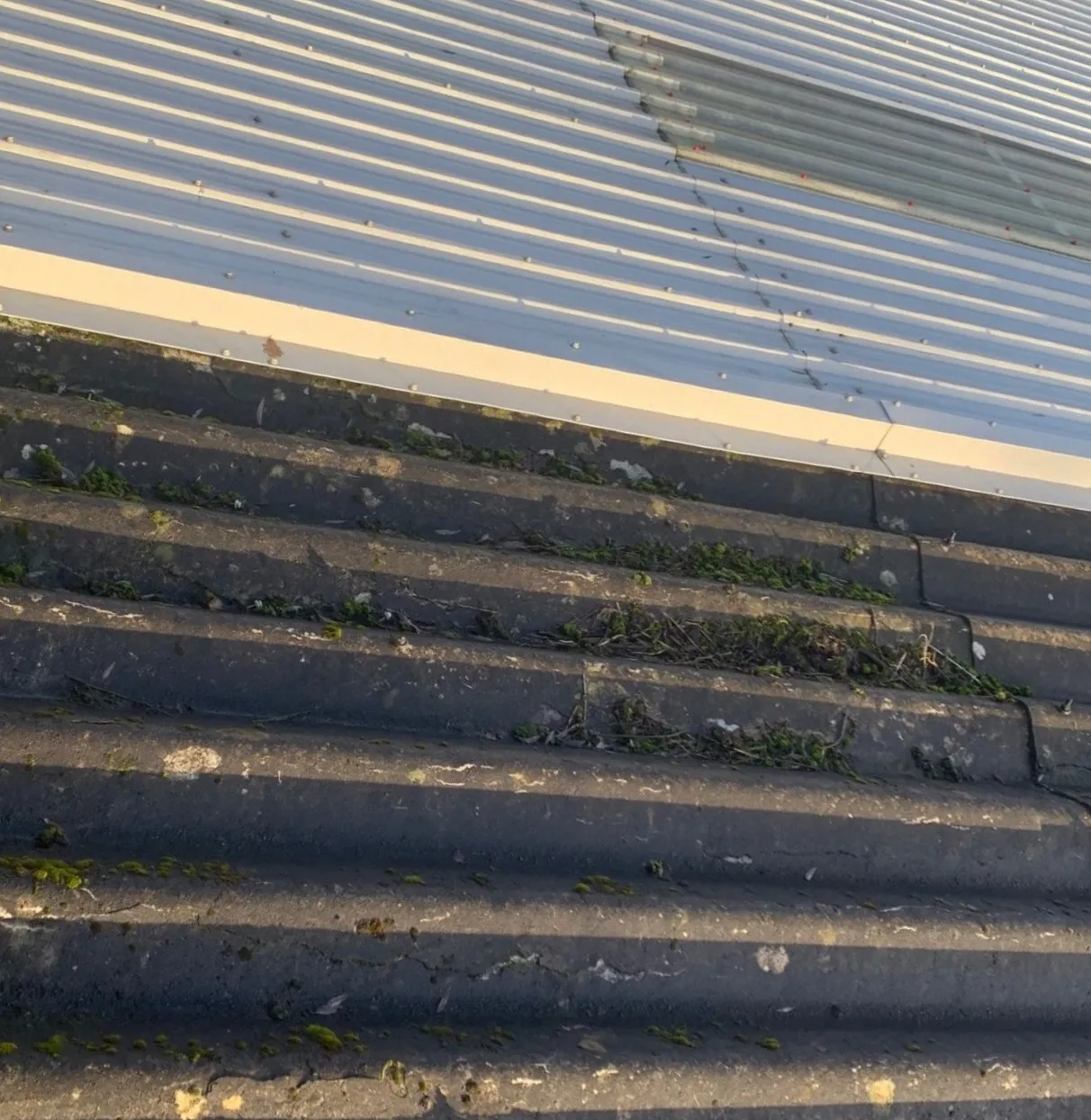
Asbestos-cement roof overlaid with a new profiled metal roofing system
Asbestos-cement roof overlay showing the existing roof alongside the new profiled metal covering.
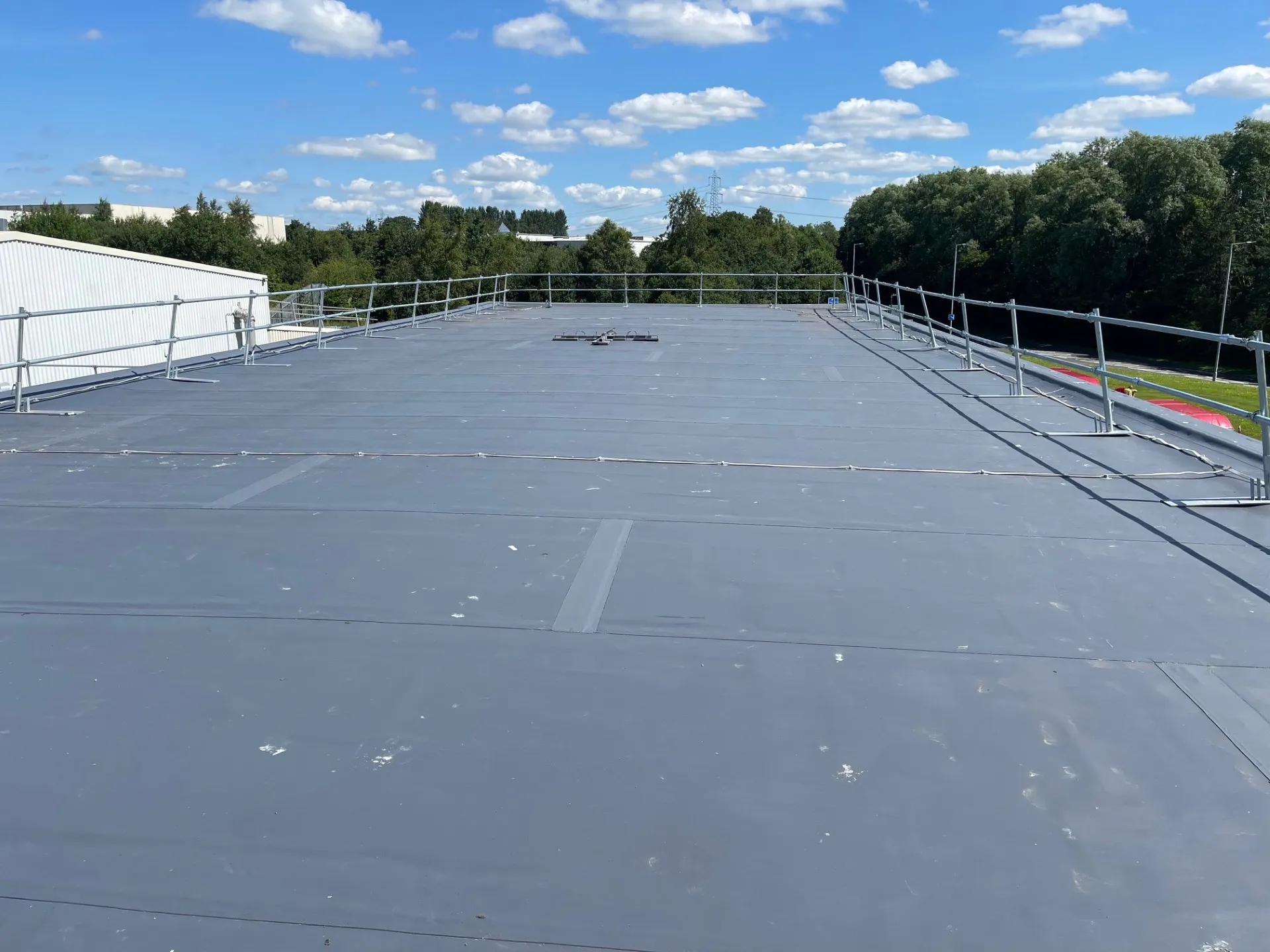
Metal roof refurbishment project by Modern Roofing Scotland
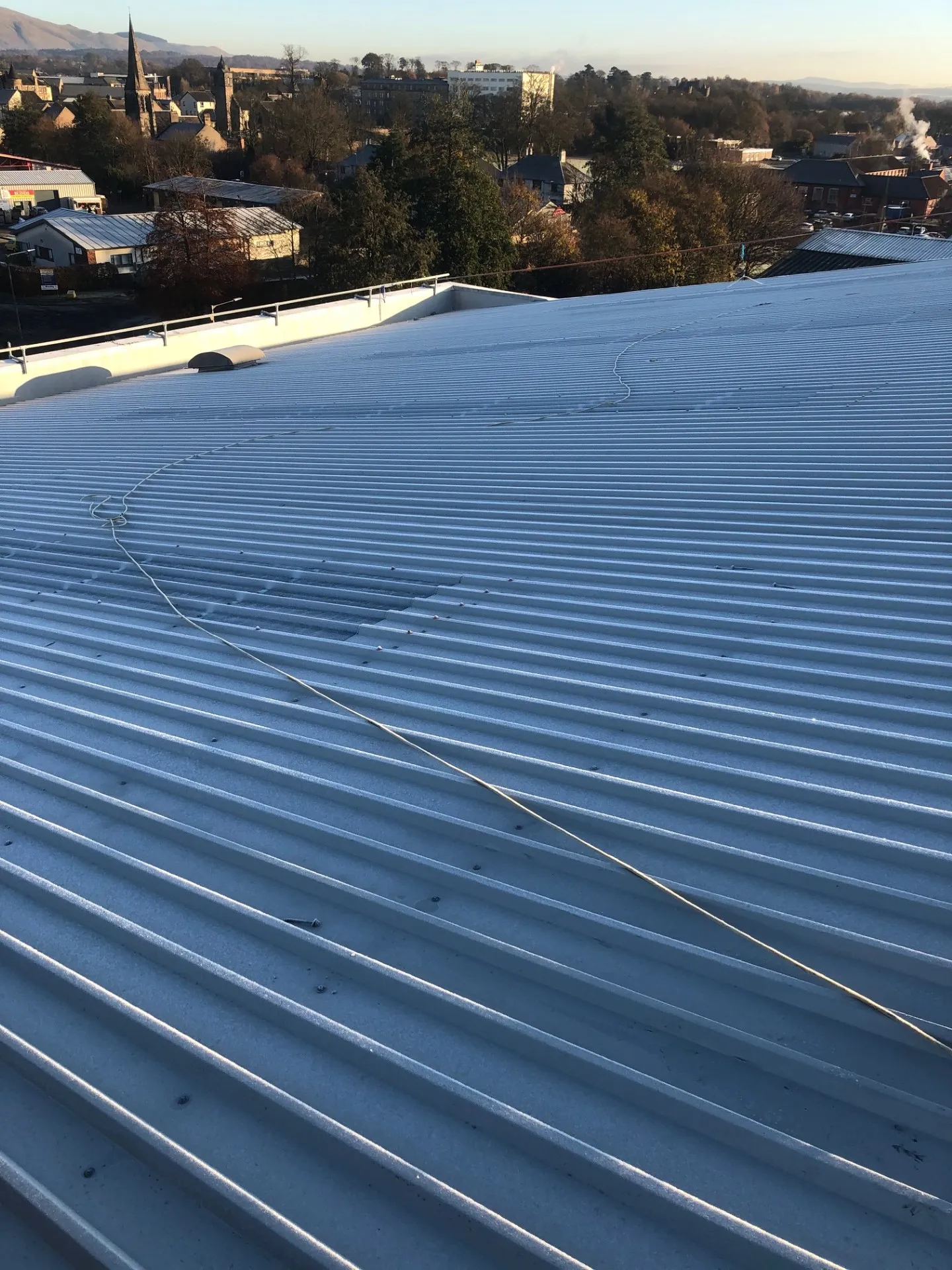
Metal-roof refurbishment work showing another practical route for an ageing industrial roof.
Metal roof refurbishment

Sheet treatment, coatings, rooflights, gutters and overcladding

Metal and asbestos-cement roof refurbishment starts with the condition of the sheets, fixings, laps, rooflights, gutters and supporting construction. A coating, local treatment or overclad is only useful when the substrate and wider roof justify it.

  • record corrosion, cracks, loose fixings and failed laps;
  • review fragile areas, rooflights and safe-access requirements;
  • check gutters, outlets and water routes before coating the roof;
  • assess fixing performance and structural capacity for overcladding;
  • consider insulation, condensation and internal environment;
  • plan phased work around production, stock and building use.

View Metal Roofing Systems

Liquid-applied refurbishment route

Liquid-Applied Roof Refurbishment

Liquid-applied roofing can provide a practical refurbishment route where the existing roof or waterproofing surface remains suitable for preparation and treatment. It can be used across complete roof areas or around complex details where sheet-based systems may be less practical.

Modern Roofing assesses the existing surface, adhesion, contamination, moisture, movement, drainage and previous repairs before recommending a liquid-applied system. A coating should not be used to conceal saturated insulation, failed substrates or defects that require removal.

View Liquid Applied Roofing Systems

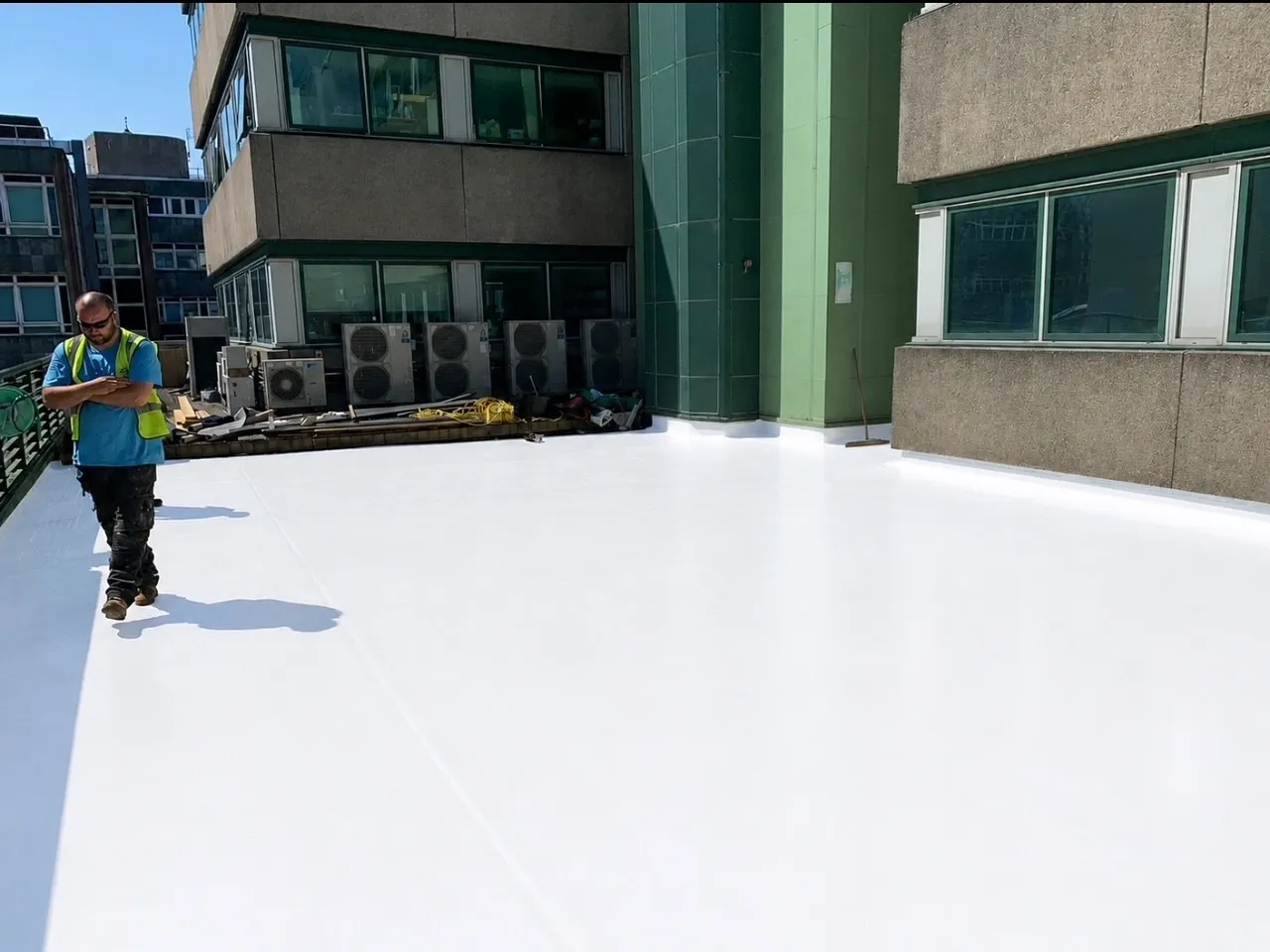
Liquid-applied waterproofing installed across a commercial roof area
Liquid-applied refurbishment can create a seamless waterproof finish across suitable roof areas and complex details after the correct preparation and compatibility checks.

Where it can work well

Suitable existing felt, compatible membranes, gutters, upstands, penetrations, complex details and prepared industrial roof surfaces where a seamless waterproofing route is technically appropriate.

What must be checked first

Surface condition, adhesion, moisture, compatibility, drainage, movement, previous coatings, detail design and the preparation required by the proposed system.

When liquid refurbishment is not enough

Where insulation is saturated, the deck or substrate is unsound, movement cannot be accommodated or the existing roof has failed beyond a viable refurbishment, selective strip-out or replacement may be required.

Real liquid-refurbishment evidence

East Kilbride Police Station: approximately 3,000m² of liquid-applied roof renewal was delivered alongside around 700m² of new single-ply membrane as one coordinated refurbishment package.

Caldriven Manufacturing Works: approximately 4,000m² of asbestos-cement roofing was carefully prepared and treated with a liquid-applied coating because the existing roof remained suitable for refurbishment rather than unnecessary replacement.

What a Proper Refurbishment Assessment Checks

The specification should be built from evidence. These are the issues that can change a seemingly simple overlay into a different scope altogether.

Roof build-up and moisture

Core samples or controlled opening-up can identify layers, insulation type, local saturation and whether an overlay is technically realistic.

Deck, substrate and fixings

The deck and fixing zones must be suitable for the proposed system. Pull-out testing or structural input may be needed for mechanically fixed or overclad routes.

Drainage and gutters

Falls, outlets, siphonic components, gutter joints, stop ends, overflows and ponding can undermine refurbishment if they are ignored.

Rooflights and details

Rooflights, upstands, penetrations, kerbs, flashings, laps and previous repairs often determine how much local renewal is required.

Thermal and condensation risk

Insulation, vapour control, internal humidity and condensation analysis affect the build-up, especially where thermal performance is being upgraded.

Access and live operations

Safe access, working areas, weather protection, deliveries, production, tenants, stock and future maintenance all influence how the work should be phased.

Observed conditionPossible routeEvidence needed first
Localised defects on an otherwise serviceable roof Targeted repair or local detail renewal Leak route, compatibility and surrounding condition
Ageing waterproofing with mostly dry, serviceable build-up Overlay, coating or wider refurbishment Core samples, adhesion, falls, outlets and detailing
Metal or asbestos-cement roof suitable for an external upgrade Treatment, coating or overcladding Sheet condition, fixings, structure, condensation and drainage
Widespread saturation, unsound deck or extensive failure Partial or full replacement Extent of failure, structural review, programme and whole-life value

Real Refurbishment Projects, Not Generic Promises

Modern Roofing’s public project record covers flat-roof overlays, mixed waterproofing renewal, warm-roof upgrades and large-area coatings. Each project used a different route because the roof condition and building requirements were different.

Approx. 2,000m²

AG Barr Irn-Bru Factory

Appraisals and core samples led to full strip-off in failed areas, direct overlay on suitable felt and recovery board over the largest old membrane areas.

See the AG Barr project

Approx. 3,700m²

East Kilbride Police Station

Approximately 3,000m² of liquid-applied renewal and around 700m² of new single-ply membrane formed one coordinated refurbishment package.

View project evidence

Approx. 4,000m²

Caldriven Manufacturing Works

The asbestos-cement roof remained in reasonable condition, allowing controlled preparation and a liquid-applied coating instead of unnecessary replacement.

View project evidence

Approx. 400m²

Fairmile Church, Edinburgh

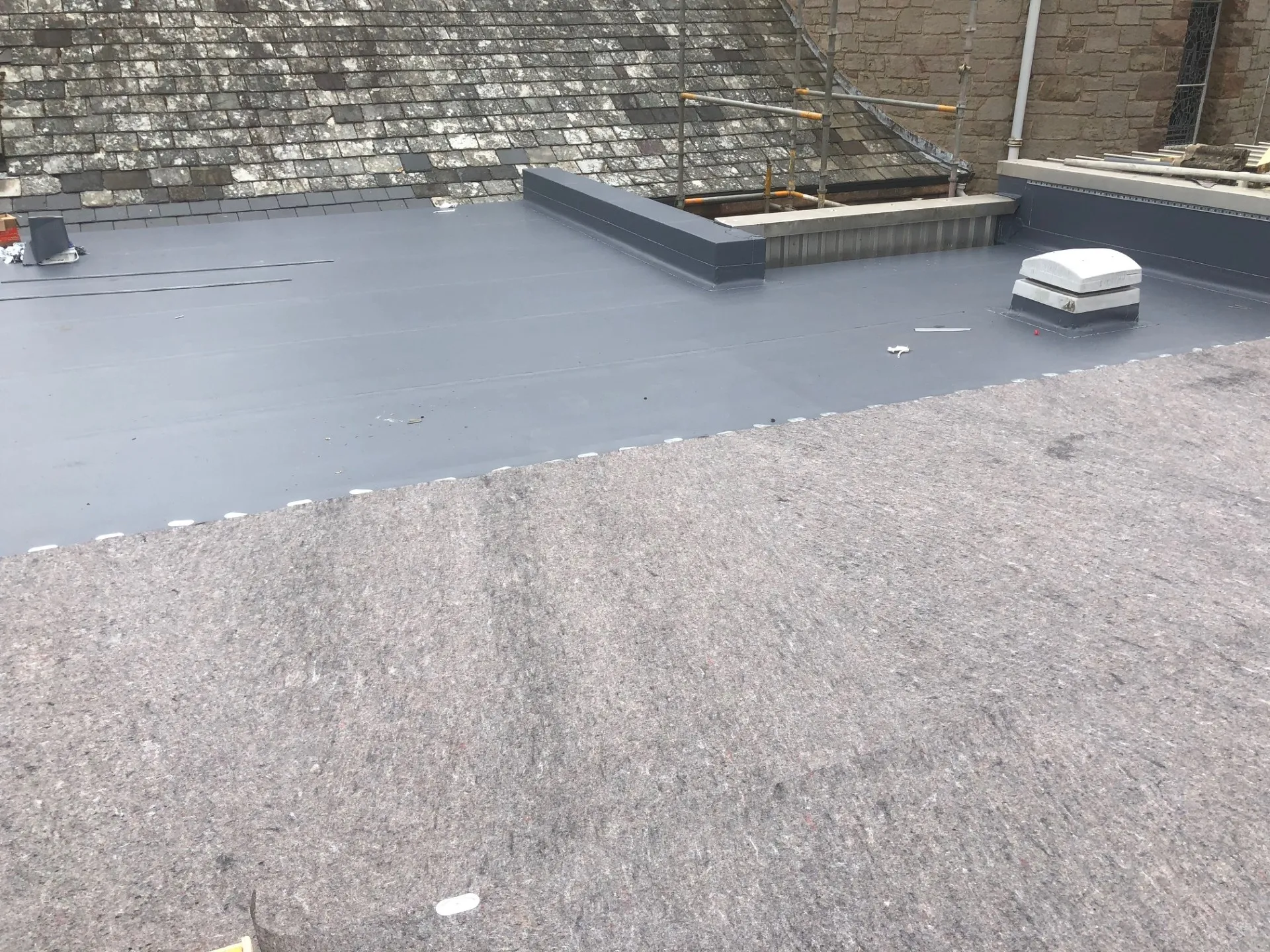
The standing-seam roof received insulation infill, vapour control, additional insulation, plywood, fleece and a mechanically fixed membrane overlay.

See the Fairmile project

How Modern Roofing Plans a Refurbishment

The buyer should know what happens between the first conversation and a buildable proposal. The process is kept practical and proportionate to the roof.

Discuss the building

We review the roof type, known leaks, previous work, operational restrictions, drawings or reports and the decision the client needs to make.

Inspect and investigate

The roof is inspected at the level required. That may include hands-on checks, core samples, testing, opening-up, drainage review or fixing assessment.

Compare viable routes

Repair, refurbishment, overcladding and replacement are compared against condition, disruption, technical risk, budget and expected service value.

Plan the delivery

The agreed scope is sequenced around access, safety, weather protection, materials, working zones, building use and final quality checks.

Access and safety

Edge protection, rooflights, fragile areas, MEWPs, scaffold, safety lines and future maintenance access are considered with the roofing work—not bolted on afterwards.

Weatherproof sequencing

Strip-off, opening-up and exposed areas need controlled sequencing so the building is protected while progress continues across the roof.

Operational continuity

Factories, schools, public buildings, nurseries, warehouses and commercial premises may need phased working areas, delivery controls and clear communication with site teams.

When refurbishment is not the right answer

Refurbishment should not be used to hide widespread saturated insulation, an unsound deck, extensive structural concerns, incompatible materials or a roof that has passed the point where retention represents good value. Where the evidence supports replacement, Modern Roofing will explain that route rather than force an overlay onto the wrong roof.

Review Industrial Roof Replacement Scotland

Tell Us What the Roof Is Doing — Not Which Product You Think You Need

Send photographs, previous reports, roof plans or a short description of the leaks and building use. Modern Roofing can explain whether the next step should be a discussion, inspection, technical survey or refurbishment proposal.

Industrial Roof Refurbishment Scotland FAQs

What is industrial roof refurbishment?

Industrial roof refurbishment upgrades an ageing roof while retaining suitable parts of the existing construction. Depending on the roof, it may include local strip-out, overlays, coatings, insulation upgrades, rooflight renewal, gutter works, detail renewal or overcladding.

When is refurbishment better than another repair?

Refurbishment may be more sensible when defects are no longer isolated, repair call-outs are increasing or several roof elements need coordinated renewal, but the wider roof or structure still has serviceable value.

Can both flat roofs and metal roofs be refurbished?

Yes, but the routes are different. Flat roofs may use membrane overlays, liquid renewal, recovery boards, insulation or selective strip-out. Metal and asbestos-cement roofs may need corrosion treatment, coatings, rooflight and gutter work or overcladding where the existing roof is suitable.

How do you know whether a roof overlay is suitable?

The existing covering, insulation, deck, moisture condition, adhesion, fixings, falls, drainage, condensation risk and structural capacity need to be considered. Core samples, opening-up, pull-out testing or other investigation may be required.

Can the building remain operational during refurbishment?

Often it can, but the answer depends on the building and scope. Access, fragile areas, weather exposure, production, tenants, stock, deliveries and internal protection all need to be planned before work begins.

What happens if refurbishment is not viable?

Modern Roofing will explain why repair or refurbishment is unlikely to provide good value and set out the replacement issues that need to be considered, including strip-off, programme, safety, internal protection and the new roof build-up.

When can liquid-applied roofing be used for refurbishment?

Liquid-applied roofing may be suitable where the existing surface can be prepared properly and has acceptable adhesion, moisture condition, compatibility, drainage and movement. It can work across complete roof areas or complex details, but it should not be used to conceal saturated insulation, failed substrates or defects that require removal.

Do Modern Roofing cover industrial roof refurbishment across Scotland?

Yes. Modern Roofing is based in Lanarkshire and supports industrial and commercial clients across Scotland, including Glasgow, Edinburgh, Ayrshire, Fife, Stirling, Falkirk, Perth, Dundee, Aberdeen and the wider Central Belt.