Modern Roofing (Scotland) Ltd

Industrial Roof Replacement Scotland

Full replacement for industrial and commercial roofs that are no longer worth patching, coating or covering over.

Replacement is the last resort, not the first recommendation. When the existing roof has failed beyond a sensible repair or refurbishment route, Modern Roofing plans the strip-off and new roof around the building below.

  • Flat-roof strip-off and renewal
  • Profiled metal roof replacement
  • Asbestos-cement roof replacement
  • Occupied and operational buildings
Established 2007Industrial and commercial roofing
Survey-LedReplace only when the evidence supports it
Live SitesProgramme and protection planned around operations
Real ProjectsFlat, metal and asbestos-cement renewal

Replace the roof because it needs replaced—not because it is the easiest thing to sell

Full roof replacement is justified when failure is widespread, the existing build-up is no longer reliable, concealed moisture or deck deterioration cannot be left in place, or an overlay would keep too much risk in the roof.

Modern Roofing looks at the roof covering, insulation, deck, fixings, drainage, rooflights, penetrations, structure, access and the activity below before setting the replacement route.

The specification then has to work as one roof: deck or support, vapour control, insulation, waterproofing or metal covering, drainage, perimeter details, rooflights and safe future access.

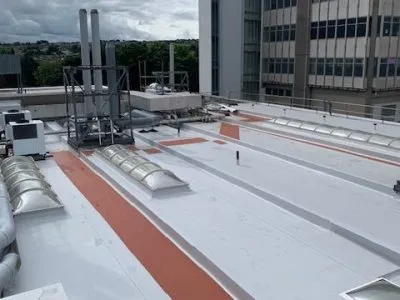
Completed commercial single-ply membrane roof by Modern Roofing
A complete replacement has to leave every layer and detail working together—not just a new surface.

When replacement is the right call

Replacement makes sense when the cost and risk of keeping the existing roof outweigh the value of repair, refurbishment or overcladding. The decision should come from the condition of the roof and the needs of the building, not from a standard sales package.

Three replacement routes, three different jobs

A failed flat roof, a corroded profiled-metal roof and an asbestos-cement roof do not share one replacement method. The roof type, structure, programme and building use set the route.

Flat-roof strip-off and rebuild

Where the existing membrane, insulation or deck cannot remain, the failed build-up is removed in controlled areas and replaced with a properly designed warm-roof or other suitable system.

  • Deck condition and repairs
  • Vapour-control layer
  • Insulation and falls
  • Membrane, outlets and details

Profiled metal roof replacement

Ageing sheets can be removed and replaced where corrosion, fixings, rooflights, laps or the wider roof condition make repair or overcladding a poor long-term option.

  • Sheet and fixing specification
  • Insulation and condensation control
  • Rooflights and flashings
  • Gutters, valleys and interfaces

Asbestos-cement roof replacement

Where asbestos-cement sheets must be removed rather than retained beneath an overclad system, the work needs a controlled plan for access, handling, disposal, weather protection and the new metal roof.

  • Survey and removal planning
  • Fragile-roof controls
  • Temporary weather strategy
  • New profiled-metal covering
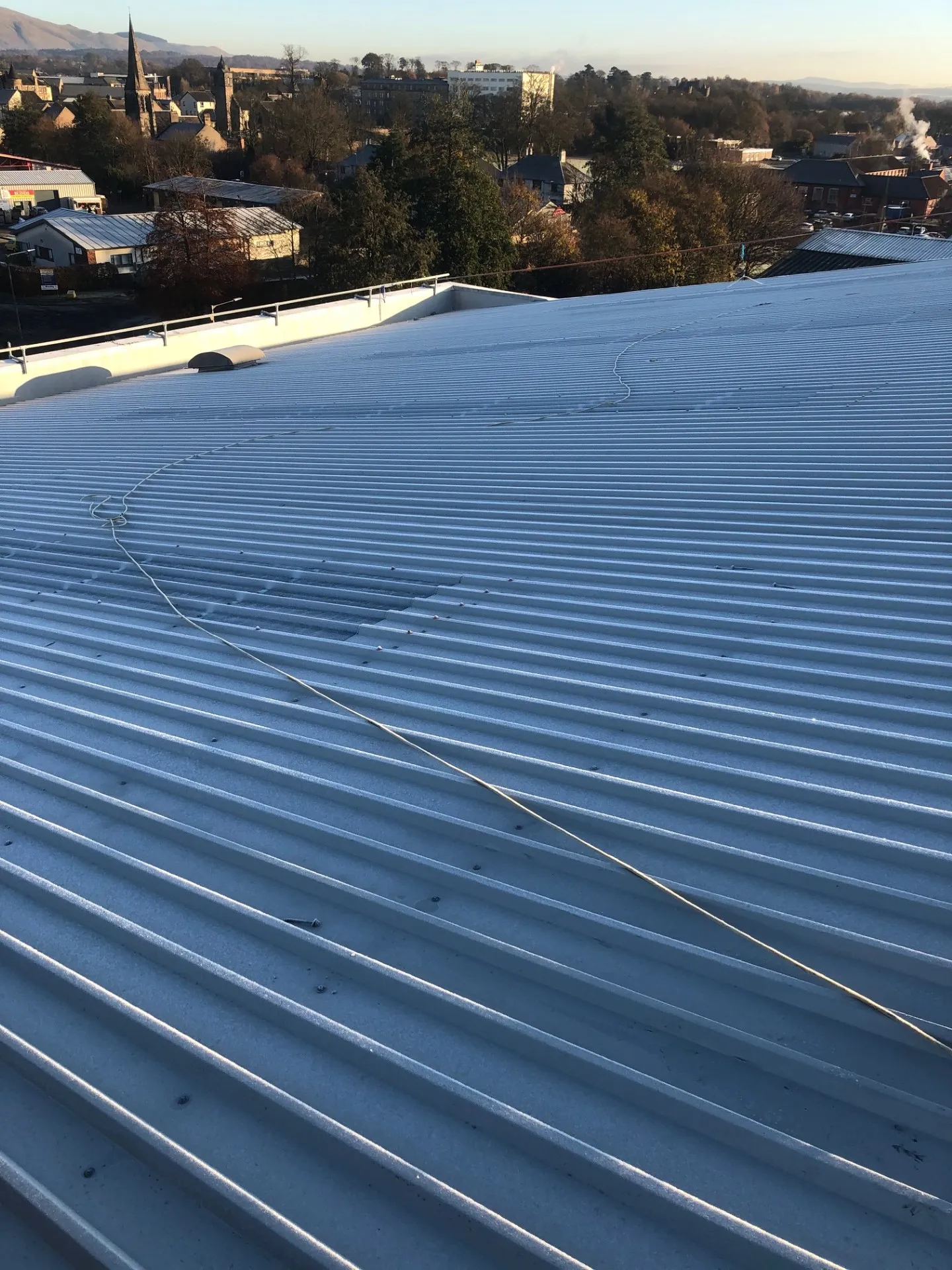
Metal roof renewal project by Modern Roofing Scotland
Metal-roof renewal work by Modern Roofing.
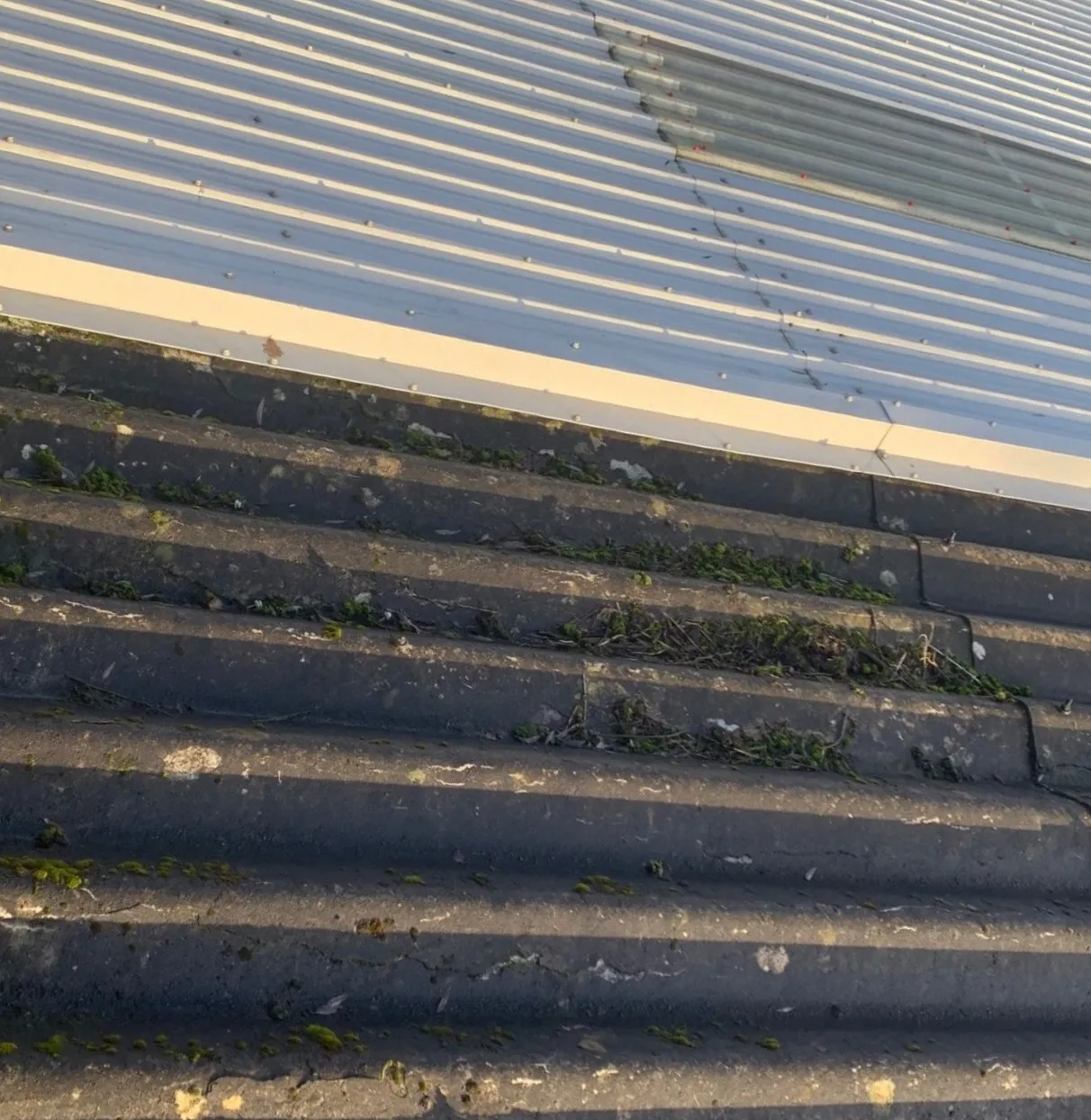
Existing asbestos-cement roof beside a new profiled metal overclad roof
Overcladding can remain a lower-disruption alternative where the existing roof and structure are suitable.

What we need to know before the first sheet or membrane comes off

The biggest replacement risks are usually hidden in the roof build-up, the programme or the building below. The survey and pre-start work should expose those risks before the roof is opened.

Roof and structure

  • Existing covering, layers and previous overlays
  • Insulation condition and trapped moisture
  • Deck, purlins, fixings and visible support condition
  • Drainage, falls, outlets, gutters and overflow routes
  • Rooflights, plant, penetrations and perimeter details

Building and programme

  • Production, stock, tenants, staff and sensitive areas below
  • Access, lifting, deliveries and exclusion zones
  • Weather exposure and temporary waterproofing
  • Phasing, working hours and shutdown constraints
  • Future maintenance, access and planned roof use

Uncertain whether the roof needs replaced?

An industrial roof survey can help separate a replacement case from a roof that still has a viable repair, refurbishment or overcladding route.

Replacement above a live building is a programme problem as much as a roofing problem

A sound replacement plan limits how much roof is exposed, protects the areas below and keeps the client informed when weather or site conditions change.

Stage 1

Agree the sequence

Set access, loading, work zones, internal protection and the order in which roof areas will be opened.

Stage 2

Open controlled areas

Remove only the area that can be made secure and watertight within the agreed weather window.

Stage 3

Deal with what is uncovered

Record concealed defects, agree necessary changes and keep unsafe or unsuitable material out of the new build-up.

Stage 4

Close out properly

Complete details, drainage, checks, snagging and handover information before the work zone moves on.

Real Modern Roofing replacement work

These projects show different roof types and operating constraints. They are more useful than a generic promise because they show where full renewal was actually chosen.

Occupied public building

Lanark Sheriff Court

The existing roof was stripped off and replaced with a new single-ply membrane system while the court remained operational.

Completed
2024
Route
Full strip-off and replacement
Constraint
Occupied court building
Industrial metal roofing

O-I Glass, Alloa

Approximately 1,700m² of industrial roofing was replaced with a new Euroclad metal roof system.

Completed
2025
Scale
Approx. 1,700m²
System
Euroclad metal roof
Asbestos-cement renewal

Carlton Bingo, Dumbarton

Approximately 800m² of asbestos-cement roofing was carefully stripped and replaced with a new profiled-metal roof.

Completed
2016
Scale
Approx. 800m²
Route
Strip and metal replacement

View Modern Roofing case studies

Repair, refurbish, overclad or replace?

Replacement is the most disruptive route, so it should only win when the evidence and long-term cost support it.

RouteUsually suitsReason to reject it
Targeted repair Localised defects where the wider roof remains serviceable. Failure is widespread, recurring or linked to the wider build-up.
Refurbishment Ageing roofs that can be prepared, upgraded or overlaid without retaining unacceptable risk. The insulation, deck or covering cannot remain in the roof.
Overcladding Metal or asbestos-cement roofs where the existing structure and details can support a new outer roof. Structural, moisture, drainage or detailing issues make retention unsuitable.
Full replacement End-of-life or failed roofs where removal and a complete new build-up provide the sounder route. A less disruptive option can deliver the required service life without leaving hidden risk.

Industrial Roof Replacement FAQs

When does an industrial roof need full replacement?

Full replacement becomes the sensible route when failure is widespread, the insulation or deck is affected, the covering has reached the end of its service life, or the roof is not suitable for a durable repair, refurbishment or overcladding solution.

Can an industrial roof be replaced while the building remains in use?

Often, yes. The programme has to account for the roof type, weather exposure, internal protection, access, deliveries, lifting, exclusion zones and the activity below. Some areas may need to be phased or temporarily isolated.

Do you always remove the existing roof covering?

No. Strip-off is appropriate where the existing roof must be removed, but some buildings may be better suited to refurbishment or overcladding. Modern Roofing checks the existing build-up and building constraints before recommending the route.

Can insulation and rooflights be upgraded during replacement?

Yes. Replacement can provide an opportunity to improve the roof build-up, insulation, vapour control, rooflights, drainage and perimeter details, subject to the design and the requirements of the building.

Do you replace flat and metal industrial roofs?

Yes. Modern Roofing carries out replacement work on suitable commercial flat roofs, profiled metal roofs and asbestos-cement roof areas, with the specification based on the existing construction and the needs of the building.

What happens if the deck is damaged after strip-off begins?

The survey and opening-up work should reduce surprises, but concealed deterioration can still be found. Any affected deck or support areas are recorded, made safe and dealt with through an agreed change before the new roof build-up continues.

Is roof replacement better than overcladding?

Not automatically. Overcladding can reduce disruption where the existing roof and structure are suitable. Replacement is more appropriate where the existing covering or build-up needs to be removed or where overlay would leave unacceptable risk.

What information helps with an initial replacement enquiry?

Useful information includes the site address, roof type, approximate area, known leak history, building use, access restrictions, previous reports, photographs and any dates that affect the programme.

Discuss an industrial roof replacement

Send the site address, roof type, approximate area, photographs and any programme constraints. Modern Roofing can advise whether the next step should be a survey or a replacement discussion.