Metal Roof Repairs
Localised work to suitable damaged sheets, laps, fixings, flashings and penetrations. Corrosion or cracking must be assessed beyond the visible defect before a repair route is selected.
Modern Roofing investigates and repairs suitable defects on metal, flat, factory and warehouse roofs.
Industrial roof leaks often travel through laps, insulation, purlins, gutters or internal linings before they appear inside the building. The visible drip may be some distance from the actual defect.
Modern Roofing checks the roof covering and the surrounding details before recommending work. Depending on the roof, this can include sheets, fixings, laps, flashings, membranes, outlets, rooflights, penetrations, gutters and previous repairs.
A local repair can be good value where the defect is isolated and the surrounding roof remains serviceable. Where failures are repeated or widespread, we explain when a detailed survey, refurbishment, overcladding or replacement should be considered instead.
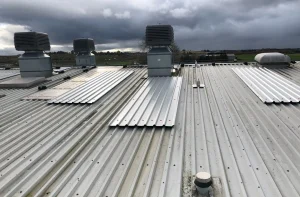
Modern Roofing provides industrial roof repairs across Scotland for suitable defects affecting metal sheets, flat-roof membranes, rooflights, flashings, fixings, gutters, outlets and penetrations. The correct repair depends on the roof type, defect, surrounding condition and route of water ingress.
The repair material and method must suit the existing roof. One generic sealant or coating is not an answer for every defect.
Localised work to suitable damaged sheets, laps, fixings, flashings and penetrations. Corrosion or cracking must be assessed beyond the visible defect before a repair route is selected.
Compatible repair work for suitable membrane punctures, failed welds, laps, outlets, upstands, penetrations and localised felt defects. Recurring leaks may require wider investigation.
Investigation of joints, outlets, lining defects, corrosion, blockages and overflow routes. Repeated gutter leakage may need a planned lining or drainage solution rather than another patch.
Checks around rooflights, flashings, raggles, kerbs, vents, pipes and other penetrations where failed seals, movement or poor previous work can allow water into the building.
Short-term making-safe work can reduce immediate water entry where conditions allow, but it should not be presented as a permanent repair when the substrate, wider roof or surrounding details still require investigation. Modern Roofing will explain the limitations of any temporary work.
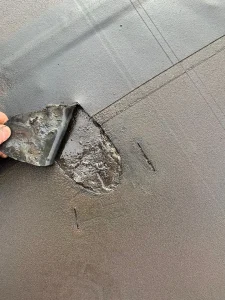
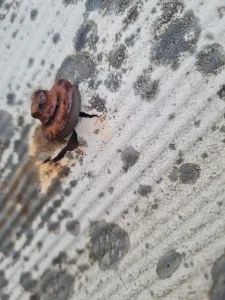
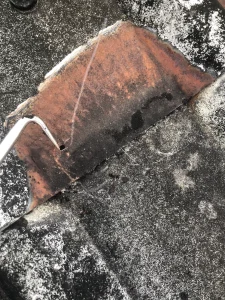
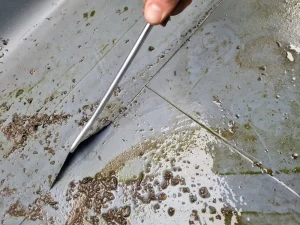
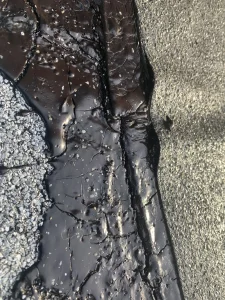
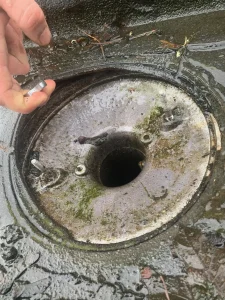
These are real defect types photographed by Modern Roofing. The image may show the symptom; the repair decision still depends on the surrounding roof condition and safe access.
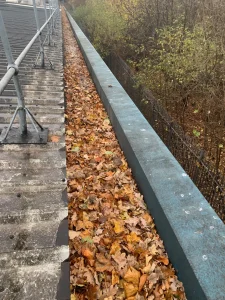
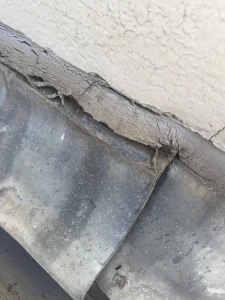
The route depends on the urgency, information available, roof type and whether safe access can be arranged for a focused repair inspection.
Provide the address, building use, known roof type, location of the leak, when it occurs and any useful photographs or previous reports.
We discuss access, fragile areas, production, tenants, stock and other constraints that affect how the suspected roof area can be checked safely.
The roof covering and surrounding details are inspected to distinguish the visible symptom from the likely route of water ingress.
Where a targeted repair is sensible, the work can be scoped. Where evidence points to a wider issue, we explain the appropriate survey or renewal route.
Repeat leaks are often blamed on the repair material when the deeper problem is diagnosis, preparation or a wider roof condition that was never addressed.
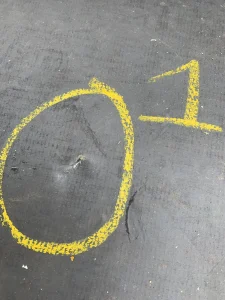
A repair must suit the existing roof material and the condition of the surface receiving it. Metal sheets, fibre-cement sheets, single-ply membranes, felt, liquid-applied systems, gutters and sealant details each have different preparation and compatibility requirements.
A targeted repair is valuable when the defect is localised. It becomes false economy when repeated failures show that the wider roof is no longer serviceable.
| Route | When it may make sense | What should be checked |
|---|---|---|
| Targeted repair | The defect is localised and the surrounding roof remains serviceable. | Leak route, roof material, substrate, preparation, surrounding condition, access and whether the repair can be made durable. |
| Detailed roof survey | The leak source is uncertain, failures recur or the client needs documented condition evidence. | Roof history, drainage, build-up, moisture, core samples or integrity testing where suitable, and the extent of defects. |
| Refurbishment | Several defects exist but a condition-led upgrade may avoid complete replacement. | Wider roof condition, moisture, deck, fixings, drainage, rooflights, compatibility and expected service life. |
| Overcladding | A suitable metal or asbestos-cement roof can support a properly designed new external covering. | Structure, fixing performance, roof build-up, insulation, condensation, gutters, rooflights and details. |
| Replacement | The roof is at end of life or unsuitable for a reliable repair or refurbishment. | Strip-off risk, temporary weathering, internal protection, programme, materials and long-term cost. |
Use the survey page where the decision requires a wider appraisal, testing, opening-up or a structured report.
Use the refurbishment page for ageing roofs with several defects that may still avoid full replacement.
Use the replacement page where the existing roof is beyond a sensible repair, overlay or refurbishment route.
These public Modern Roofing images show localised repair work on different industrial roof coverings. They demonstrate repair capability without suggesting that one method suits every roof.
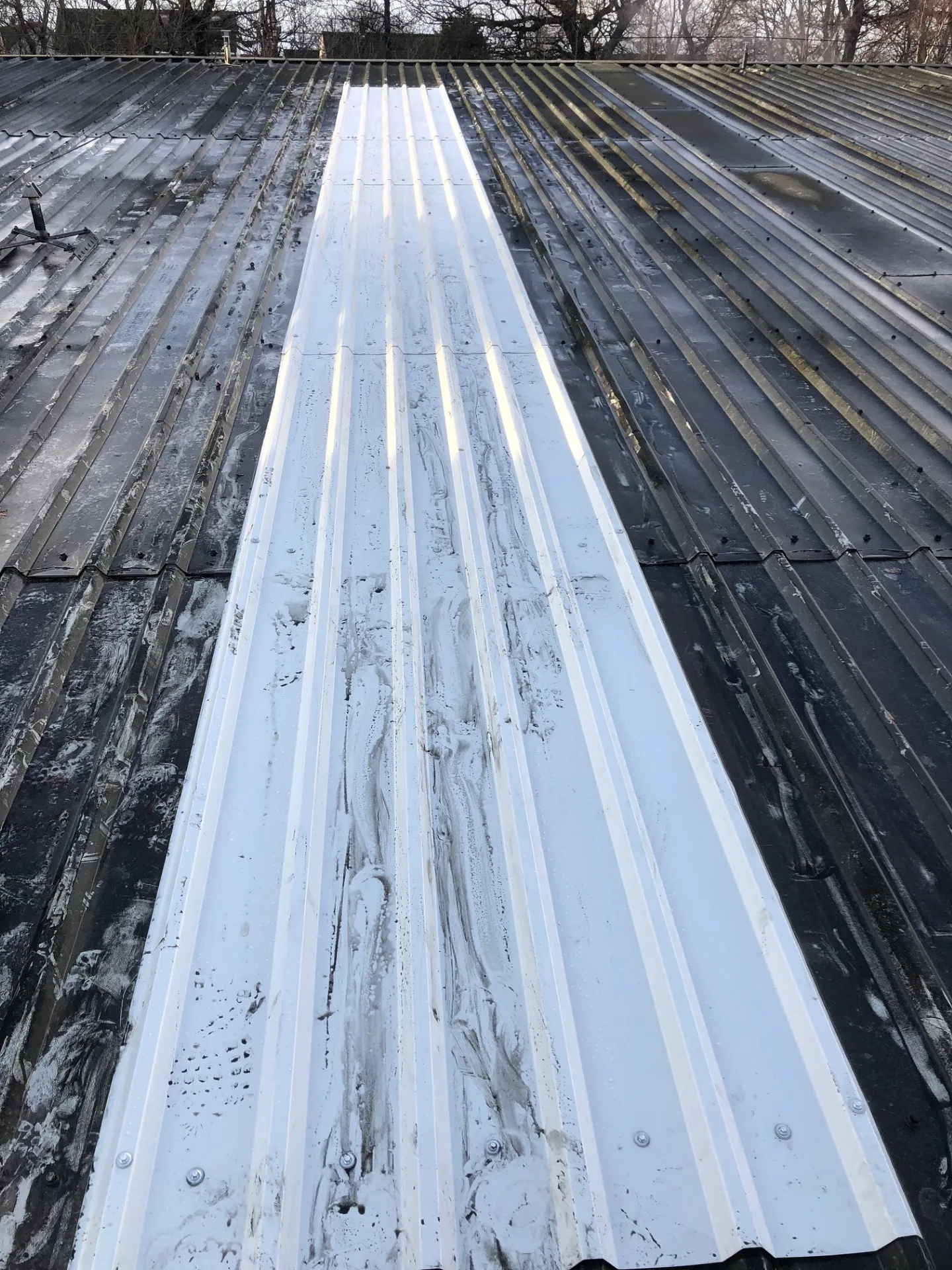
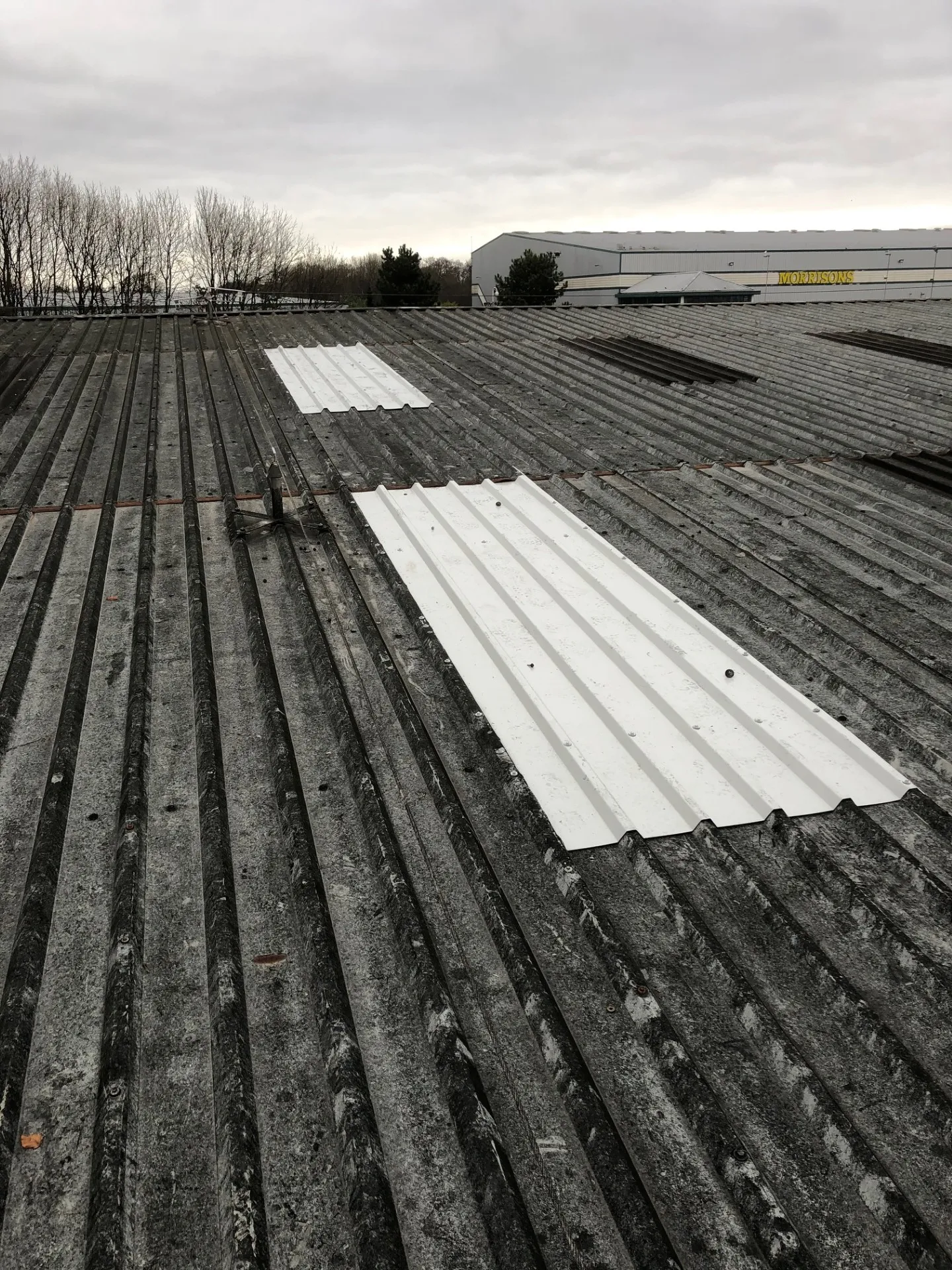
Useful information helps Modern Roofing understand whether the next step is a focused repair visit, a wider survey or a planned renewal discussion.
Send the site location, roof type, leak history and any useful photographs. Modern Roofing can then discuss the most appropriate next step without assuming the whole roof needs replaced.
Modern Roofing supports factories, warehouses and commercial buildings across Scotland with roof surveys, repairs, refurbishment, overcladding, gutter lining, roof testing and planned maintenance.
Yes, where the defect and surrounding roof condition allow a suitable repair. The first step is identifying the likely route of water ingress and matching the repair to the roof material and failure.
Modern Roofing works on suitable metal-sheet, fibre-cement, single-ply membrane, felt, liquid-applied and other commercial roof defects. The repair method depends on compatibility, preparation, access and the wider roof condition.
Yes. Repair investigation can include gutter joints, outlets, local lining defects, corrosion, blockages and surrounding waterproofing. Widespread gutter failure may require planned gutter lining rather than another patch.
Water can travel through laps, insulation, purlins, gutters, decks or internal linings before it becomes visible. The internal stain is evidence of water ingress, but it does not always identify the entry point.
Short-term making-safe or temporary weathering may be possible where conditions, access and the roof material allow. Any limitations should be explained because temporary work is not a substitute for a durable repair or wider renewal where those are required.
A wider route should be considered when defects are repeated, widespread or linked to failed roof coverings, saturated insulation, extensive corrosion, poor drainage or an end-of-life roof. A survey can help establish the extent of the problem.
Often, subject to the roof, access and project conditions. Production, tenants, stock, machinery, deliveries, internal protection, fragile areas and weather exposure should be considered when planning the inspection and repair.
Modern Roofing is based in Lanarkshire and undertakes suitable industrial and commercial roof repair work across Scotland, including Glasgow, Edinburgh, Lanarkshire and the wider Central Belt.
Share the site location, roof type, leak history and any useful photographs. We can then discuss whether the next step is a focused repair inspection or a wider roof appraisal.