Safety Line Installation Scotland
Roof safety line installation, safety line inspection and safety line recertification support for commercial and industrial roofs across Scotland.
Modern Roofing provides a roofing-led safety line installation service for commercial, industrial and public sector buildings where safe roof access is needed for inspections, maintenance, repairs, gutter works, plant servicing and general roof access planning. This can include fall restraint posts, fall arrest posts, Mansafe systems and horizontal lifelines, depending on the roof layout and intended use. We coordinate the safety line package, specialist checks and recertification requirements alongside the roofing detail.
We understand the roof as well as the safety line detail. That matters on metal roofs, membrane roofs and larger non-domestic buildings where the roof interface, sealing and waterproofing details must be properly considered as part of the finished installation.
Roof safety line support for:
- Safety line installation on commercial and industrial roofs
- Roof safety line inspection and condition review
- Safety line recertification support for existing systems
- Fall restraint posts, fall arrest posts and horizontal lifeline systems
- Metal roof and membrane roof safety line details
- Factories, warehouses, plant areas and commercial buildings
- Access planning for inspections, maintenance and repairs
Roof Safety Line Installation, Inspection and Recertification for Commercial and Industrial Buildings
A roof safety line system provides a controlled attachment route for trained users who need to access a roof for inspections, planned maintenance, gutter clearing, plant servicing, roof repairs or general upkeep. On suitable buildings, a properly planned system can make future roof access more controlled and more practical.
Modern Roofing provides safety line installation support as part of wider commercial and industrial roofing works, with inspection and recertification support where existing systems need reviewed. We coordinate the correct approach for the building, arrange specialist input where required and ensure the roof interface, membrane details, metal roof fixings and sealing works are properly considered as part of the finished installation.
This is important because a safety line is not just a piece of metalwork fixed to a roof. It needs to be right for the building, right for the roof system and right for the way the roof will be used in future.
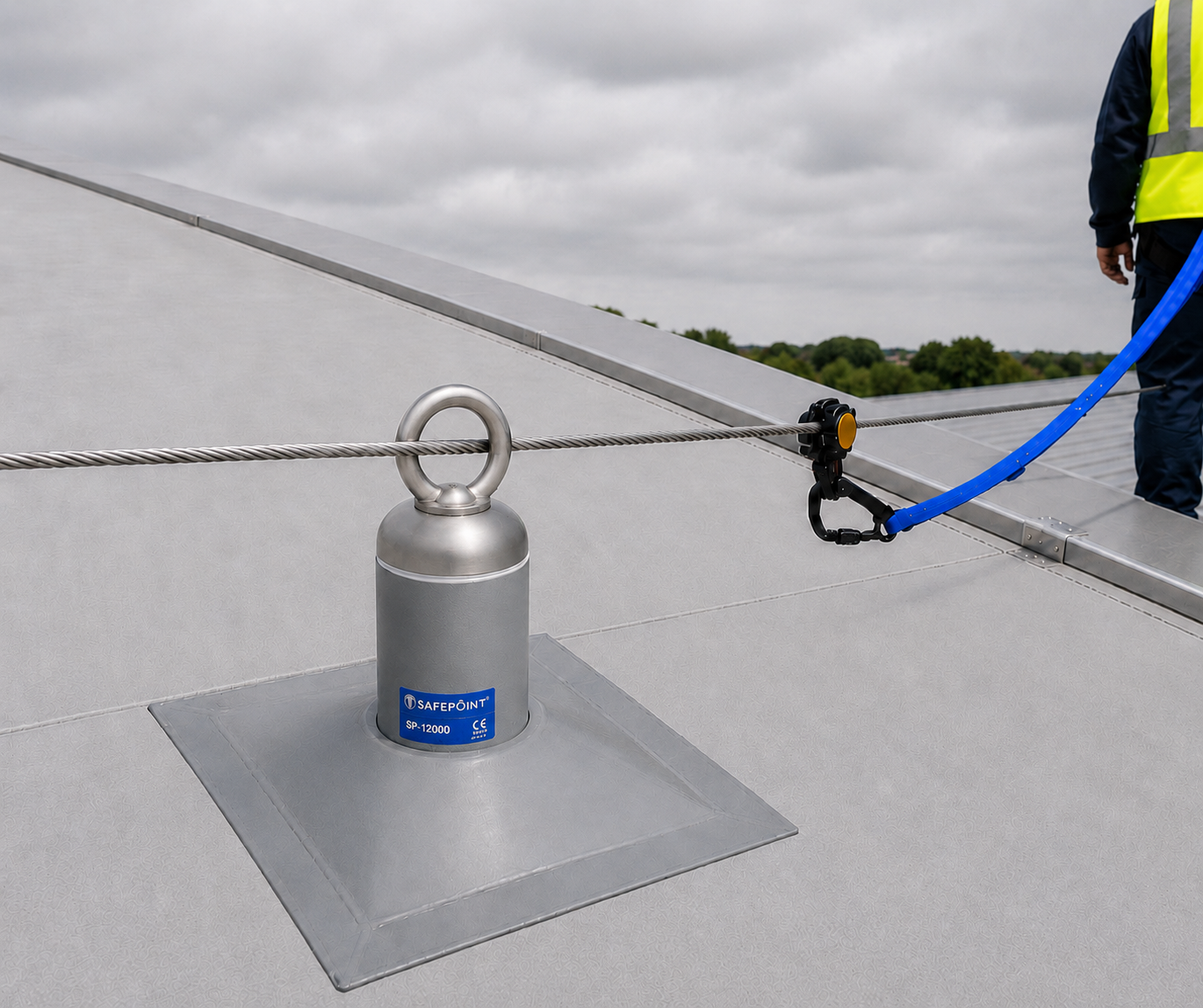
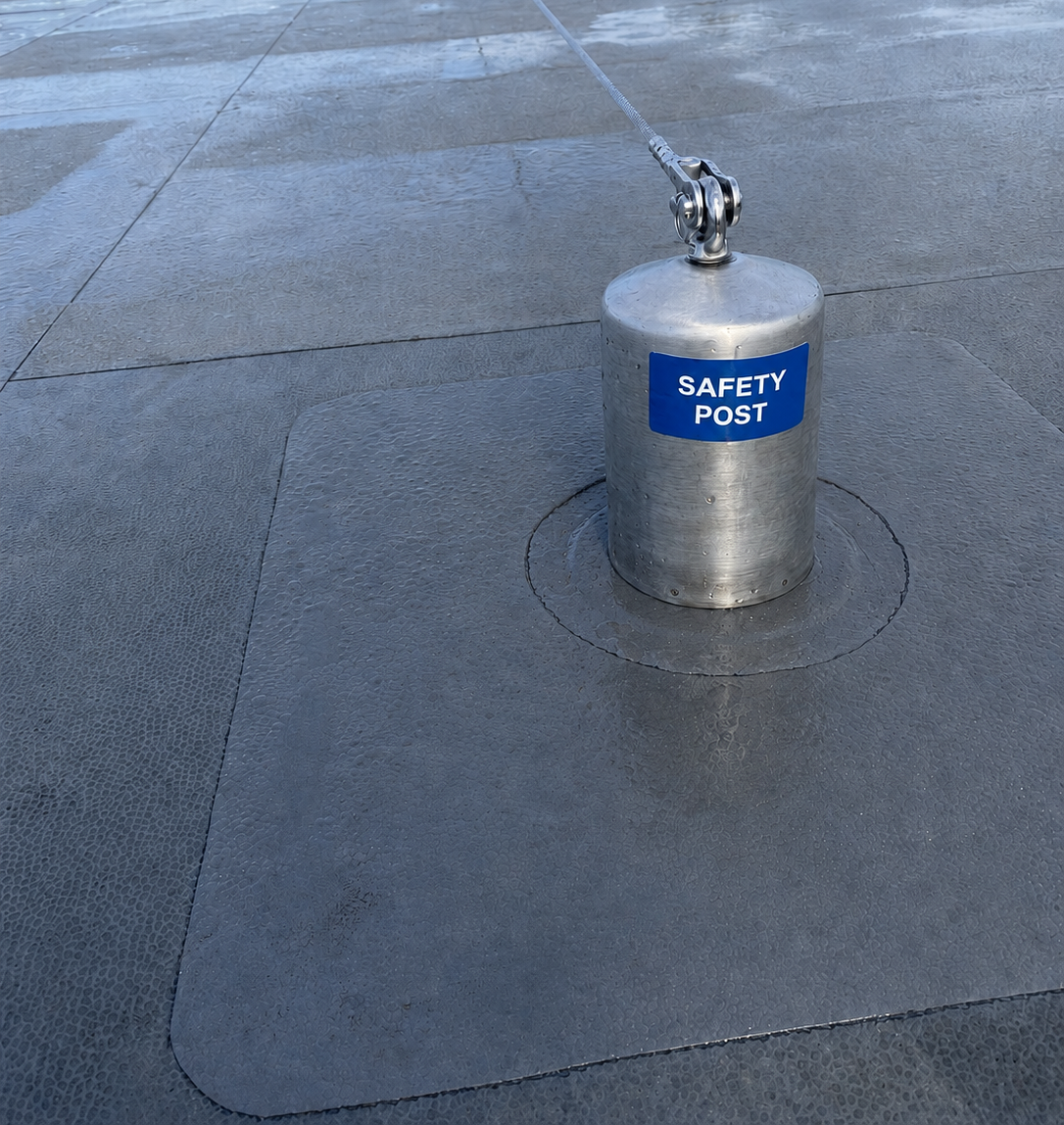
Mansafe safety line post detail installed through a membrane roof area.
Safety line installation, inspection and recertification Scotland
Modern Roofing provides safety line installation in Scotland together with roof safety line inspection and safety line recertification support for commercial and industrial roofs. This includes safety line package coordination, specialist system checks where required, metal and membrane roof detailing, sealing works and access planning for future inspection and maintenance.
Who Needs a Roof Safety Line System?
Safety line systems are commonly considered where a commercial or industrial roof needs repeat access. That could be for gutter cleaning, roof surveys, roof repairs, plant maintenance, solar panel access, rooflight checks, safety line inspection or annual maintenance visits.
Gutters and roof inspections
Large roofs often need regular gutter cleaning, outlet checks, leak investigation and planned roof inspections. A safety line can help create a more controlled route for trained users.
Plant, solar and rooftop equipment
Where plant, vents, services or solar equipment are located on the roof, access routes need to be considered properly rather than treated as an afterthought.
Repairs and planned maintenance
Recurring roof access for repairs, surveys and maintenance can be planned more safely when the access route, rooflights, gutters, edge risks and roof construction are reviewed together.
Why a roofing contractor matters
A safety line system has to work with the roof, not against it. Modern Roofing understands the roof covering, sheet profile, waterproofing, fixings, gutter routes and maintenance areas, so the safety line package can be coordinated alongside the wider roofing condition. We deal with the roof interface, sealing and waterproofing detail, while specialist system checks and certification requirements can be arranged where required. That is especially useful when safety line works are linked to industrial roof surveys, metal roofing systems, single ply membrane roofs or planned roof repairs.
What Is a Roof Safety Line System?
Roof safety line systems are typically used to create an attachment route across suitable roof areas for trained users carrying out inspection, maintenance and repair tasks. Depending on the building and the design, the system may form part of a fall restraint, fall arrest or controlled roof access strategy.
Horizontal lifeline systems
A horizontal lifeline system allows a user to move along a defined route while remaining attached to the system across an area of roof.
Roof access planning
The route needs to suit the roof layout, the areas people need to reach and the tasks they are carrying out on the building.
Detail matters
Fixings, brackets, posts, cable runs and waterproofing details all need to be considered properly as part of the finished installation.
Important point
Every building is different. A safety line system should be planned around the roof construction, access route, areas of risk and future maintenance needs rather than treated as a one-size-fits-all detail.
Fall Restraint Posts and Fall Arrest Posts for Commercial Roofs
Building owners and facilities teams often search for fall restraint posts, fall arrest posts, Mansafe posts or horizontal lifeline posts when they need permanent roof access protection. These terms describe the roof anchors or posts that form part of a designed safety-line system, but the way the complete system is laid out and used determines whether it operates as restraint or arrest.
Fall restraint or work restraint
A fall restraint system is arranged to restrict the user’s movement so they cannot reach an unprotected roof edge, fragile rooflight or other position from which they could fall. HSE guidance commonly calls this work restraint. Where the roof layout allows it, preventing the fall is normally preferable to relying on equipment that arrests a fall after it happens.
Fall arrest systems
A fall arrest system is intended to stop a person after a fall has started. The design therefore needs to consider available fall clearance, the position of the line and posts, compatible harnesses and connecting equipment, trained users and how a prompt rescue would be carried out following a fall.
Roof posts are only one part of the system
A roof safety system may include end posts, intermediate posts, anchors, cable, corners, travellers, energy-absorbing components, user equipment, signs and access controls. Some proprietary roof-post and horizontal-lifeline systems can be designed for either restraint or arrest, but that must be confirmed by the system design and manufacturer requirements. A post should not be assumed suitable for fall arrest simply because it is already fixed to the roof.
Roof construction and waterproofing still matter
The correct fall restraint or fall arrest post arrangement depends on the roof type, structure, sheet profile, membrane build-up, fixing method, access route and areas that need to be reached. Modern Roofing can coordinate the safety-line package and specialist design input while managing the metal-roof or membrane waterproofing detail around the posts and anchors.
Why Install a Safety Line System?
Working at height remains one of the highest-risk activities in roofing and building maintenance. A properly planned roof safety line system helps building owners create a controlled access route for trained users carrying out roof inspections, maintenance and repair tasks. It also makes future safety line inspection and recertification easier to manage because the system, access route and roof detail have been considered from the start.
Standards and guidance considered
A safety line system should be planned around the building, roof construction, access route and future maintenance requirements. The following regulations, standards, guidance and manufacturer instructions are commonly considered when planning safe roof access, inspection, testing and recertification.
Typical reasons for roof safety lines
Commercial and industrial roofs often need repeat access. A safety line system can make those visits more controlled, especially where the same roof areas need to be reached each year.
For buildings with ongoing or annual maintenance requirements, a safety line system is often an important part of safe, practical roof access planning. Existing systems should also be inspected and recertified where required so building owners can keep records up to date.
Safety Line Installation on Metal Roofs
Metal roof safety line systems are commonly needed on warehouses, factories, industrial units and larger commercial buildings where regular access is required for gutters, rooflights, plant, leaks, inspections and maintenance.
On metal roofs, the safety line fixing detail must suit the roof sheet profile, the roof build-up and the access route required. Modern Roofing ensures the roofing detail is properly managed so the installation does not create avoidable leak risks or future maintenance issues.
- Metal roof safety line systems for factories and warehouses
- Roof access routes for gutters, plant and inspection tasks
- Installation details that take account of the roof sheet profile
- Safety line inspection support for existing metal roof systems
- Practical roofing knowledge built into the installation
- Support for commercial and industrial maintenance planning
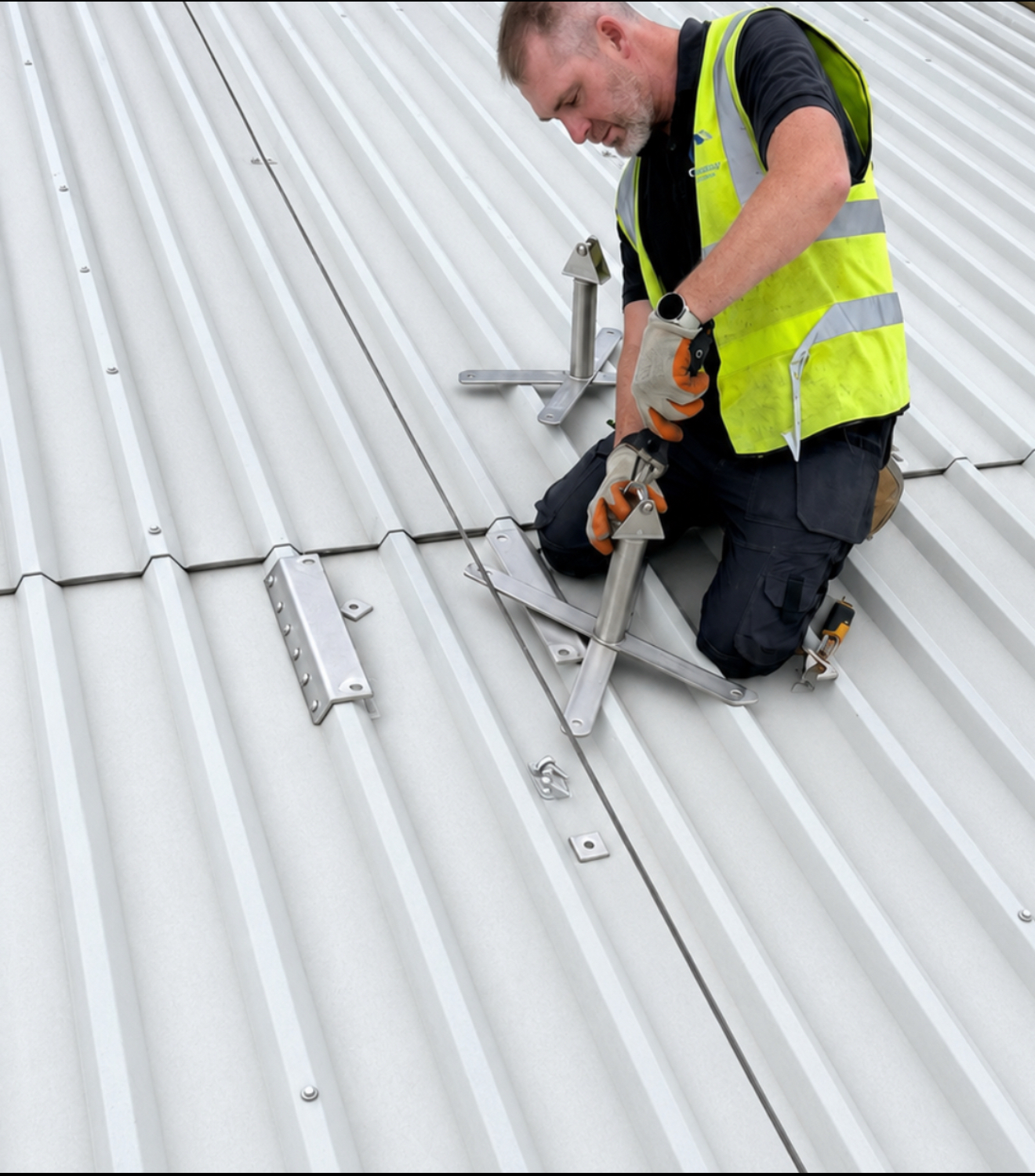
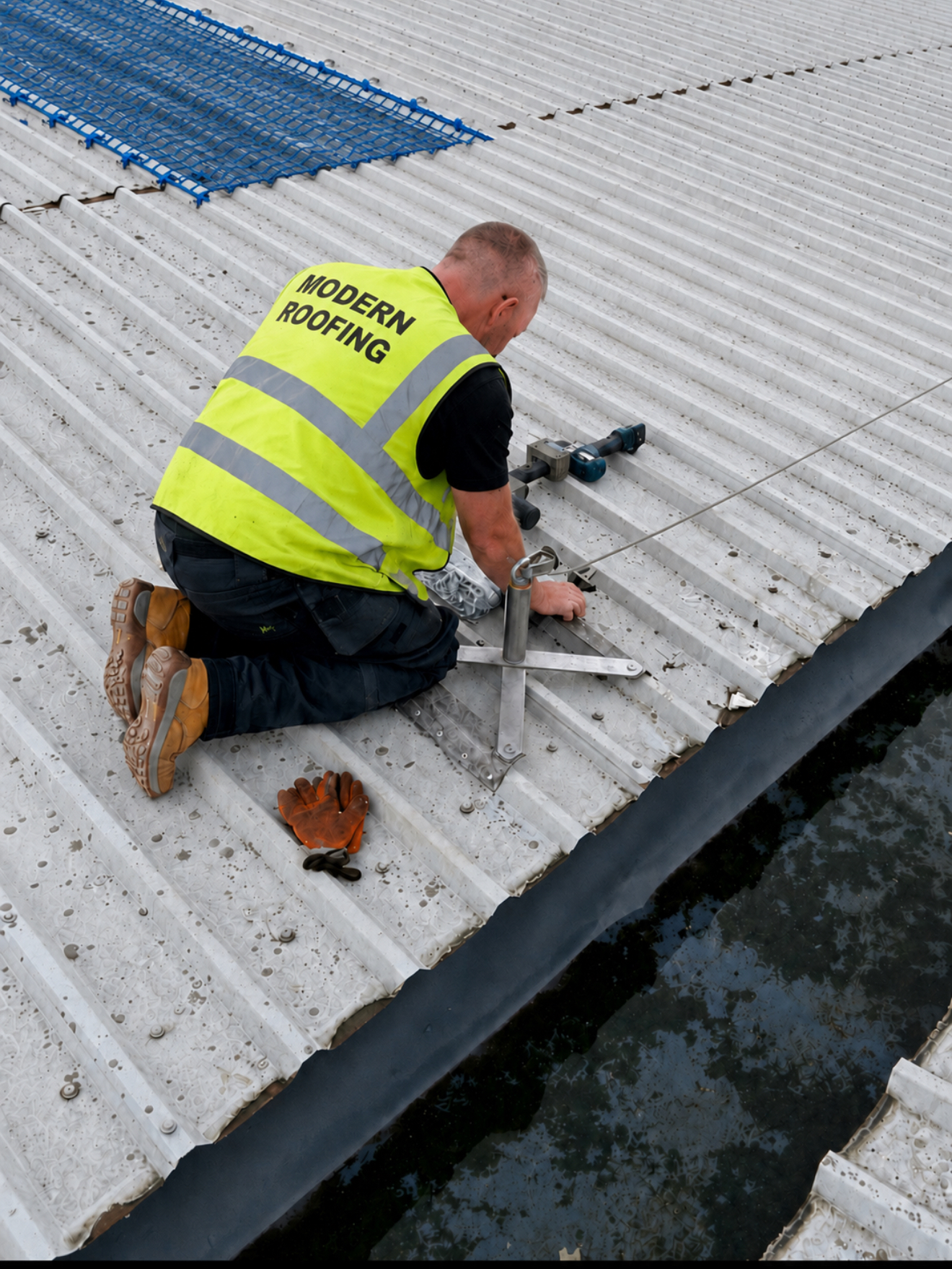
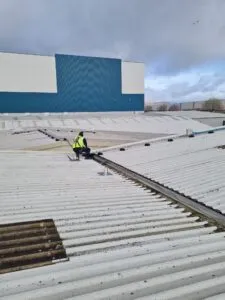
Roof safety line works being carried out on a profiled metal roof, with the roof detail managed as part of the installation.
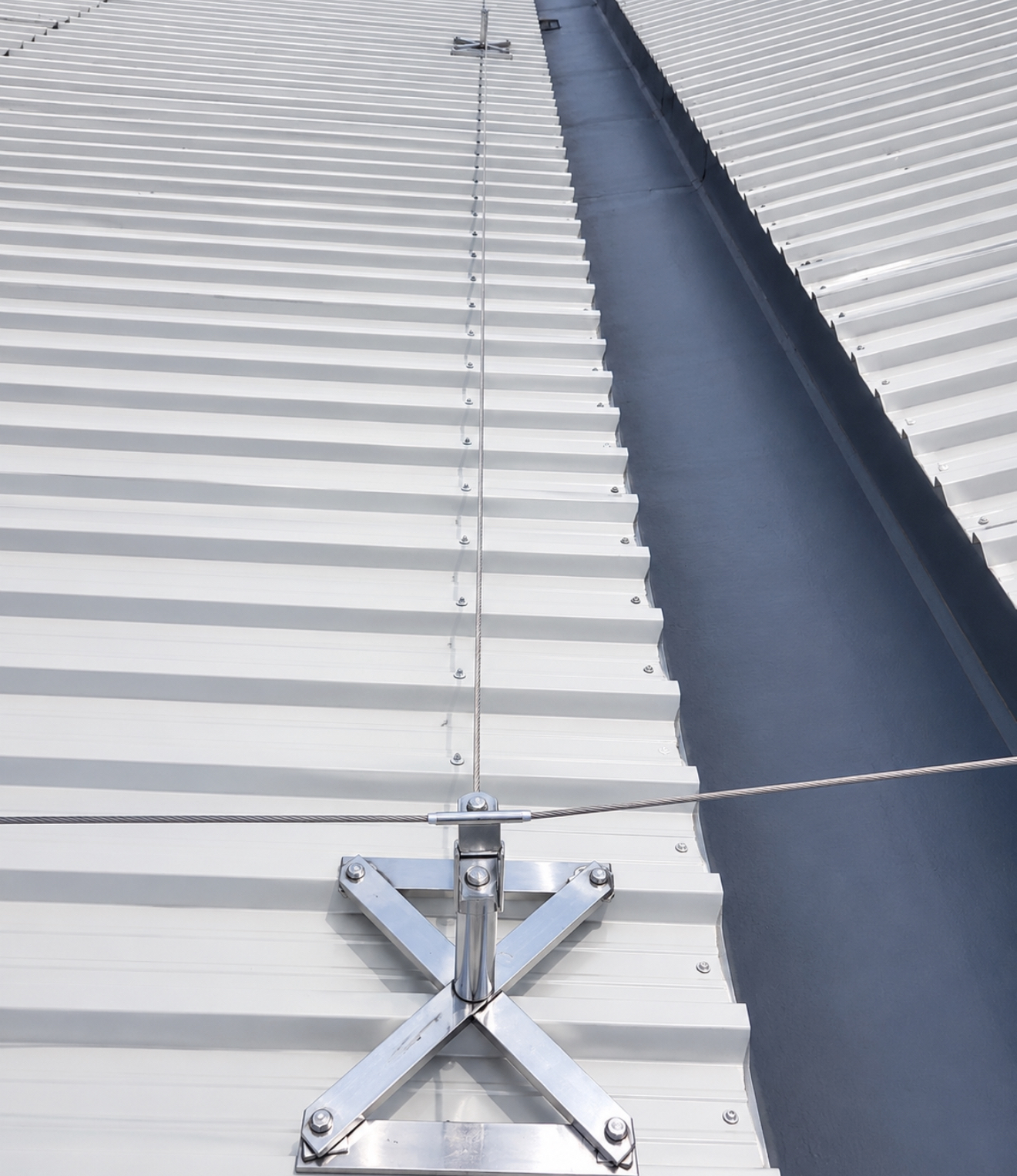
Completed safety line installation on a metal roof area, with the fixing and sealing detail formed as part of the roofing package.
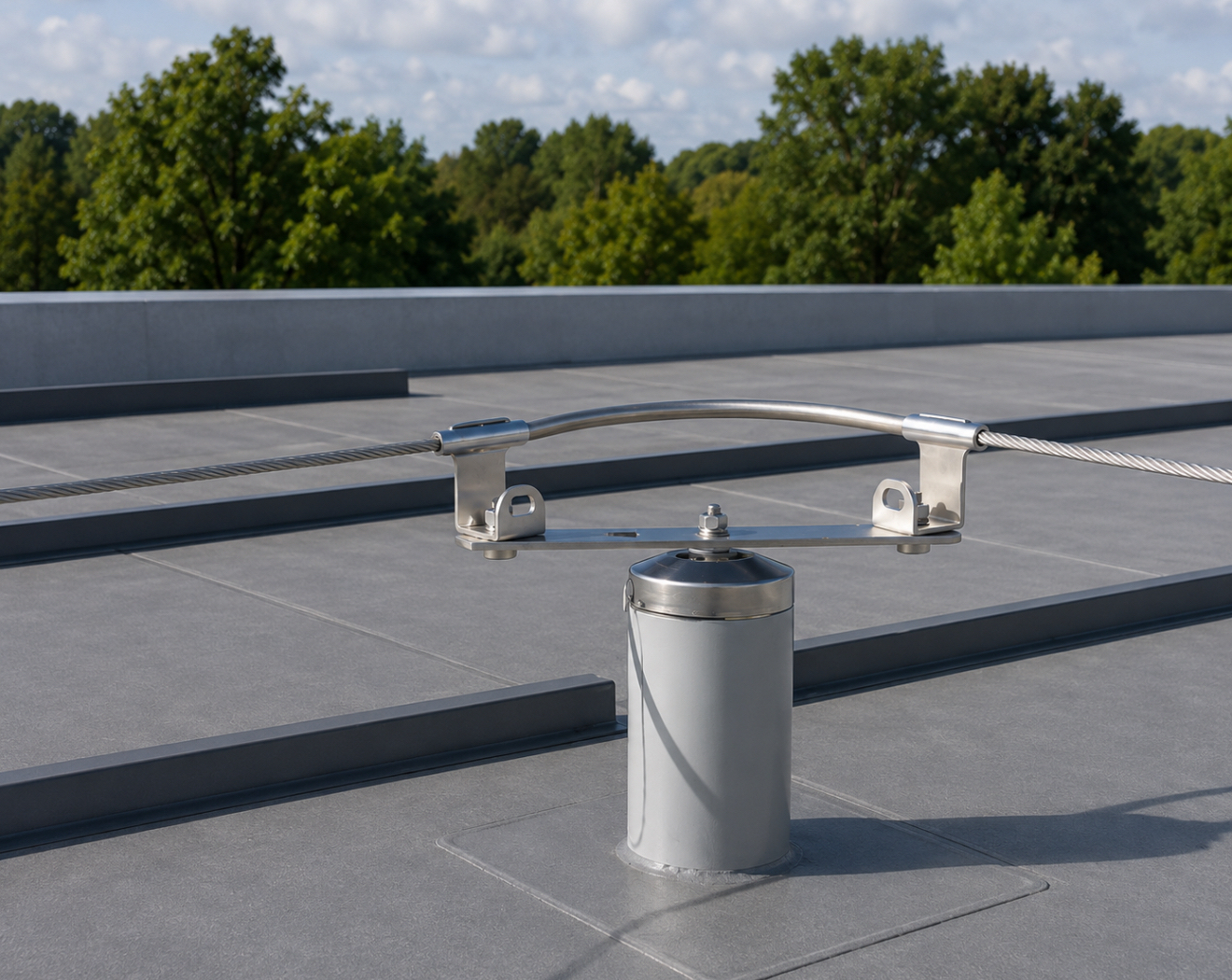
Safety line detail installed through a membrane roof area.
Safety Line Details on Membrane Roofs
On membrane roofs, the waterproofing detail around the safety line post or base is critical. Modern Roofing’s role is to ensure the roof detail, sealing and membrane finish are properly dealt with so the roof remains weather-tight.
Modern Roofing’s experience with single ply membranes and flat roof waterproofing is useful where a safety line system needs to be incorporated into a membrane roof without losing sight of the roof covering itself.
Waterproofing awareness
The membrane detail around the penetration or base needs to be clean, neat and properly finished.
Roofing first mindset
Safety line works are better managed when the roofing contractor understands both the roof system and the access requirement.
Our Safety Line Installation Process
A good roof safety line installation starts with understanding the building, the roof and how the system will actually be used.
Survey the roof
We review the roof type, layout, access points, gutters, rooflights, plant and the areas the user needs to reach.
Plan the route
The safety line route is planned around the building and the tasks people need to carry out on the roof.
Manage the installation package
The works are coordinated with proper attention to fixings, roof details, cable runs, sealing, system labelling and the finished roof surface.
Support future maintenance
We can also support clients with ongoing safety line inspection coordination, roof maintenance planning, system review, records and recertification support.
Need advice on roof safety lines?
If you need a new safety line system, want an existing installation reviewed, need safety line inspection support or need roof access advice as part of wider roofing works, Modern Roofing can help coordinate the right approach and make sure the roof detail is properly dealt with.
Safety Line Inspection, Testing & Recertification
Safety line inspection and recertification is more than a quick visual check. Depending on the system type, manufacturer’s instructions and site records, inspection may include cable tension checks, torque checks, swage and terminal inspection, anchor and post checks, shock absorber or fall indicator checks, labels, tags, documentation and roof interface review.
Modern Roofing can coordinate safety line inspection support, Mansafe testing support, horizontal lifeline inspection and safety line recertification planning for commercial and industrial buildings. Our roofing background means the line system, roof interface and waterproofing detail are considered together.
System checks — Existing systems can be reviewed and specialist checks coordinated for visible condition, cable tension where applicable, damaged components, loose parts, corrosion, tags, labels and general system condition.
Fixings and components — Depending on the system, inspection may include terminals, swages, turnbuckles, brackets, posts, anchors, energy absorbers, end fixings and intermediate supports.
Roof-aware reporting — The roof sheet, membrane, waterproofing, sealing detail, substrate condition, rooflights, gutters and access route can be reviewed alongside the safety line.
What safety line inspection and recertification can include
The exact inspection process depends on the system manufacturer, design, installation records and site conditions. As part of a coordinated safety line testing and recertification support package, the following checks may be considered where applicable:
We do not give one fixed cable tension or torque figure for every system because the correct setting depends on the manufacturer, design and installation type. The right approach is to inspect against the relevant system information and manufacturer guidance.
Existing Mansafe and horizontal lifeline systems
If your building already has a Mansafe, horizontal lifeline or roof safety line system, Modern Roofing can help coordinate inspection, testing support, recertification planning and roof detail review as part of a wider maintenance plan.
Why Roof Safety Lines Are Commonly Needed
Commercial and industrial roofs often need repeat access. A roof safety line system can help create a more controlled route for those future visits.
Roof inspections
Regular roof checks, condition reviews and planned inspections across larger non-domestic roof areas.
Safety line inspections
Coordinating review of existing roof safety line systems, access routes, cable tension where applicable, visible condition, tags and roof interface details as part of building maintenance.
Recertification support
Helping clients keep on top of safety line recertification planning, inspection records, system tags, photographic evidence and future access planning.
Gutter maintenance
Access for gutter cleaning, outlet checks, water management and maintenance work.
Plant servicing
Access to plant, vents, service equipment and rooftop maintenance areas.
Roof repairs
More controlled access for leak investigations, minor repairs and future maintenance visits.
Solar panel access
Support for access routes where roof-mounted solar equipment needs checking or maintenance.
Industrial buildings
Factories, warehouses, food and drink sites, commercial estates and public sector buildings.
Roof access records
Keeping roof access arrangements, inspection history and future maintenance needs easier to manage.
Why Choose Modern Roofing for Safety Line Works?
- ✓Experienced roofing contractor with safety line installation knowledge
- ✓Coordination of safety line inspection, testing checks and safety line recertification planning
- ✓Full consideration of working-at-height requirements and roof access routes
- ✓High-quality installation backed by commercial and industrial roofing experience
- ✓Clear project planning around live sites, factories and operational buildings
- ✓Support for future inspection records, maintenance planning, system tags and recertification requirements
We provide dependable safety line and roof access solutions for commercial and industrial buildings across Scotland.
What Our Clients Say
Modern Roofing organised the safety line and rooflight protection works at the IRN-BRU factory. The works were well planned, communication was clear and the finished arrangement has made future roof access and maintenance much more practical. We are very happy with the service provided.
Safety Line Installation Project Images
These images show safety line systems installed on different roof types, including membrane roofs and profiled metal roofs.
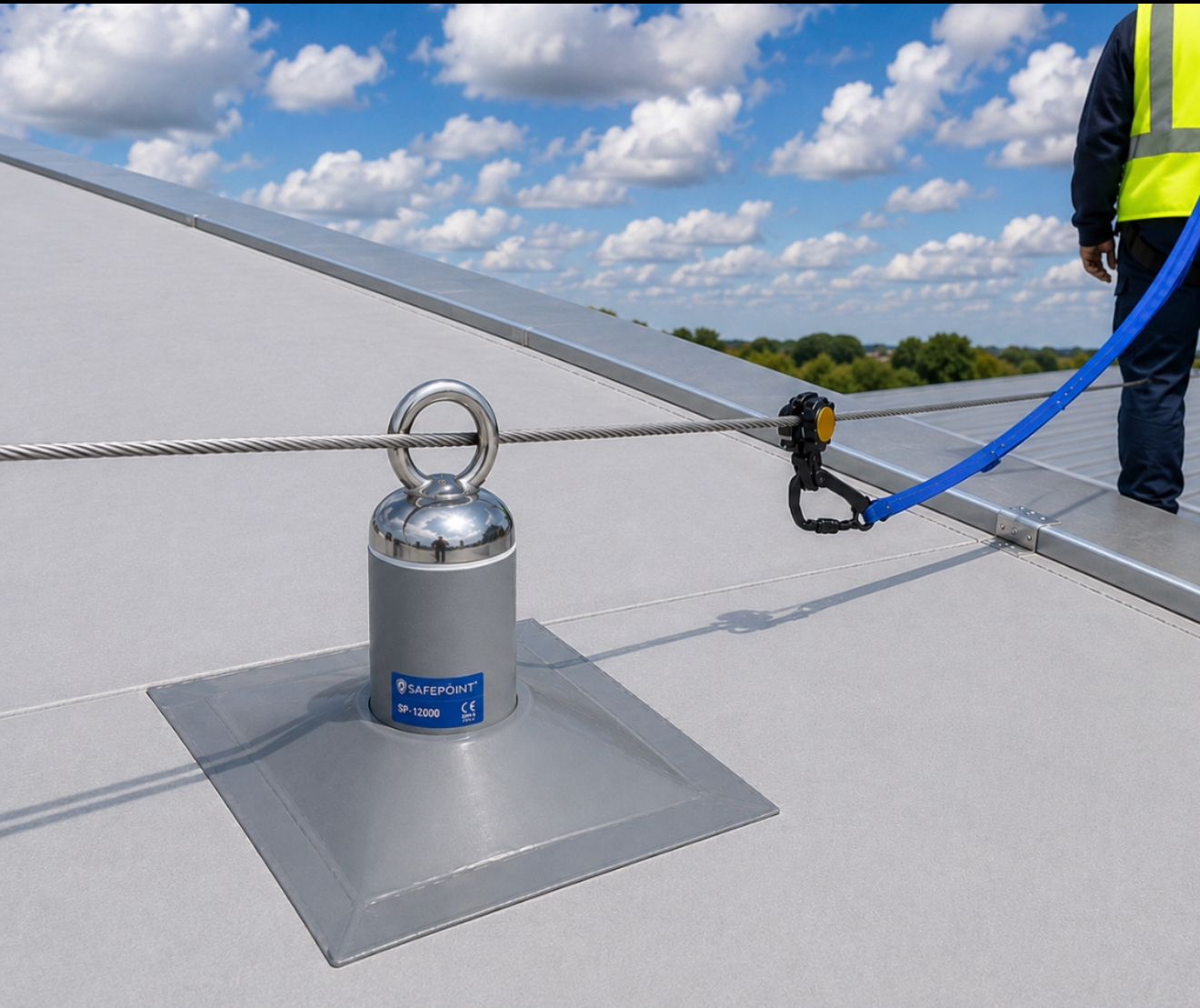
Roof safety line system on a commercial roof area.
Safety line post detail installed through a membrane roof.
Safety line installation works on a metal roof, with the roof interface and sealing detail properly considered.
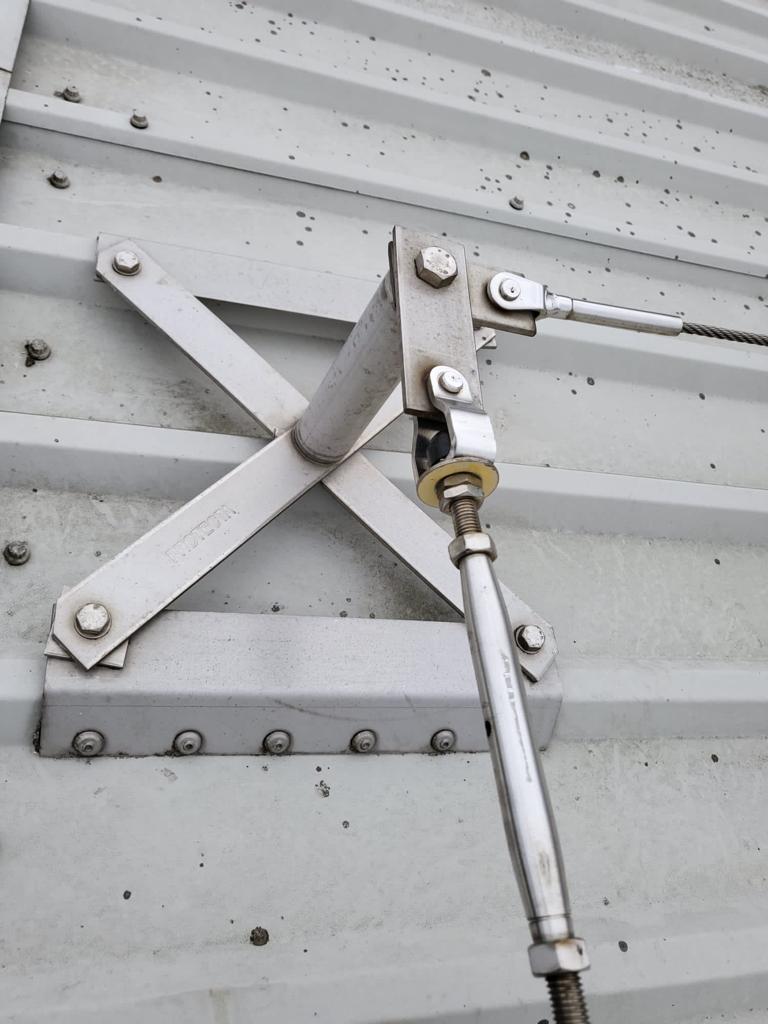
Safety line installation detail on a metal roof area.
Completed safety line installation on a profiled metal roof.
Mansafe roof safety line installation on an industrial roof area.
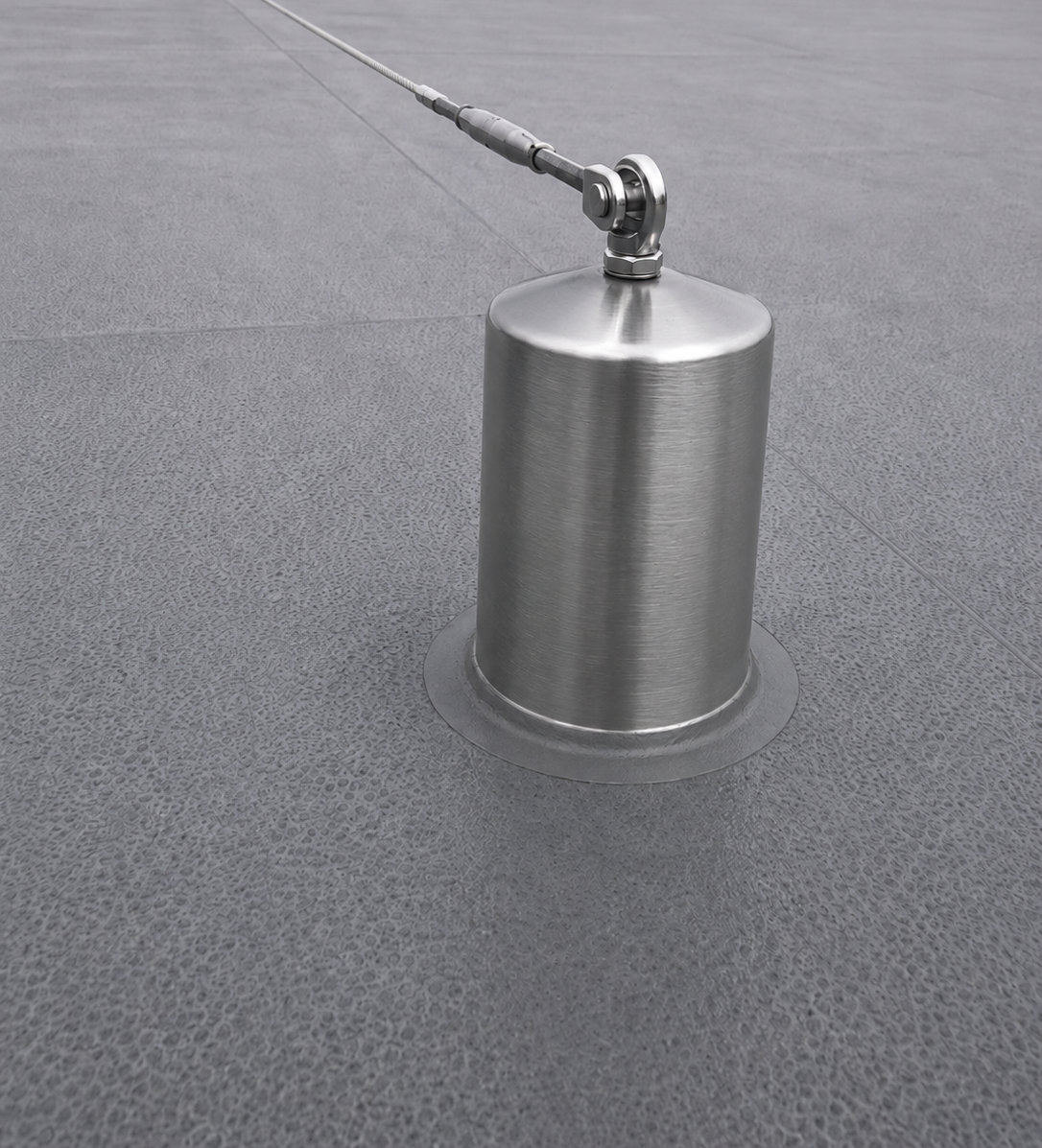
Mansafe safety line post and cable detail on a membrane roof.
Mansafe roof safety system detail on a commercial roof.
Commercial roof safety access and roofing detail support.
Safety Line Installation, Inspection and Recertification Across Scotland
Modern Roofing is based in Lanarkshire and works across Scotland for commercial and industrial roofing clients. That includes safety line installation support, safety line inspection coordination, safety line recertification planning, roof access planning, roof surveys and related roofing works where access and future maintenance need to be considered together.
- Safety line installation in Glasgow
- Safety line inspection in Glasgow
- Safety line recertification in Edinburgh
- Safety line inspection and recertification in Lanarkshire
- Roof safety line support across the Central Belt
- Commercial and industrial buildings across Scotland
| Building type | Typical reason for a safety line | How Modern Roofing helps |
|---|---|---|
| Factories | Plant access, maintenance and future roof inspections | Roof-aware installation detail with wider roofing support |
| Warehouses | Gutters, rooflights, large roof areas and inspection access | Safety line systems and planned roof access routes |
| Commercial buildings | Routine maintenance, safety line inspection and controlled access to roof areas | Practical advice, installation, inspection and recertification support |
| Membrane roofs | Need for controlled access without poor roof detailing | Understanding of both the access system and the waterproofing |
Related Modern Roofing services
Safety line systems often sit alongside industrial roof surveys, industrial roof repairs, industrial gutter lining, roof integrity testing and wider Industrial Roofing Scotland support.
Safety Line Installation FAQs
What is a roof safety line system?
A roof safety line system is a fixed attachment route that allows trained users to connect to the system while accessing suitable roof areas for inspection, maintenance and repair work.
What is the difference between fall restraint and fall arrest?
Fall restraint, also called work restraint, is designed to stop the user reaching a position where a fall can occur. Fall arrest is designed to stop the user after a fall has started. The correct approach depends on the risk assessment, roof layout, system design and the work being carried out.
Can the same roof safety-line posts be used for fall restraint and fall arrest?
Some proprietary post and horizontal lifeline systems are tested for both uses, but this cannot be assumed. The permitted use depends on the manufacturer, system design, roof structure, post layout, fall clearance, connecting equipment and user instructions. Existing posts should be identified and checked before their intended use is confirmed.
Do you install safety lines on metal roofs?
Yes. Modern Roofing provides safety line installation support on suitable metal roofs, including profiled metal roofs on factories, warehouses and commercial buildings.
Can safety lines be installed on membrane roofs?
Yes. Membrane roof installations need careful detailing so the waterproofing and the safety line detail work together properly.
Do you provide safety line inspection?
Yes. Modern Roofing can support and coordinate roof safety line inspection for commercial and industrial buildings, including system condition, access route, documentation and roof detail around the installation.
Do you help with safety line recertification?
Yes. Where an existing system is suitable, Modern Roofing can support and coordinate safety line recertification planning, helping clients keep on top of inspection records, condition checks and future roof access requirements.
Why use a roofing contractor for safety line installation or inspection?
Because the roof detail matters. On many buildings, the fixing arrangement, roof sheet detail, sealing work or waterproofing finish is just as important as the safety line system itself.
Do safety line systems need checked later?
Yes. Building owners should keep on top of system condition, records and future inspection requirements so the roof access arrangement remains suitable over time.
What does a safety line inspection include?
Depending on the system and manufacturer’s instructions, a safety line inspection may include cable tension checks, torque checks, posts, anchors, swages, terminals, brackets, shock absorbers, labels, tags, roof interface details, previous records and photographic reporting. Modern Roofing can coordinate this as part of a roofing-led access package.
Do safety lines need cable tension checked?
Some horizontal lifeline systems include a tensioner or tension indicator, so cable tension may need checked as part of inspection or recertification. The correct setting depends on the system manufacturer and should not be guessed.
Can you help with Mansafe testing or horizontal lifeline testing?
Yes. Modern Roofing can coordinate support for Mansafe system review, horizontal lifeline inspection, safety line testing support, recertification planning and roof detail checks where the system is installed through or onto the roof.
Do you cover safety line installation, inspection and recertification across Scotland?
Yes. Modern Roofing supports safety line installation packages, roof safety line inspection coordination and safety line recertification planning across Scotland, including Glasgow, Edinburgh, Lanarkshire and the wider Central Belt.