Industrial Roof Surveys Scotland
Hands-on roof appraisals, leak investigation, roof testing and practical repair or refurbishment advice for industrial and commercial roofs across Scotland.
Modern Roofing helps clients understand what is failing before spending money on repairs, gutter lining, overcladding, refurbishment or replacement.
- Identify whether the leak is isolated or part of a wider roof issue
- Decide if the roof is suitable for repair, overcladding or replacement
- Check gutters, outlets, rooflights, laps and vulnerable details
- Separate urgent works from items that can be planned properly
Industrial Roof Surveys Scotland from Modern Roofing
Modern Roofing provides industrial roof surveys in Scotland for building owners, facilities managers, property managers, main contractors and commercial clients who need clear advice before committing to roofing works.
A proper industrial roof survey can identify visible defects, roof age, material condition, drainage issues, rooflight risks, weak details, leak sources, hidden build-up concerns and whether the roof is suitable for targeted repair, planned maintenance, gutter lining, liquid applied works, overcladding, refurbishment or full replacement.
Our approach is survey-led and practical. We do not send a salesperson to guess from the ground. Where safe and appropriate, we physically inspect the roof, check the details, record defects, test where required and explain what the findings mean in real roofing terms.
We work across Scotland, including Glasgow, Edinburgh, Lanarkshire, the Central Belt, Ayrshire, Fife, Stirling, Falkirk, Perth, Dundee, Aberdeen, Inverness and the Scottish Borders.
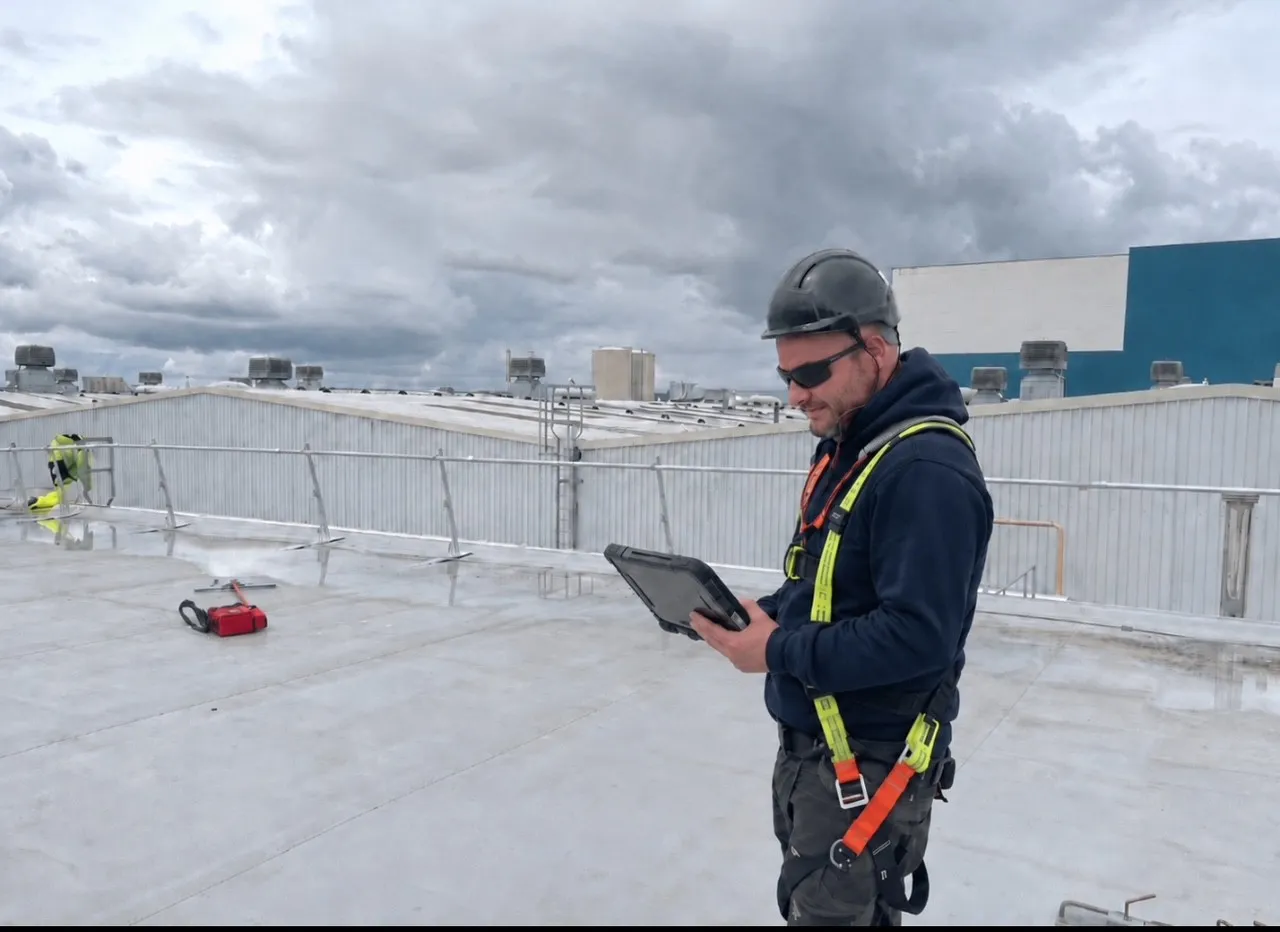
Modern Roofing uses Technical Roof Surveyors with practical roofing experience and engineering-based training.
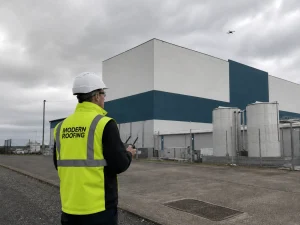
A Modern Roofing Technical Roof Surveyor using drone support as part of a wider survey-led roof appraisal.
Know What the Roof Needs Before You Spend
Modern Roofing provides industrial roof surveys in Scotland for roof appraisals, leak investigation, electronic roof integrity testing, core samples, pull-out testing, drainage checks, defect reports and practical repair or refurbishment advice.
Technical Roof Surveyors, Not Sales Representatives
Modern Roofing roof surveys are carried out by Technical Roof Surveyors, not sales representatives.
Our Technical Roof Surveyors are amongst the most qualified people in the company. They combine a minimum of five years’ practical roofing experience with HNC or higher engineering-based qualifications and technical training.
Modern Roofing gives experienced roofers a route to progress into technical surveying by supporting college-based learning, HNC or higher engineering qualifications and technical training while they continue working in the business. This means practical roofing experience is backed by proper technical understanding, which matters for pull-out testing, fixing checks, substrate assessment, electronic roof integrity testing, controlled opening-up works and core samples.
Equipment or manufacturer training can be useful, but Modern Roofing does not rely on short training courses alone. We combine practical roofing experience, HNC or higher engineering-based knowledge and equipment-specific competence so the findings can be interpreted properly.
Qualifications and evidence of technical training are available on request.
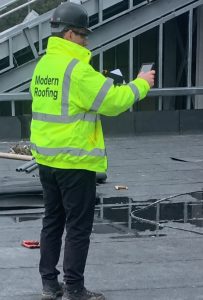
Technical Roof Surveyor carrying out survey-led industrial roof investigation.
A test result is only useful if the person taking it understands the roof.
Our surveyors understand roof build-ups, deck condition, fixing forces, waterproofing systems, drainage, support structure, safe access and the limitations of each test method. The aim is not simply to produce a reading. The aim is to understand what the result means for the roof and whether the correct route is repair, maintenance, gutter lining, refurbishment, overcladding or replacement.
What happens when you contact Modern Roofing?
1. Initial roof discussion
We discuss the building, known roof system, leak history, operational constraints and what decision you need to make.
2. Information review
Where available, we review photographs, drawings, previous reports and roof history before arranging the appropriate next step.
3. Site inspection or technical survey
The roof is inspected using the level of investigation appropriate to the problem. This may include hands-on inspection, core samples, opening-up or integrity testing where required.
4. Clear options and recommendation
We explain whether targeted repair, refurbishment, overlay or replacement appears most appropriate, along with any further investigation required.
What You Receive After the Roof Survey
After an industrial roof survey, Modern Roofing can provide a clear roof appraisal to help clients understand the condition of the roof and make a sensible decision before committing to repairs, refurbishment, overcladding or replacement.
The format depends on the building, access, survey scope and level of investigation required, but the aim is always the same: give the client practical evidence, not guesswork.
Roof Condition Summary
A plain-English summary of the visible roof condition, key defects and areas requiring attention.
Photographic Evidence
Photos of relevant defects, roof areas, gutters, outlets, rooflights, penetrations, laps and vulnerable details.
Leak and Defect Observations
Comments on likely water ingress routes, drainage issues, failed details and areas where further testing may be useful.
Practical Next Steps
Clear advice on whether targeted repair, planned maintenance, gutter lining, refurbishment, overcladding or replacement is the sensible route.

Example appraisal format shown for illustration only. Project details and client information are blurred or removed. Full reports are prepared for the specific roof, survey scope and client requirements.
Customer Feedback: Site-Wide Roof Appraisal, Glasgow
“An excellent report.
Modern Roofing (Scotland) Ltd carried out a site-wide roof appraisal for John Dewar & Sons Ltd in Glasgow, reviewing the condition of the existing roof areas and identifying key maintenance, repair and long-term asset-protection requirements.
The appraisal provided a clear overview of the roof condition across the site, highlighting areas of concern, likely causes, recommended remedial works and practical next steps. The purpose of the report was to give us a structured understanding of the roof estate, helping plan future maintenance, prioritise works and protect the building from avoidable water ingress or deterioration.”
Jonathan Neale
John Dewar & Sons Ltd, part of the Bacardi group
Glasgow
Survey Equipment and Investigation Methods
No single test tells the full story of an industrial roof. Modern Roofing uses survey equipment alongside practical roofing experience, visual inspection, drainage checks, roof history and safe access planning.
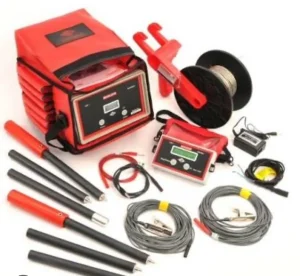
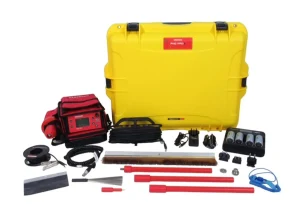
Electronic Roof Integrity Testing
Wet and dry electronic leak detection can help locate breaches, pinholes, punctures and failed details in suitable non-conductive waterproofing membranes.
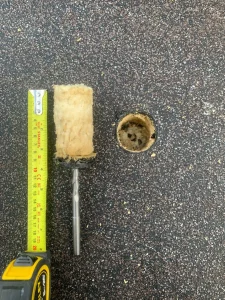
Core Samples and Opening-Up
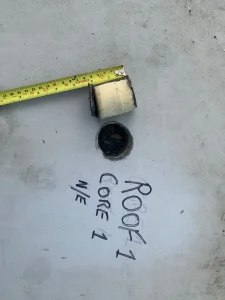
Core samples and controlled opening-up works can confirm roof build-up, layers, insulation condition, deck type and hidden moisture or deterioration.
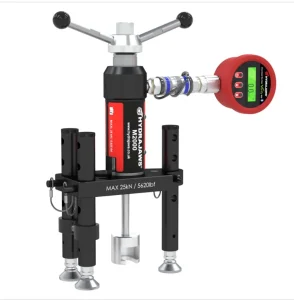
Pull-Out Testing
Pull-out tests can help assess fixing performance and substrate suitability where mechanically fixed roofing or overcladding is being considered.
Bond and Adhesion Checks
Adhesion checks can help assess whether an existing surface is suitable for liquid applied waterproofing, coatings or bonded repair systems.
Dye Testing and Water Routes
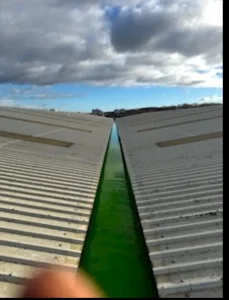
Dye testing can sometimes support leak investigation around outlets, gutters, penetrations and complex details where water routes are unclear.
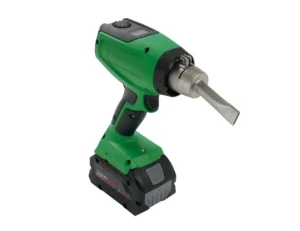
Leister Hot Air Tools
Portable Leister hot air equipment can support localised membrane repairs, temporary making-good and controlled work around sample or test areas where suitable.
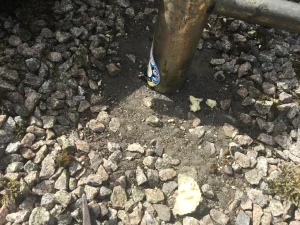
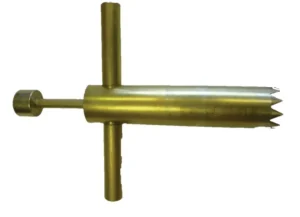
Electronic Roof Integrity Testing and Leak Detection
Electronic roof integrity testing, often called electronic leak detection or ELD, is used to help locate defects in suitable flat roofing and waterproofing membranes.
The basic principle is simple: a sound non-conductive waterproofing membrane acts as an electrical barrier. If there is a breach, pinhole, puncture, failed seam or damaged detail, the test equipment can detect an electrical path through the defect to a conductive deck, conductive layer or grounded component below.
This can support roof leak investigation, post-installation checks, membrane condition surveys, Sika membrane inspections, flat roof surveys and targeted repair planning.
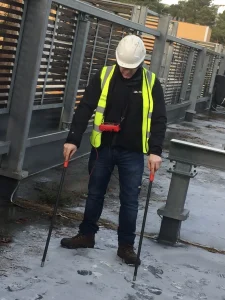
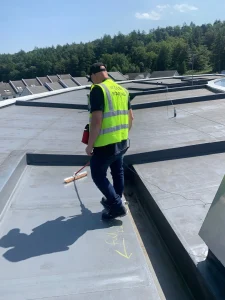
Electronic leak detection can support survey-led roof appraisals where the roof build-up is suitable.
Wet Testing
Wet testing uses water on the membrane surface to help complete the electrical path through a breach. It can be useful on suitable flat roofing systems where the test area can be controlled properly.
Dry Testing
Dry testing can be used on suitable exposed waterproofing membranes where the surface and roof build-up allow the test method to work correctly.
Spark / Holiday Testing
High-voltage spark testing is also called holiday testing because a “holiday” is a small void, pinhole, discontinuity or missed area in a waterproofing or coating layer. The tester helps identify these defects.
Testing has limitations
Electronic roof testing is not suitable for every roof. The membrane type, roof build-up, deck, weather conditions, moisture, access, insulation, conductivity and details all affect whether wet testing, dry testing, spark testing or another method is appropriate. Modern Roofing uses ELD as part of a wider roof survey, not as a replacement for roofing judgement.
Controlled Intrusive Roof Testing and Core Samples
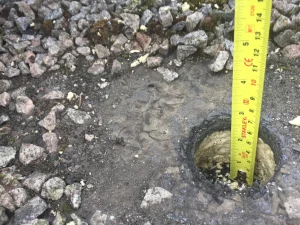
Where the roof build-up, insulation condition, deck type or hidden layers cannot be confirmed visually, Modern Roofing can carry out controlled intrusive roof investigation as part of the survey.
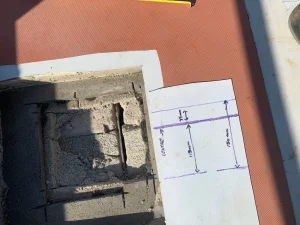
This can include core samples, square cut-outs, small opening-up works and exploratory holes to expose the waterproofing layers, insulation, vapour control layer, deck, tray, fixings and visible support details.
Where required, samples can be retained or sent away for further identification or testing. The opened area is then made watertight using suitable temporary or permanent repair methods.
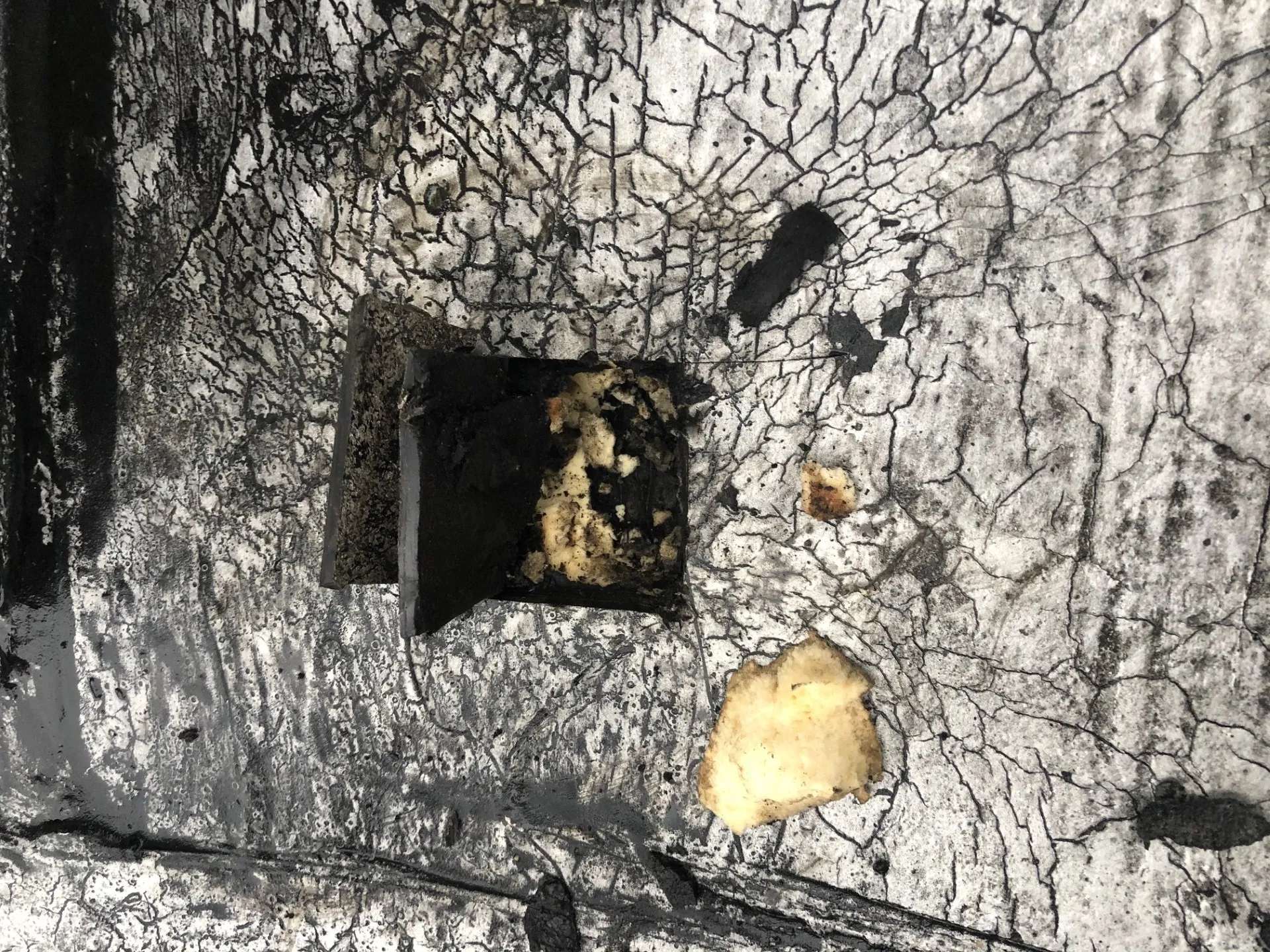
Controlled opening-up works can confirm what is below the visible roof surface.
Roof Build-Up Checks
Core samples can confirm the number of roof layers, insulation type, membrane type, deck construction and whether previous overlays are present.
Wet or Failed Insulation
Where moisture is suspected, samples can help confirm whether insulation is wet or deteriorated below the surface.
Visible Support Details
Opening-up can expose visible deck, tray, purlin or support details so concerns can be recorded and considered during the roofing recommendation.
Working in Conjunction with Structural Engineers
Modern Roofing work with structural engineers when roofing areas need to be opened up for inspection. We can carry out localised opening-up works to expose suspected RAAC, deck build-up, roof layers, support details or other areas the engineer needs to inspect, then reinstate or make the roof watertight using suitable roofing materials after inspection.
Pull-Out Testing, Bond Testing and Fixing Checks
When a roof is being considered for overcladding, mechanically fixed systems, single-ply refurbishment or new insulation build-ups, the existing substrate and fixings matter.
Pull-Out Testing
Pull-out testing helps assess how fixings perform in the existing deck or substrate. This can support decisions around overcladding, mechanically fixed membranes, refurbishment and fixing patterns.
Fixing and Substrate Checks
Loose, corroded or failed fixings can indicate wider roof problems. Fixing checks help identify whether the existing roof is suitable for local repair or needs a wider refurbishment approach.
Bond and Adhesion Testing
Where a liquid applied system, coating or bonded repair is being considered, adhesion checks can help confirm whether the existing surface is suitable for the proposed preparation and system.

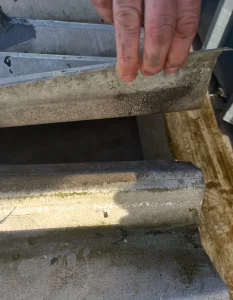
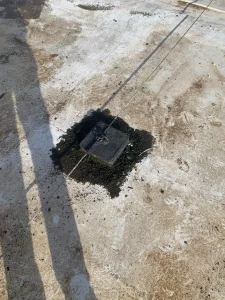
Siphonic Drainage Outlet and Baffle Plate Checks
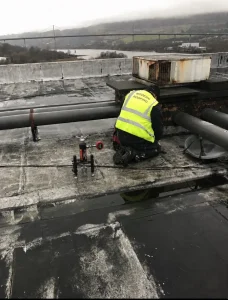
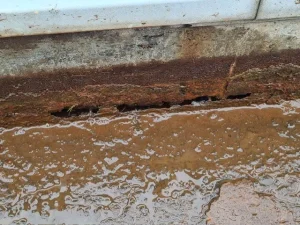
Industrial roof surveys should include more than the visible roof covering. On buildings with siphonic drainage, the roof outlets, baffle plates, leaf guards, gutter interfaces and surrounding waterproofing details need to be checked carefully.
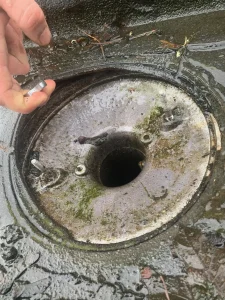
Siphonic outlets rely on baffle plates, sometimes called anti-vortex plates, to restrict air entering the system so the drainage can operate correctly during heavy rainfall. If baffle plates are missing, damaged, blocked or incorrectly fitted, the system may not perform as intended and water can back up around outlets, gutters or roof areas.
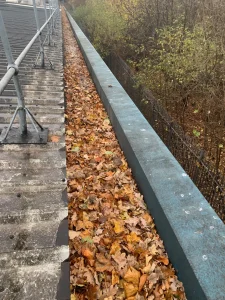
Modern Roofing checks outlet condition, surrounding waterproofing, debris, ponding, previous repairs, failed details and whether the drainage issue may be contributing to repeated water ingress.
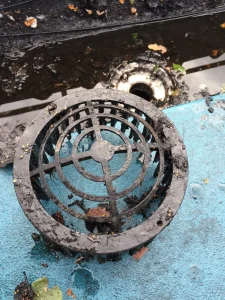
Missing or damaged baffle plates can affect siphonic roof drainage performance.
Roof Defects We Commonly Investigate
Industrial roof leaks are not always caused by one obvious hole. A survey can identify the wider pattern of deterioration and help separate symptoms from the actual cause.
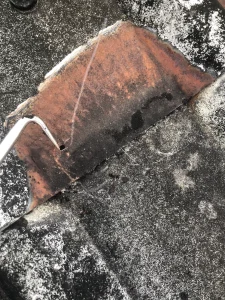
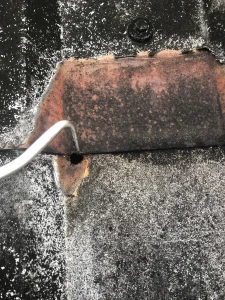
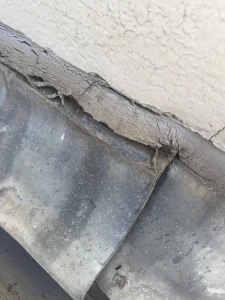
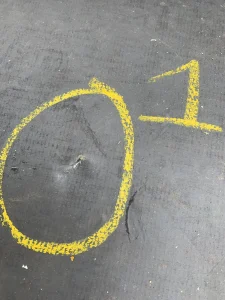
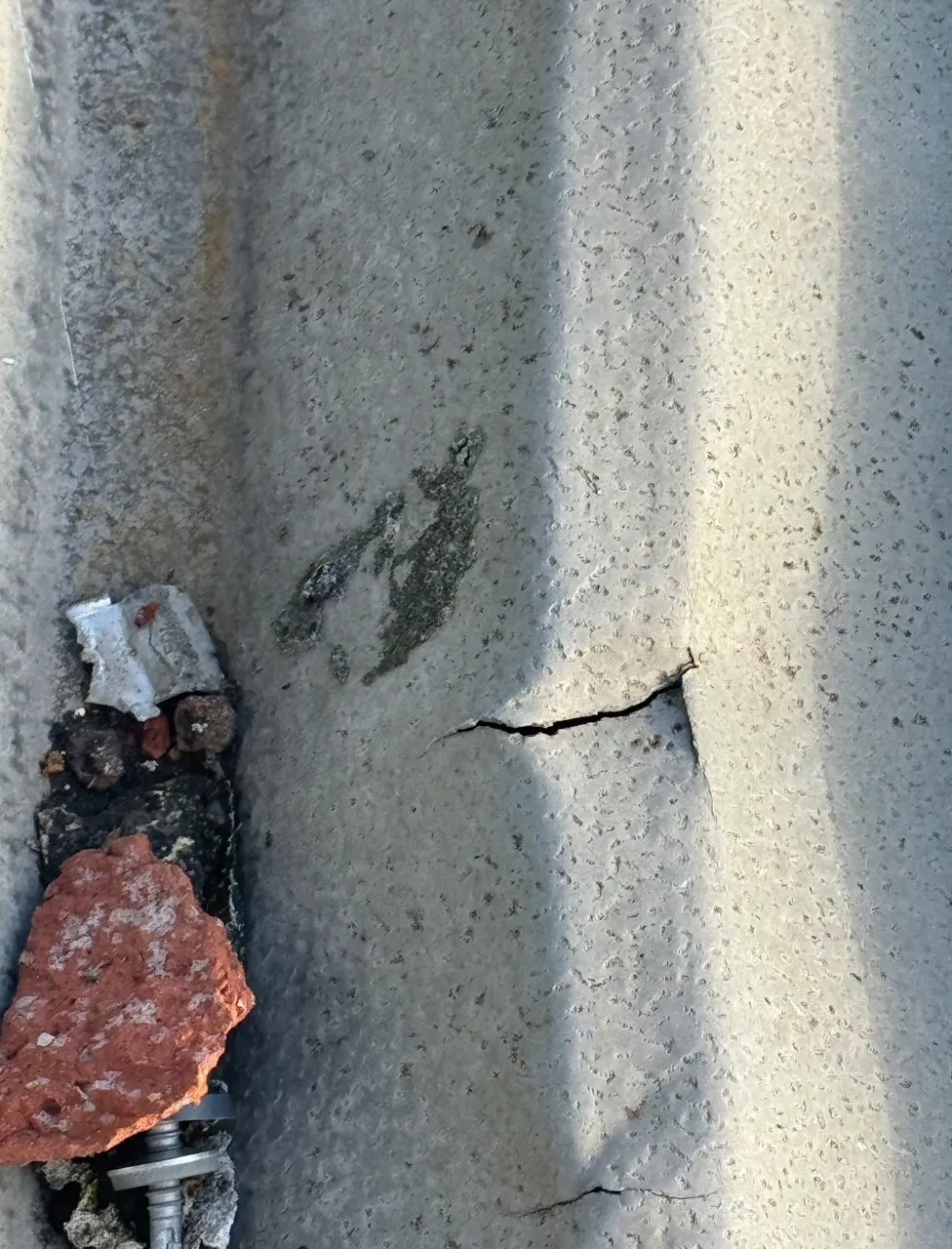
Cut Edge Corrosion
Cut edge corrosion, holes, loose fixings and failed laps on metal roofs can allow water into the building and may point towards coating, localised repair, overcladding or replacement.
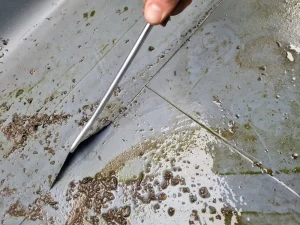
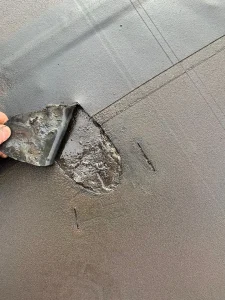
Failed Membrane Details
Splits, failed welds, fish mouths, punctures, raggle failures, poor previous repairs and debris damage can all contribute to repeated water ingress.
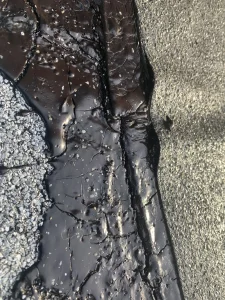
Compatibility Problems
Old bitumen, incompatible materials, silicone repairs and contamination can affect waterproofing compatibility, adhesion and the correct repair route.
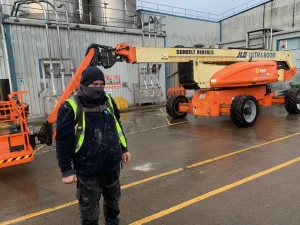
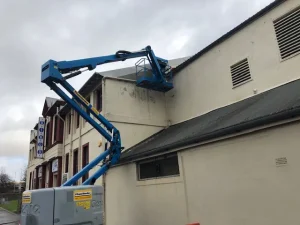
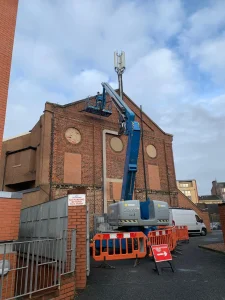
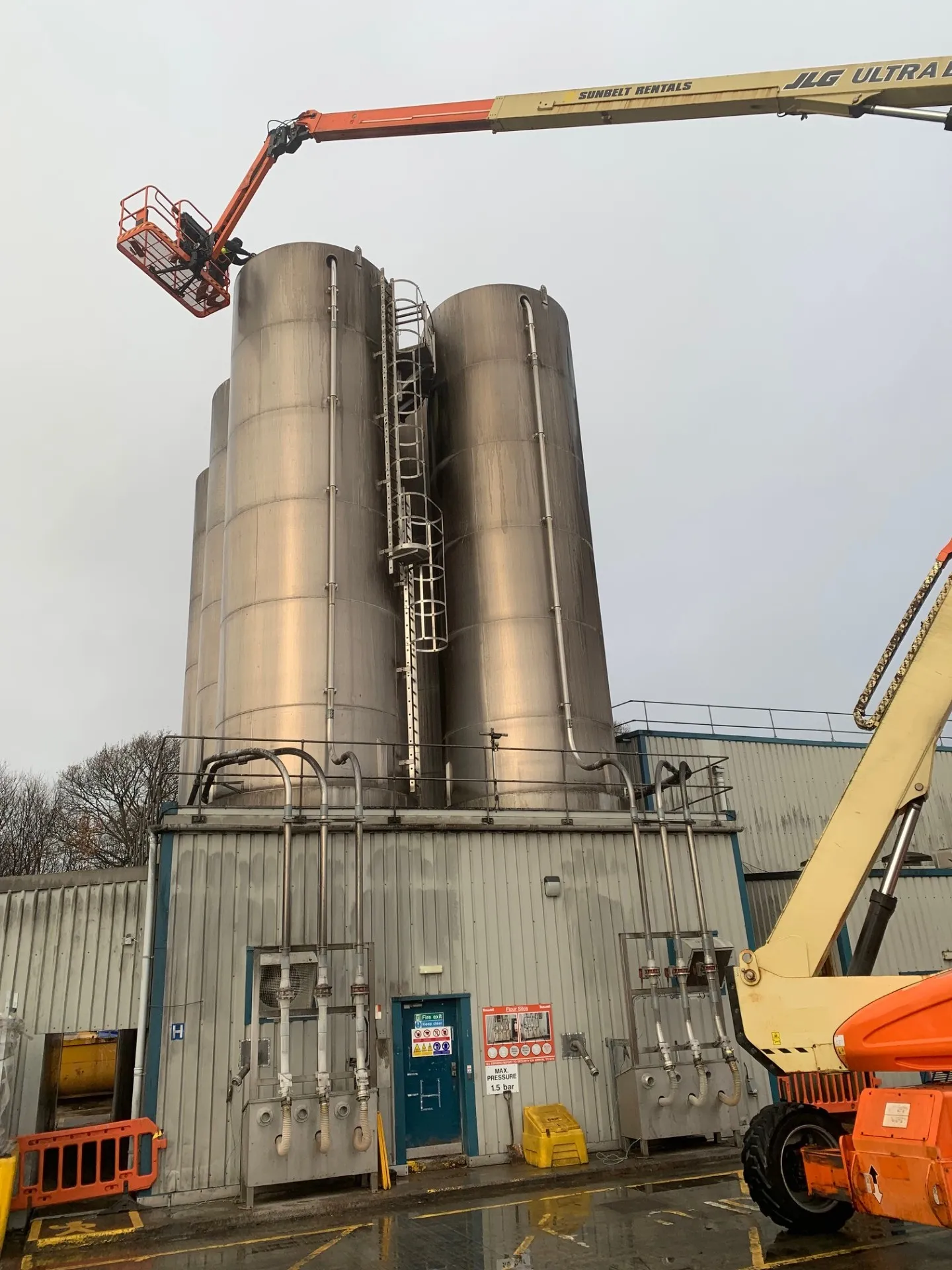
Safe Access, MEWPs and Hands-On Inspection
Modern Roofing prefers hands-on roof investigation wherever safe and practical. A proper roof survey often needs direct access to gutters, outlets, laps, fixings, rooflights, details and test locations.
Where access equipment is required, our work is supported by IPAF and PASMA trained personnel. MEWPs, cherry pickers, scissor lifts, towers and controlled access methods can help us inspect roofs properly while planning the work safely.
Older industrial roofs, fibre cement roofs, suspected asbestos cement sheets, fragile rooflights and corroded metal roofs need careful access planning before inspection or opening-up works.
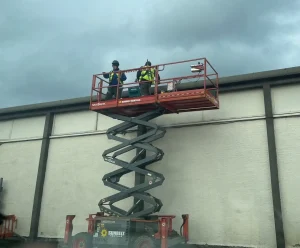
MEWPs and controlled access methods can support safe, hands-on roof inspection.
Drone Surveys Support the Inspection — They Do Not Replace It
Drone roof surveys can be useful for first-stage visual records, large industrial roof areas, difficult access, rooflights, gutters and obvious defects before closer inspection is planned.
However, Modern Roofing does not rely on drone-only surveys. A drone can show what the roof looks like. A hands-on roof survey helps find out what is actually wrong.
Drone images cannot physically check laps, seams, fixings, deck condition, siphonic outlet baffle plates, core samples, pull-out values or the suitability of repair, refurbishment, overcladding or replacement works.

Close-up drone image showing the type of equipment that can support first-stage roof inspections.
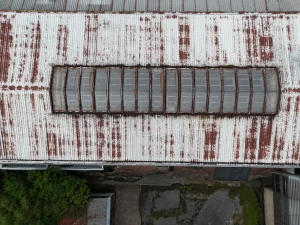
Drone footage can help record large roof areas, corrosion, gutters and obvious defects from above.
Why we do not rely on thermal imaging alone
Thermal imaging can sometimes help identify suspected wet insulation, but it is highly dependent on the right roof build-up, weather, solar loading, night-time cooling and surface conditions. It does not directly find the leak source and it does not prove what repair or refurbishment route is correct.
Modern Roofing does not rely on thermal imaging as a primary survey method. We prefer practical roof investigation, visual inspection, drainage checks, roof history, core samples, controlled opening-up works and electronic integrity testing where suitable.
Repair, Refurbish, Overclad or Replace?
The right roofing route depends on the condition of the existing roof, the type of building, disruption risk, budget, safety, roof build-up and long-term plan for the property.
| Option | When it makes sense | What to check first |
|---|---|---|
| Targeted repair | Defects are localised and the wider roof is still performing. | Source of leak, substrate, access, water route and whether the repair will actually hold. |
| Planned maintenance | The roof is generally serviceable but has gutters, outlets, details or minor defects needing regular attention. | Drainage routes, access, known weak points and priority areas. |
| Gutter lining | The main failure points are industrial gutters, outlets, joints or water channels. | Existing gutter condition, falls, outlet capacity, baffle plates and compatibility with the proposed lining system. |
| Liquid applied works | Details, gutters, localised waterproofing areas or existing surfaces may be suitable for a liquid applied system. | Adhesion, contamination, substrate condition, preparation requirements and system compatibility. |
| Refurbishment | The roof has several issues but may not need full replacement. | Drainage, sheet condition, rooflights, details, existing layers, core samples and system suitability. |
| Overcladding | The existing roof and structure may support a new external roof layer. | Existing roof condition, fixing pull-out values, deck condition, gutters, rooflights, loading and structural review where required. |
| Replacement | The roof is at end of life or unsuitable for repair, overlay or refurbishment. | Programme, strip-off risk, internal protection, materials, safety, access, budget and building operations. |
Survey-Led Industrial Roofing Scotland
Modern Roofing (Scotland) Ltd provides commercial and industrial roofing services across Scotland, including roof surveys, leak investigation, roof repairs, refurbishment, overcladding, gutter lining, Sika roofing systems, roof integrity testing and planned maintenance.
Industrial Roof Survey Advice Before Money Is Wasted
A roof survey helps separate obvious symptoms from the real cause. Modern Roofing uses survey-led advice to help clients decide whether the correct route is repair, maintenance, refurbishment, gutter lining, overcladding or replacement.
Condition Review
We assess visible defects, ageing materials, weak details, rooflights, gutters, outlets, fixings and drainage risks.
Leak Investigation
We look beyond the internal stain to find the likely route of water ingress and reduce the risk of repeat failure.
Budget Planning
Survey findings can help separate urgent works from longer-term roofing investment and planned refurbishment budgets.
Industrial Roof Surveys Scotland FAQs
What is an industrial roof survey?
An industrial roof survey is an inspection of a commercial or industrial roof to identify roof condition, defects, drainage issues, leak sources, weak details and suitable next steps.
Who carries out Modern Roofing roof surveys?
Modern Roofing surveys are carried out by Technical Roof Surveyors. Our surveyors are amongst the most qualified people in the company and combine a minimum of five years’ practical roofing experience with HNC or higher engineering-based qualifications and technical training.
What is electronic roof integrity testing?
Electronic roof integrity testing uses electrical testing equipment to help locate defects such as breaches, pinholes, punctures, failed seams or damaged details in suitable waterproofing membranes.
Why is spark testing called holiday testing?
In waterproofing and coatings, a “holiday” is a small void, pinhole, discontinuity or missed area in the protective layer. High-voltage spark testing is called holiday testing because it helps locate these defects.
Do you carry out core samples?
Where suitable and safe, core samples can help confirm the roof build-up, existing layers, insulation condition and whether certain repair, overlay or refurbishment options may be realistic.
Do you check siphonic roof drainage outlets?
Yes. Industrial roof surveys can include siphonic outlet checks, including outlet condition, surrounding waterproofing, debris, ponding, leaf guards and missing or damaged baffle plates.
Do you rely on drone surveys?
No. Drone surveys can support first-stage visual records, but Modern Roofing prefers hands-on investigation wherever safe and practical. Drone images do not replace direct inspection, testing, core samples, drainage checks or roofing judgement.
Do you use thermal imaging for roof surveys?
Modern Roofing does not rely on thermal imaging as a primary roof survey method. Thermal imaging is highly dependent on roof build-up, weather, solar loading, night-time cooling and surface conditions, and it does not directly prove the leak source or the correct repair route.
Can a survey help decide between repair, refurbishment, overcladding and replacement?
Yes. Survey findings can help compare the condition of the existing roof against the practical options, including targeted repair, planned maintenance, gutter lining, liquid applied works, refurbishment, overcladding or replacement.
Do you work with structural engineers on RAAC or support inspections?
Yes. Modern Roofing work with structural engineers by carrying out controlled opening-up works so suspected RAAC, deck build-up, roof layers or support details can be exposed for inspection, then reinstating or making the roof watertight using suitable roofing materials afterwards.
Book an Industrial Roof Survey Before Committing to Repairs or Refurbishment
Call Modern Roofing or request a roof survey for survey-led industrial roof advice, leak investigation, condition reporting and practical refurbishment planning.
What do clients receive after an industrial roof survey?
Depending on the survey scope, Modern Roofing can provide a roof appraisal with a roof condition summary, photographs of key defects, leak and drainage observations, and practical next-step recommendations for repair, planned maintenance, refurbishment, overcladding or replacement.