Cut Edge Corrosion Treatment Scotland
Sika cut edge corrosion treatment for industrial metal roofs, factory roofs and warehouse roofs across Scotland.
Netting is normally installed below rooflights before works begin. Where netting from below is not feasible, rooflights can be netted from above, followed by survey-led preparation, grinding, primer, gun-grade Sika to laps where required and two coats of Sika cut edge treatment.
Modern Roofing (Scotland) Ltd treats cut edge corrosion before it becomes a larger roof replacement problem, helping commercial and industrial clients extend the life of existing metal roof sheets.
Cut edge treatment at a glance
- Rooflights normally netted below before work starts
- Corroded edges prepared and ground back
- Loose coating and rust removed properly
- Laps sealed with gun-grade Sika where specified
- Primer applied to prepared metal
- Above-rooflight netting used where below netting is not feasible
- Two coats of Sika cut edge treatment installed
What Is Cut Edge Corrosion?
Cut edge corrosion is the rusting and breakdown that appears on the exposed edges of coated metal roof sheets. It is common on older factory roofs, warehouse roofs, industrial units and commercial buildings where metal sheets have been cut, overlapped or exposed at the sheet ends.
From the ground the roof can look acceptable, but once the edges are inspected the coating may be lifting, rust may be forming and water may be getting into the laps. If the issue is dealt with early, treatment can often extend the life of the roof without full replacement.
Modern Roofing does not simply paint over the rust. The correct approach is to prepare the affected edge, remove loose corrosion, seal vulnerable laps where required, prime the metal and apply a proper liquid-applied cut edge treatment system.
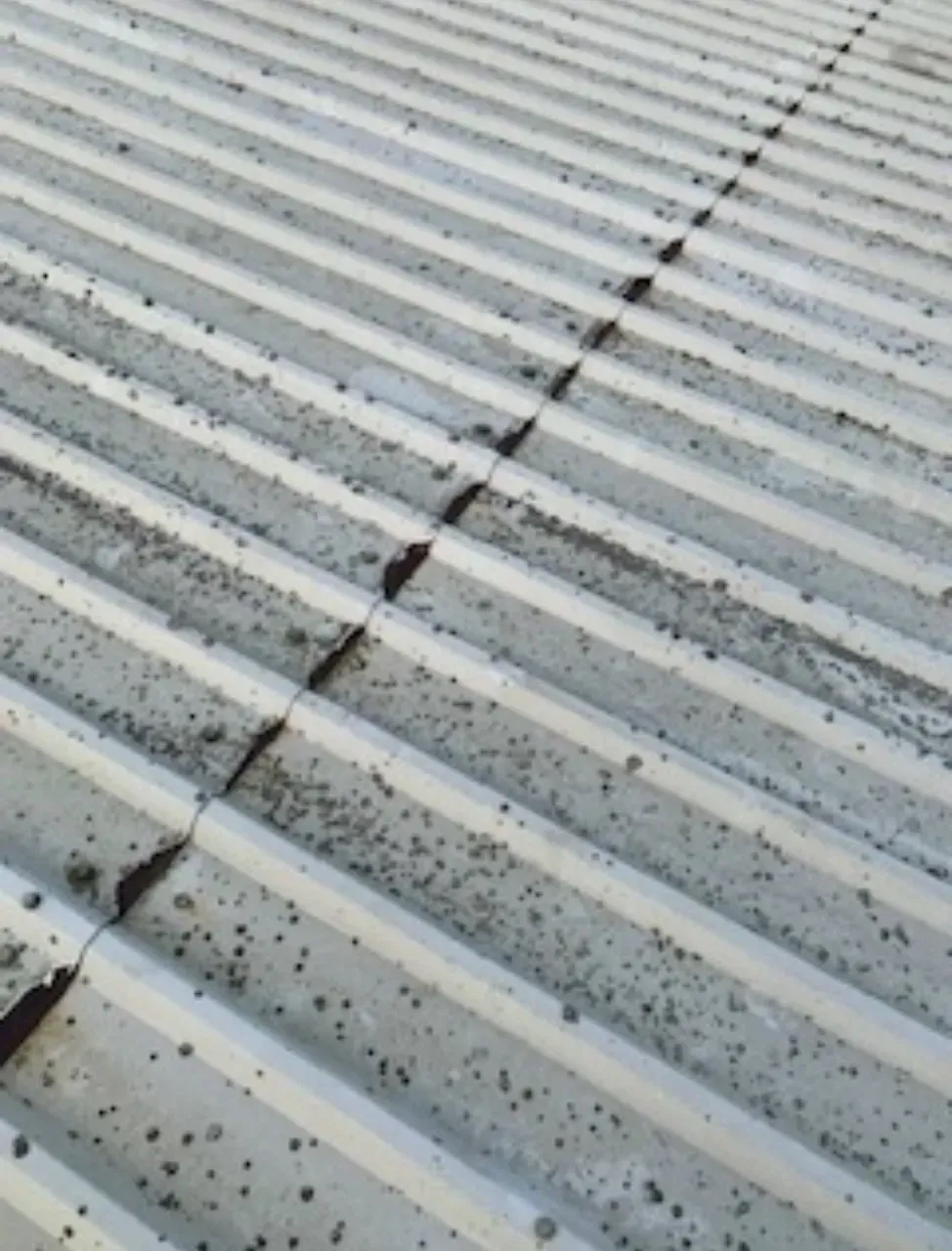
Typical cut edge corrosion on one of our Glasgow industrial roofing jobs before treatment.
Direct answer
Cut edge corrosion treatment is the process of preparing, sealing, priming and coating exposed or corroded metal roof sheet edges so the roof can continue to perform for longer. It is normally far less disruptive than allowing the roof to deteriorate until replacement becomes the only sensible option.

Bellshill industrial roof where corrosion was left too long and the roof had to be replaced.
Why Cut Edge Corrosion Should Not Be Left
Cut edge corrosion does not repair itself. Once the protective coating has failed, moisture can continue to attack the exposed metal and can spread further beneath laps, fixings and sheet overlaps.
If caught early, treatment can protect the exposed sheet edges and improve the roof’s service life. If left too long, the edge of the sheet can become too weak, perforated or unsuitable for a coating-only repair.
At that stage, the client may be forced into larger works such as sheet replacement, overcladding or a full roof replacement. That normally means more cost, more programme disruption and more risk to the building below.
The expensive mistake
The cheapest time to deal with cut edge corrosion is before the metal has deteriorated too far. Once the sheet edge has lost strength or the corrosion has spread under the laps, coating alone may no longer be the right answer.
Our Cut Edge Corrosion Treatment Process
Modern Roofing follows a practical, preparation-led process. The strength of the job is not just the coating. It is the survey, access planning, grinding, cleaning, sealing, priming and two-coat application.
Rooflight netting and access planning
Before treatment begins, fragile roof areas are considered and rooflights are normally netted from below where required. Where it is not feasible to install netting from below, netting can be installed above the rooflights, but the preferred approach is to protect from below wherever practical. Access, edge protection, working zones and live-site risks are planned so the works can be carried out safely and efficiently.
Inspection and suitability check
The roof is checked to confirm whether cut edge treatment is suitable. If the metal is too badly corroded, split, holed or structurally weak, a wider repair, overcladding or replacement may be a better long-term solution.
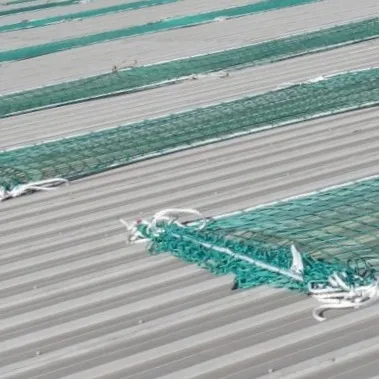
Rooflights are normally netted from below. Where that is not feasible, netting can be installed above the rooflights as part of the access and safety plan.

Viewing and assessing the roof before choosing the correct treatment route.
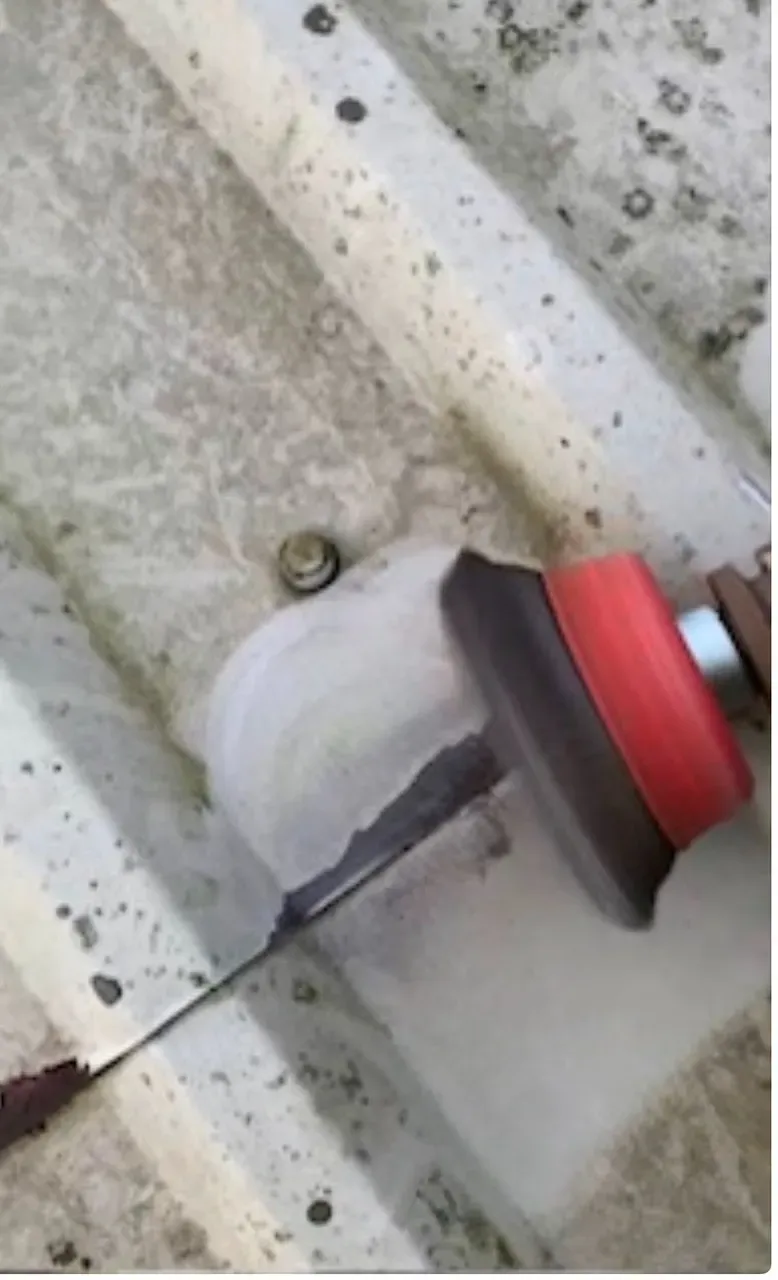
Grinding affected sheet edges back before primer and Sika cut edge treatment.
Grinding back corrosion
Loose coating, rust and failing material are removed. The cut edge is ground back and prepared so the primer and coating can bond to a sound surface rather than sitting over loose corrosion.
Cleaning and detail preparation
The prepared edge is cleaned and checked. Laps, overlaps and vulnerable details are treated carefully because water can track into the roof build-up if these areas are ignored.
Gun-grade Sika to laps where required
Where specified, gun-grade Sika polyurethane is installed to laps and vulnerable joints to help seal the areas most likely to hold water or allow moisture into the sheet overlap.
Primer to prepared metal
Primer is applied to the correctly prepared metal surface before the coating system. This stage is essential because the finished treatment is only as strong as the preparation beneath it.

Gun-grade Sika applied to laps and details.
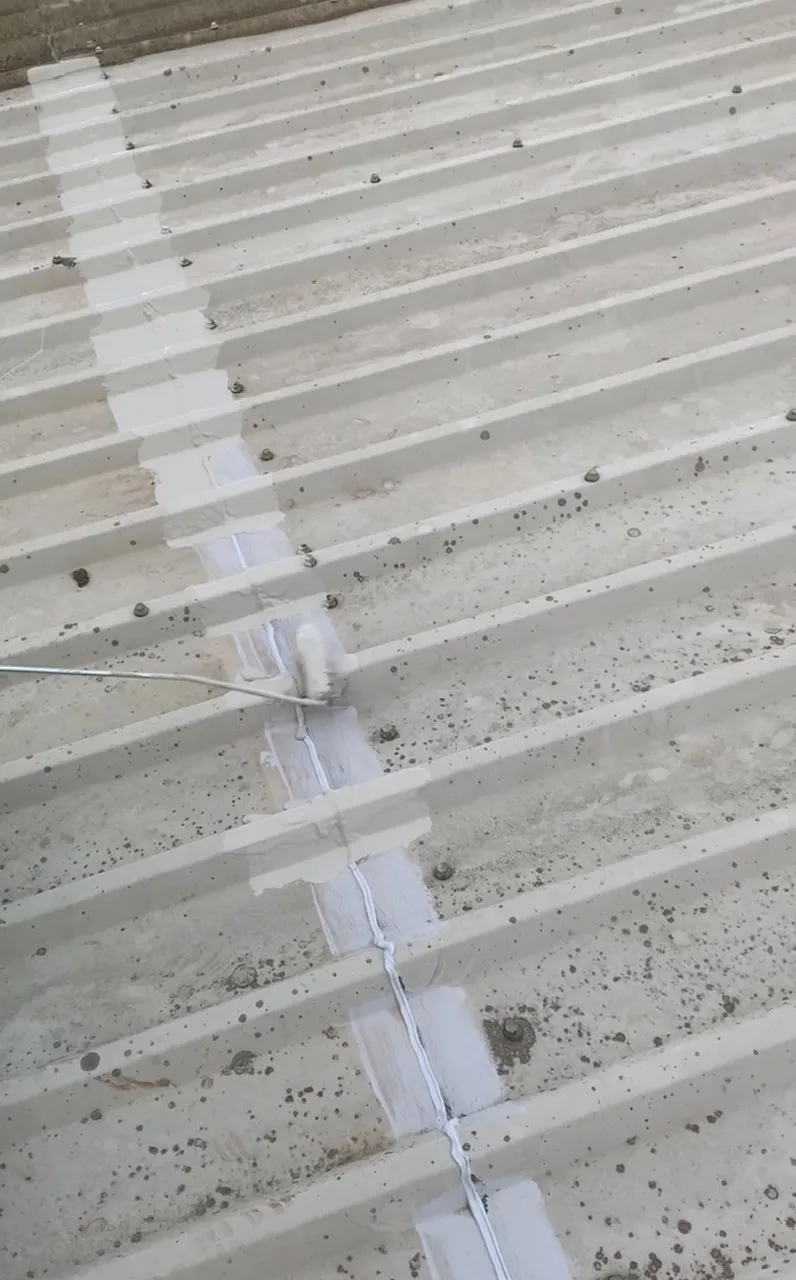
Primer, detail treatment and first coat in progress.
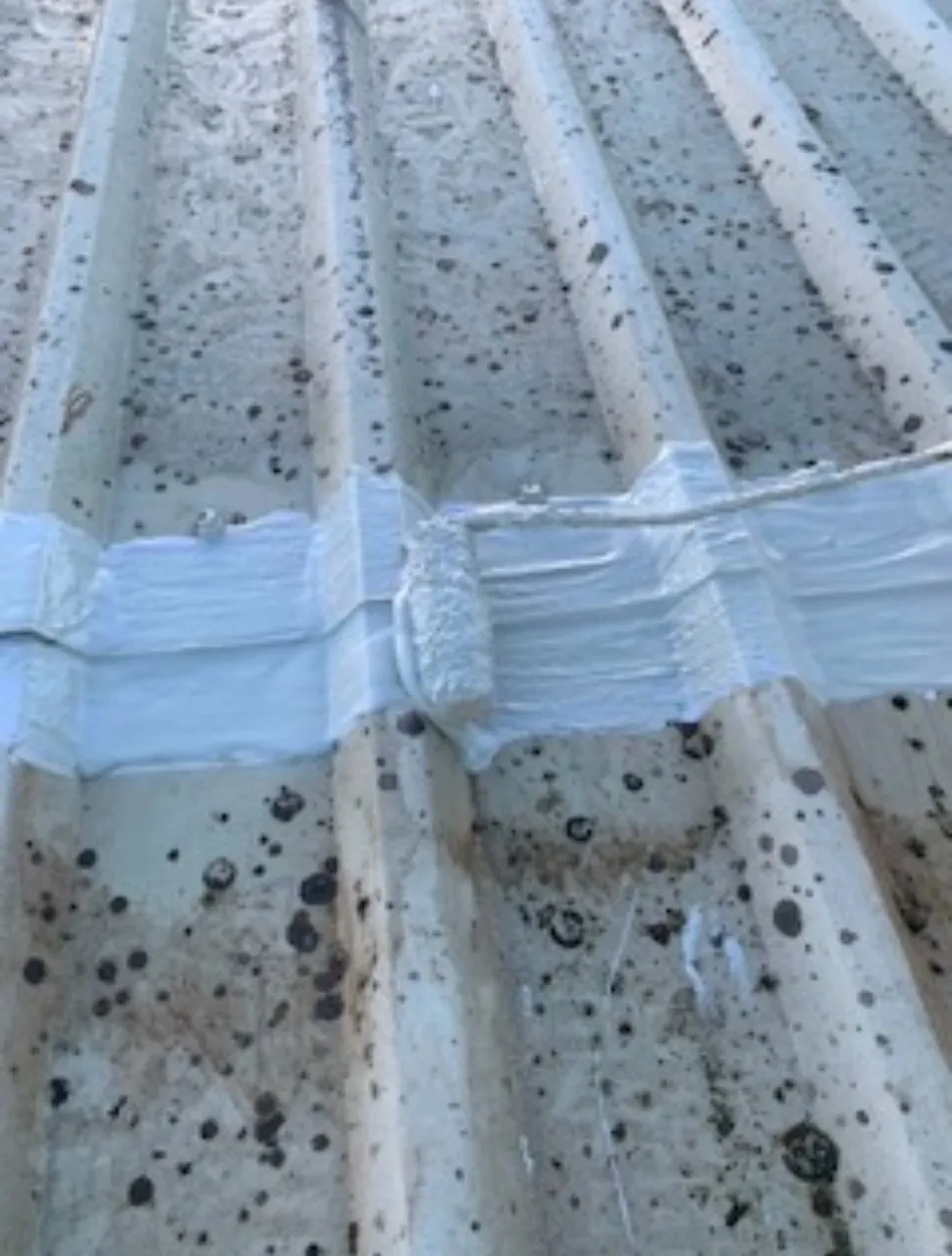
First coat of Sika cut edge treatment being installed.
First coat of Sika cut edge treatment
The first coat is installed to the prepared cut edge, creating the base layer of the liquid-applied treatment system.
Second coat and final checks
A second coat of Sika cut edge treatment is applied to complete the system. The finished work is then checked for coverage, continuity, detail treatment and overall appearance.
Need Cut Edge Corrosion Checked?
Send Modern Roofing photos or arrange a roof survey. We will advise whether treatment, repair, overcladding or replacement is the most sensible route.
Sika Cut Edge Treatment: What a Proper Specification Should Include
A good cut edge corrosion job should not be judged only by the finished colour. The hidden preparation stages matter most.
1. Treat the corrosion
The affected edge needs to be prepared properly. Grinding and cleaning remove loose rust, failing coating and weak material so the treatment is applied to a sound surface.
2. Prime and seal
Primer is applied to prepared metal. Laps and joints can be sealed with gun-grade Sika where required to reduce the risk of water tracking beneath overlaps.
3. Two protective coats
Two coats of Sika cut edge treatment are installed to form a protective liquid-applied finish over the exposed and vulnerable sheet edges.
| Bad approach | Modern Roofing approach | Why it matters |
|---|---|---|
| Paint straight over visible rust. | Grind back and prepare the metal first. | Loose corrosion will not give a reliable base for coating. |
| Ignore laps and sheet overlaps. | Seal vulnerable laps with gun-grade Sika where specified. | Water can track through laps even when the visible edge looks coated. |
| Single thin coat with no system build-up. | Primer followed by two coats of Sika cut edge treatment. | A proper system build-up gives the roof edge better protection. |
| Treat every roof the same. | Survey first, then choose repair, treatment, overcladding or replacement. | Some roofs are too far gone for coating alone. |
Cut Edge Corrosion Project Photos
These photos show the problem, the preparation stages and completed Sika cut edge treatment works carried out by Modern Roofing on industrial metal roofs.
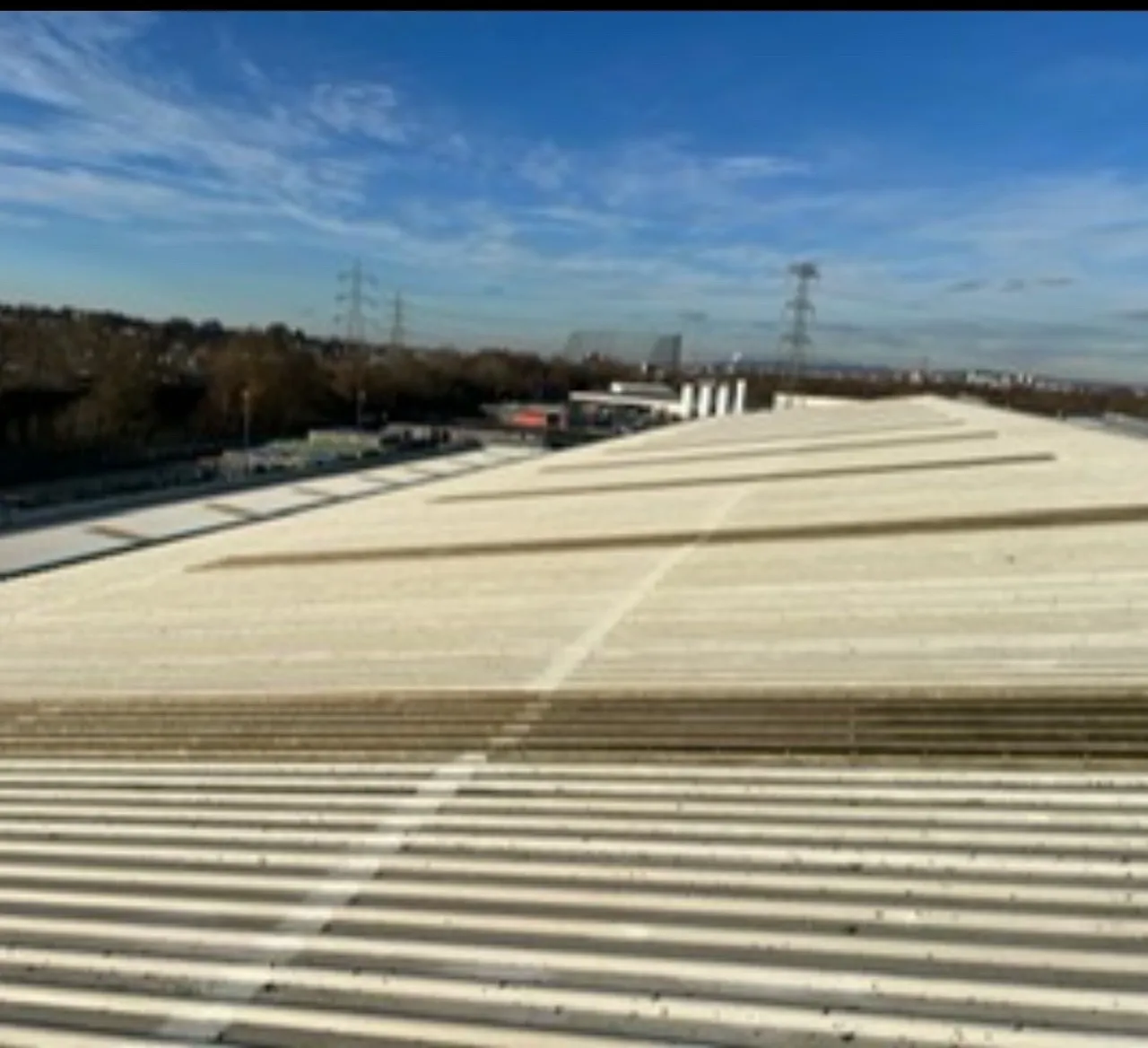
Completed treatment
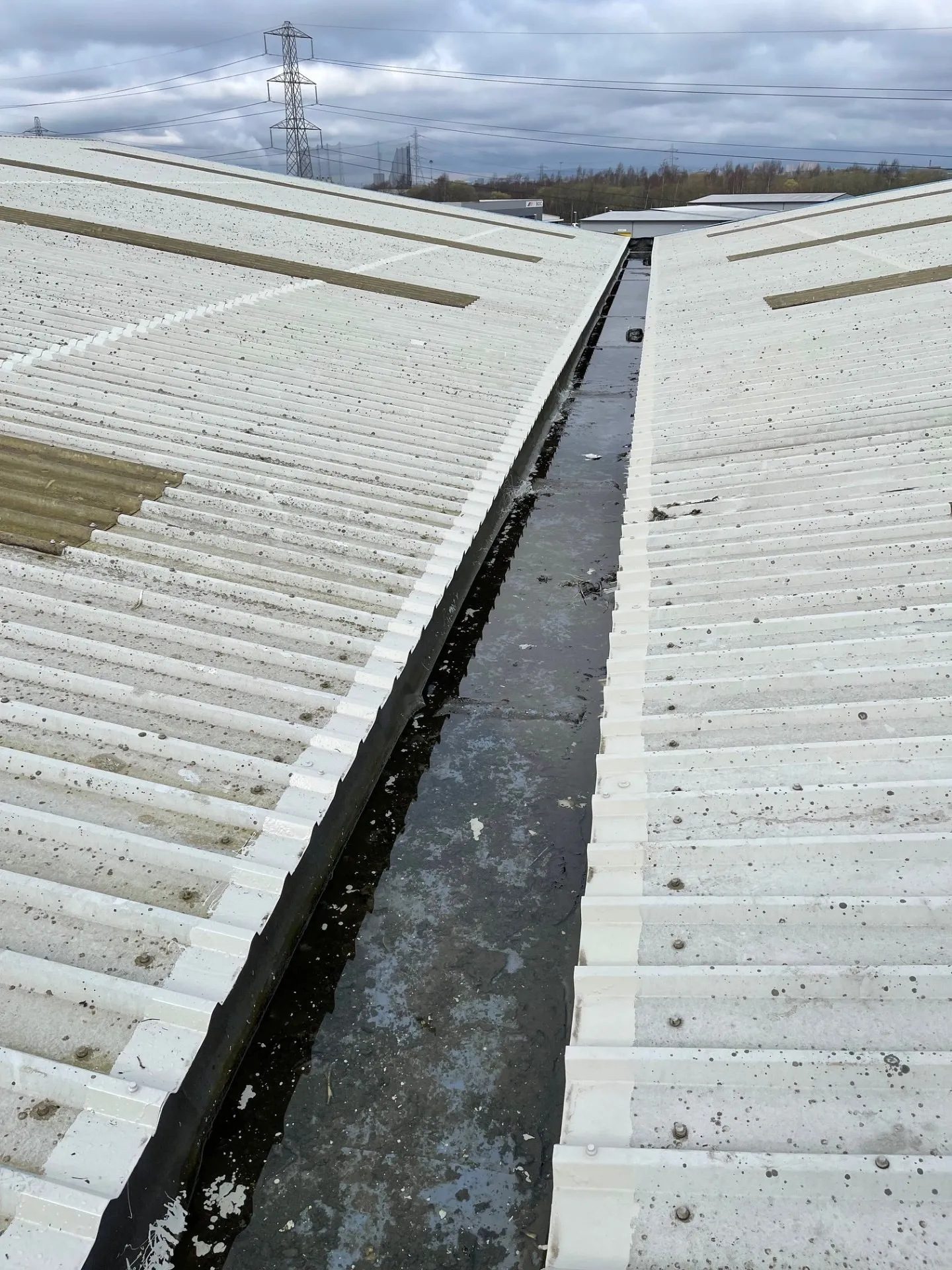
Prepared sheet edges finished with Sika cut edge treatment.
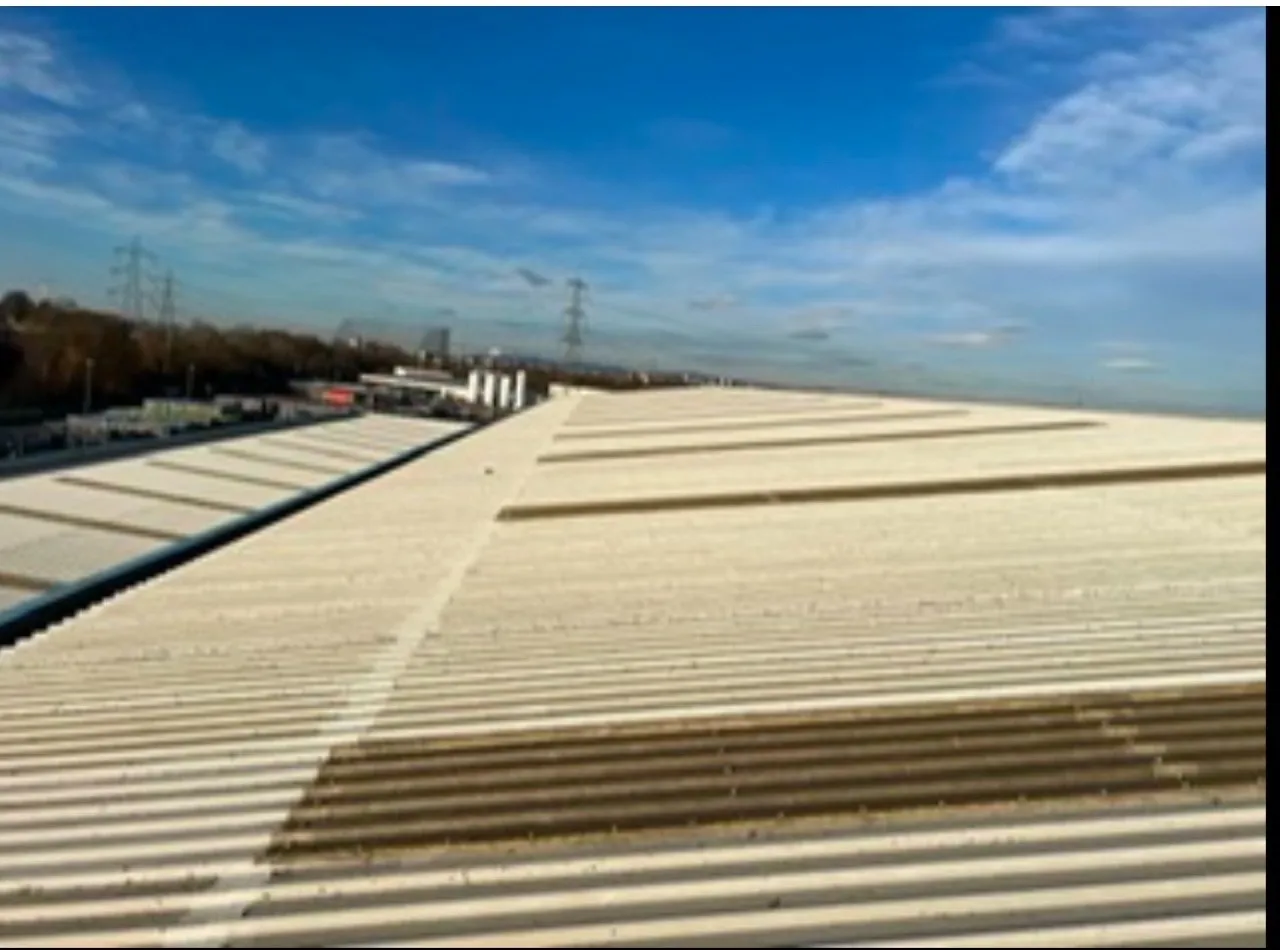
Clean finished edges
Completed coating work improving protection at vulnerable exposed edges.

Industrial metal roof
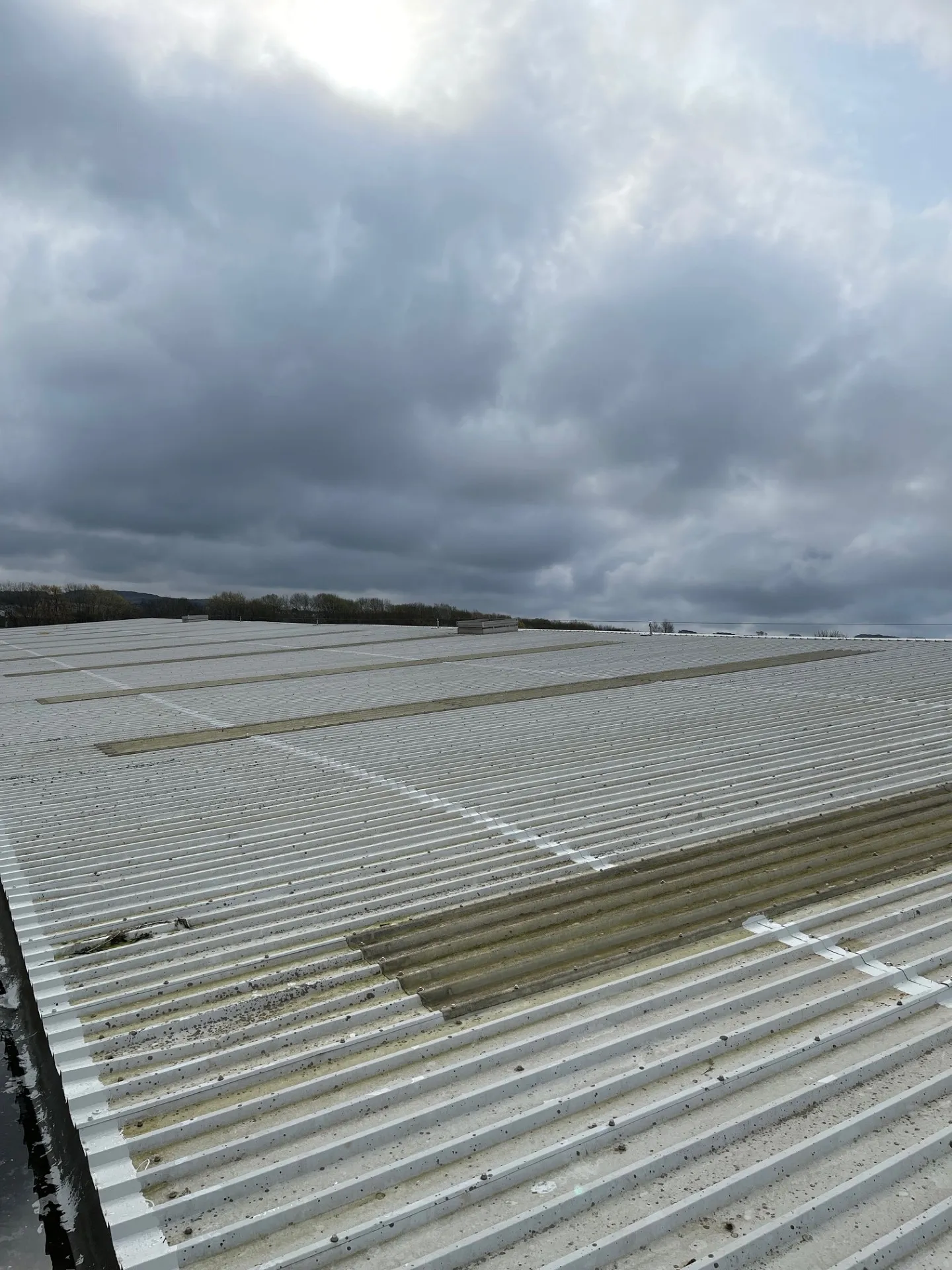
Finished cut edge treatment across metal roof sheets.
Sheet lap protection
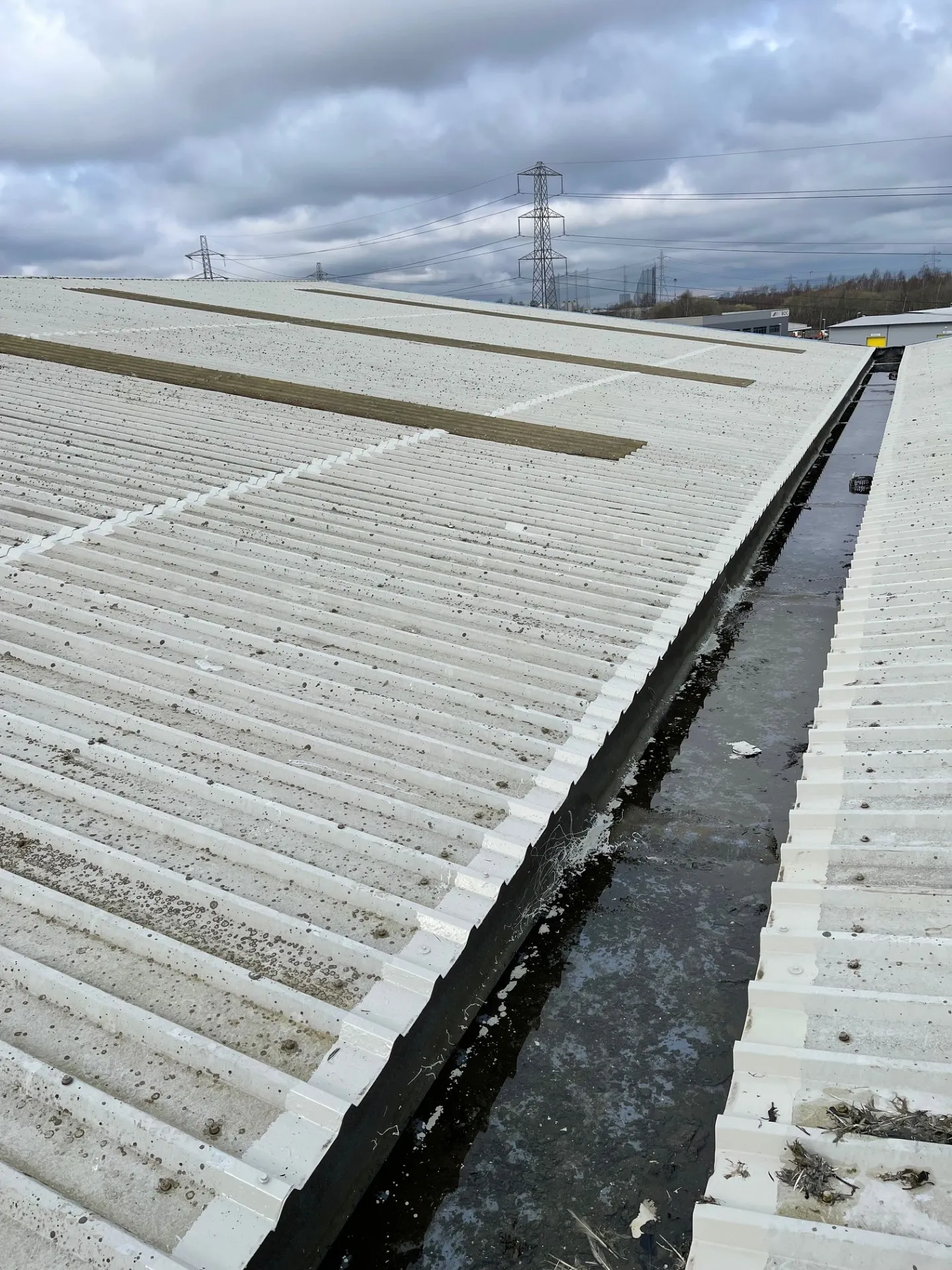
Coated cut edges and lap areas after treatment.
Sika treatment complete
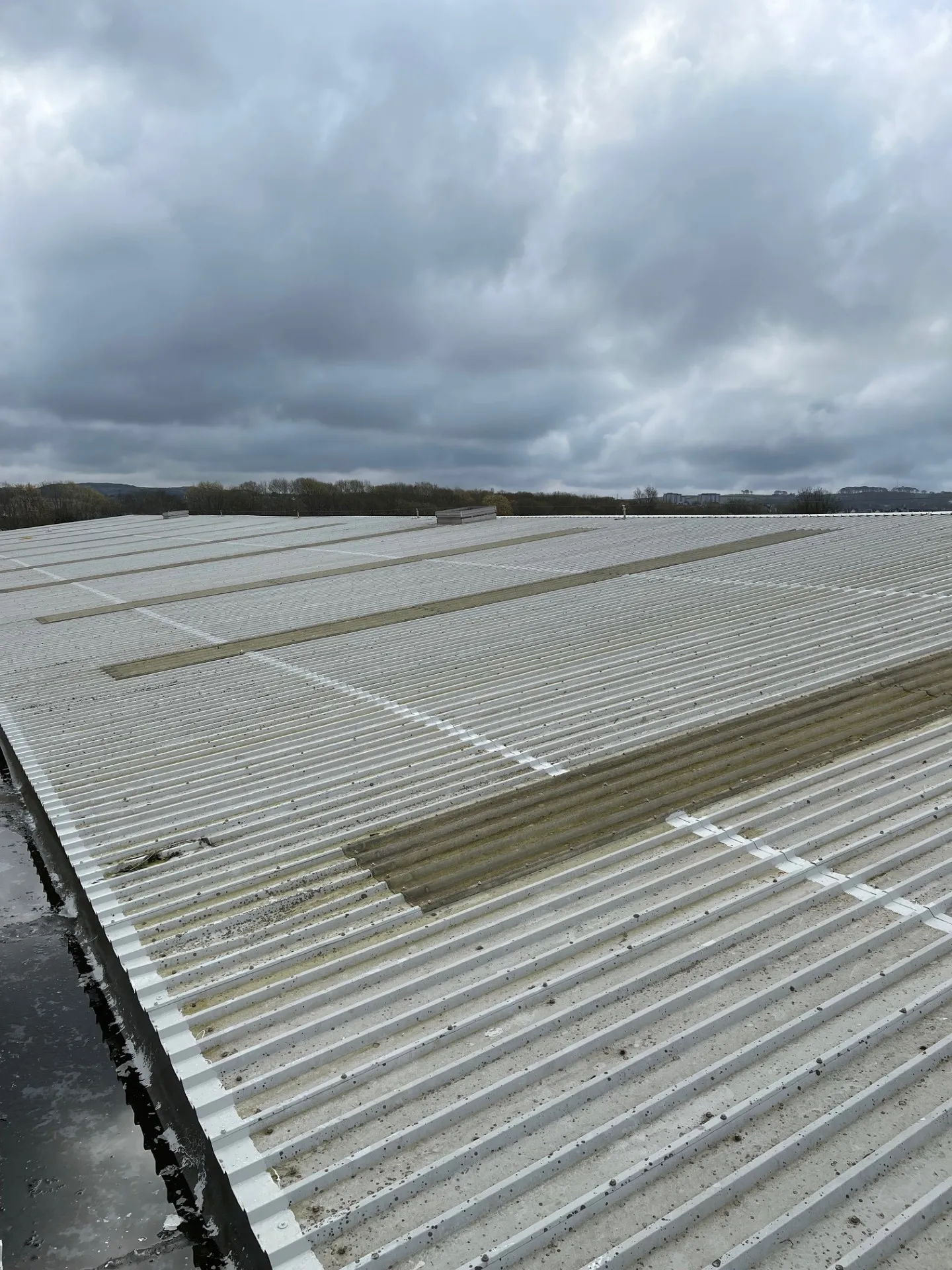
Finished liquid-applied protection to exposed sheet edges.
Protected sheet ends
Cut edge treatment installed to help slow further deterioration.
Modern Roofing finish
Completed works on an industrial metal roof.
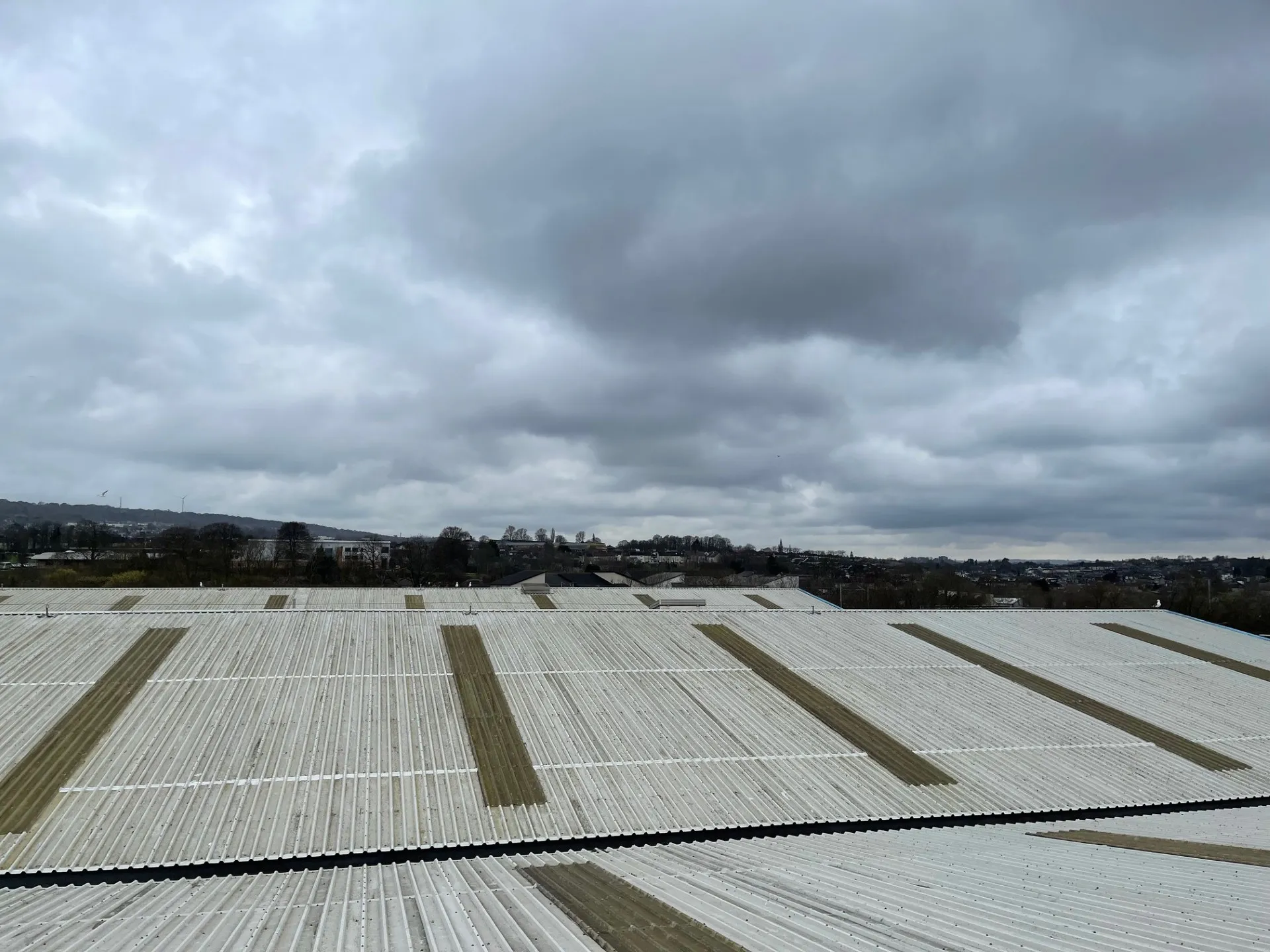
Primer and two coats
Finished result after preparation, primer and Sika coating.
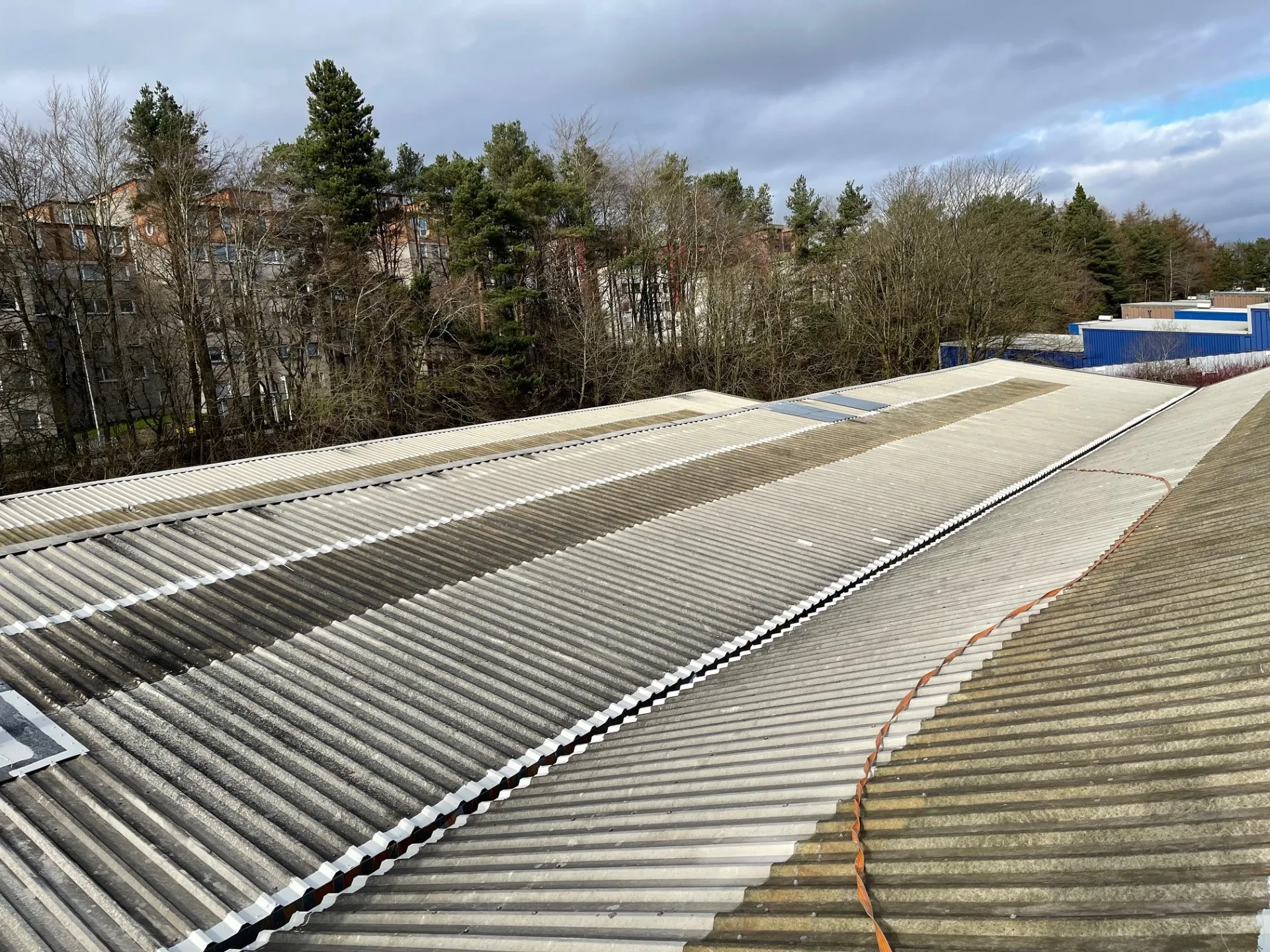
Scotland-wide service
Cut edge corrosion treatment for industrial and commercial roofs.
When Treatment Is Suitable and When It Is Not
Cut edge treatment is a strong refurbishment option when the existing roof sheets still have enough integrity. The survey decides whether coating is sensible or whether a bigger roofing solution is needed.
Treatment may be suitable when
- The corrosion is mainly at exposed cut edges and laps.
- The roof sheets are still structurally sound.
- The issue has been caught before widespread perforation.
- The client wants to extend roof life without full replacement.
- The works can be safely accessed and prepared correctly.
Replacement or overcladding may be better when
- Corrosion has eaten through the sheets.
- The roof has widespread failure across large areas.
- Fixings, purlins or structural elements are affected.
- There are repeated leaks from multiple roof defects.
- The existing roof is beyond a coating-only repair.
Part of a Wider Industrial Roof Refurbishment Plan
Cut edge corrosion is often one part of a wider industrial roof condition issue. During a roof survey, Modern Roofing can also assess gutters, rooflights, fixings, flashings, leaks, coating condition and whether the roof is suitable for refurbishment, overcladding or replacement.
Industrial roof repairs
Leak repairs, sheet repairs, failed fixings, flashings, storm damage and localised roof defects.
Industrial roof refurbishment
Survey-led refurbishment options for ageing factory, warehouse and commercial roofs.
Industrial roof overcladding
Overcladding options for older metal roofs where the existing roof and structure are suitable.
Industrial gutter lining
Gutter lining, outlet works and internal gutter refurbishment for large industrial roof areas.
Metal roofing systems
Metal roof repairs, sheeting, coating, overcladding and roof refurbishment support.
Industrial roofing Scotland
Complete commercial and industrial roofing support across Scotland.
Cut Edge Corrosion Treatment Across Scotland
Modern Roofing is based in Lanarkshire and carries out cut edge corrosion treatment, industrial roof repairs and refurbishment works across Scotland.
Glasgow
Cut edge corrosion treatment for factories, warehouses and commercial units.
Bellshill
Roof surveys, cut edge treatment advice and replacement guidance where roofs are too far gone.
Airdrie & Lanarkshire
Local industrial roofing support from Modern Roofing’s base near Airdrie and Caldercruix.
Scotland Wide
Commercial and industrial roofing support across the Central Belt and wider Scotland.
Get Advice Before the Roof Gets Worse
Cut edge corrosion is much easier to treat before the sheet edges fail. Arrange a survey and Modern Roofing will advise the right route.
Cut Edge Corrosion Treatment FAQs
What causes cut edge corrosion on metal roofs?
Cut edge corrosion usually starts where the protective coating on a metal roof sheet has been cut or exposed. Moisture attacks the exposed edge and the coating can begin to lift, allowing corrosion to spread along the sheet edge or beneath laps.
Can cut edge corrosion be treated?
Yes, if the existing roof sheets are still suitable. The affected areas can be prepared, ground back, sealed, primed and protected with a liquid-applied cut edge corrosion treatment system.
What system does Modern Roofing use?
Modern Roofing uses a preparation-led process that can include grinding, primer, gun-grade Sika to laps where required and two coats of Sika cut edge treatment.
Is cut edge corrosion treatment cheaper than roof replacement?
In many suitable cases, treatment is far less disruptive and less costly than full roof replacement. However, if corrosion has been left too long and the sheets are no longer suitable, replacement or overcladding may be the better long-term route.
Do you install safety netting below rooflights?
Where required, rooflights are normally netted from below before cut edge corrosion treatment begins. If netting from below is not feasible, netting can be installed above the rooflights. Access and safety planning are part of the job, not an afterthought.
Do you cover Glasgow, Bellshill and Lanarkshire?
Yes. Modern Roofing is based in Lanarkshire and carries out cut edge corrosion treatment and industrial roofing works across Glasgow, Bellshill, Airdrie, Lanarkshire and wider Scotland.